
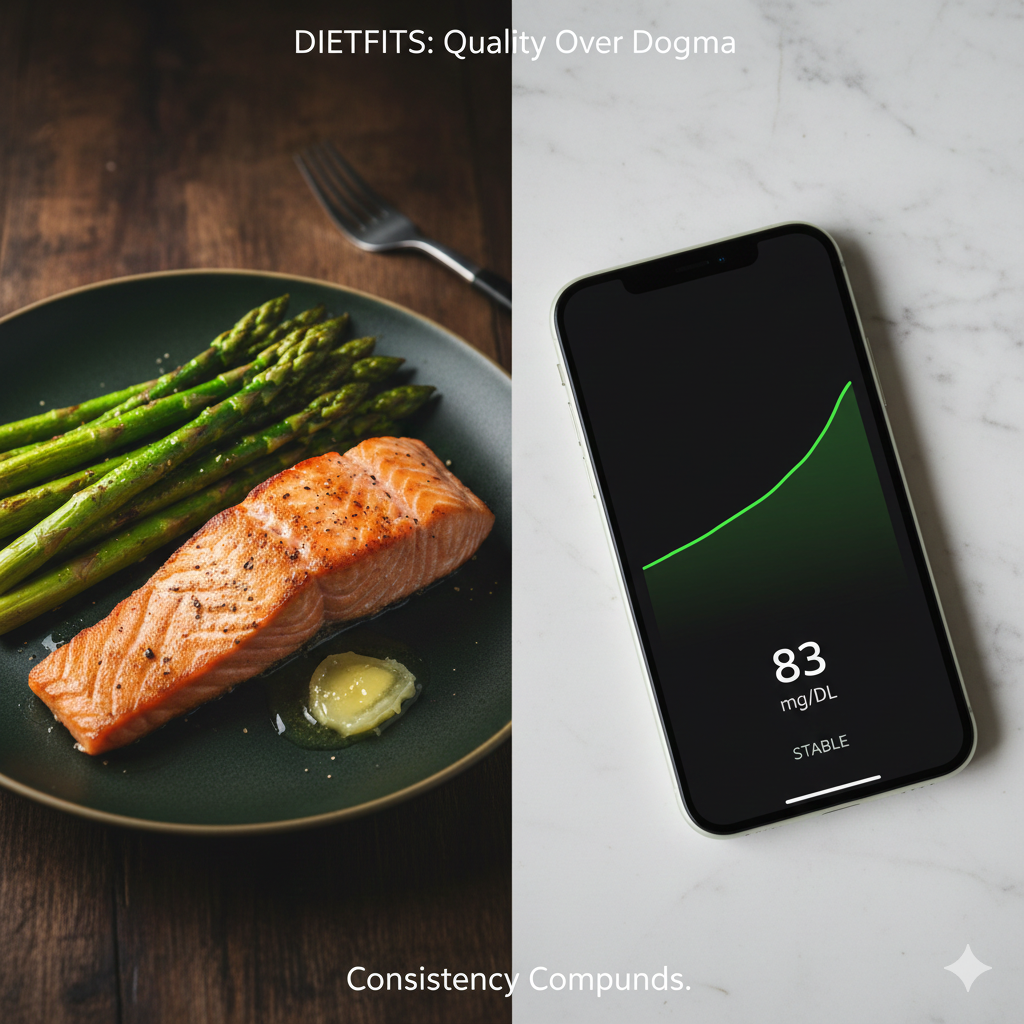
The DIETFITS from Stanford University followed 609 overweight adults for one year comparing healthy low-fat vs healthy low-carb diets. Both groups were coached to eliminate refined foods and added sugars. At 12 months, average weight loss was similar — about 13 lbs on low-carb and 12 lbs on low-fat — with wide individual variation. Translation: quality and adherence mattered more than the label.
🔬 What Really Drives Results
The biggest predictor of success wasn’t fat vs carb ideology — it was sustainability. Participants who stuck consistently to whole foods, adequate protein, and reduced processed intake lost weight regardless of camp. Some people naturally eat less and feel more satisfied on lower-carb. Others do well on lower-fat. The body rewards consistency more than macronutrient tribalism.
👨🦱👩🦰 Sex Differences: Interesting, Not Absolute
Sub-analyses suggested men sometimes lost slightly more weight overall, and there were small variations in response patterns. But the study wasn’t designed to declare a biological “winner.” Compliance, food choices, and behavioral patterns likely influenced outcomes more than gender alone. Physiology matters — but adherence matters more. The take home message is that if women are as compliant as men on low-carb diets, that’s the best way for them to lose weight and body fat.
🍽️ The Universal Principle
For everyone, metabolic stability improves when meals are built around:
• Adequate protein
• Fiber-rich vegetables
• Minimally processed foods
• Consistent eating rhythm
When glucose swings shrink, hunger stabilizes. When hunger stabilizes, adherence improves. When adherence improves, results compound.
🩺 Type 1 Context: Why Carb Load Changes the Equation
For people living with type 1 diabetes, carbohydrate quantity directly determines insulin demand. Lower carbohydrate meals typically require smaller boluses, which absorb more predictably and reduce glucose variability. That doesn’t mandate extreme restriction for everyone — but smaller carb loads often make blood sugar management simpler, smoother, and more stable.
Less volatility → fewer corrections → steadier CGM → long-term protection.
💚 HealO Takeaway
This isn’t about low-fat vs low-carb warfare.
It’s about metabolic calm.
The best approach is the one that:
• Controls hunger
• Stabilizes energy
• Reduces glucose swings
• Can be sustained for years
For the general population: choose the pattern you can live with.
For type 1: remember that carb size directly impacts insulin size — and smaller inputs usually mean smaller errors.
Stability wins.
Consistency compounds.
Health follows.
References
- https://jamanetwork.com/journals/jama/fullarticle/2673150
- https://youtu.be/MKHVHhWs9fg?si=IqI1cmDhnFam1ZzU
- Recent Post