FDA-approved but post-market red flags: dysbiosis, biofilms, permeability. Animal studies dominate (human ethics limit), yet microbiome shifts concern. Swap smart.

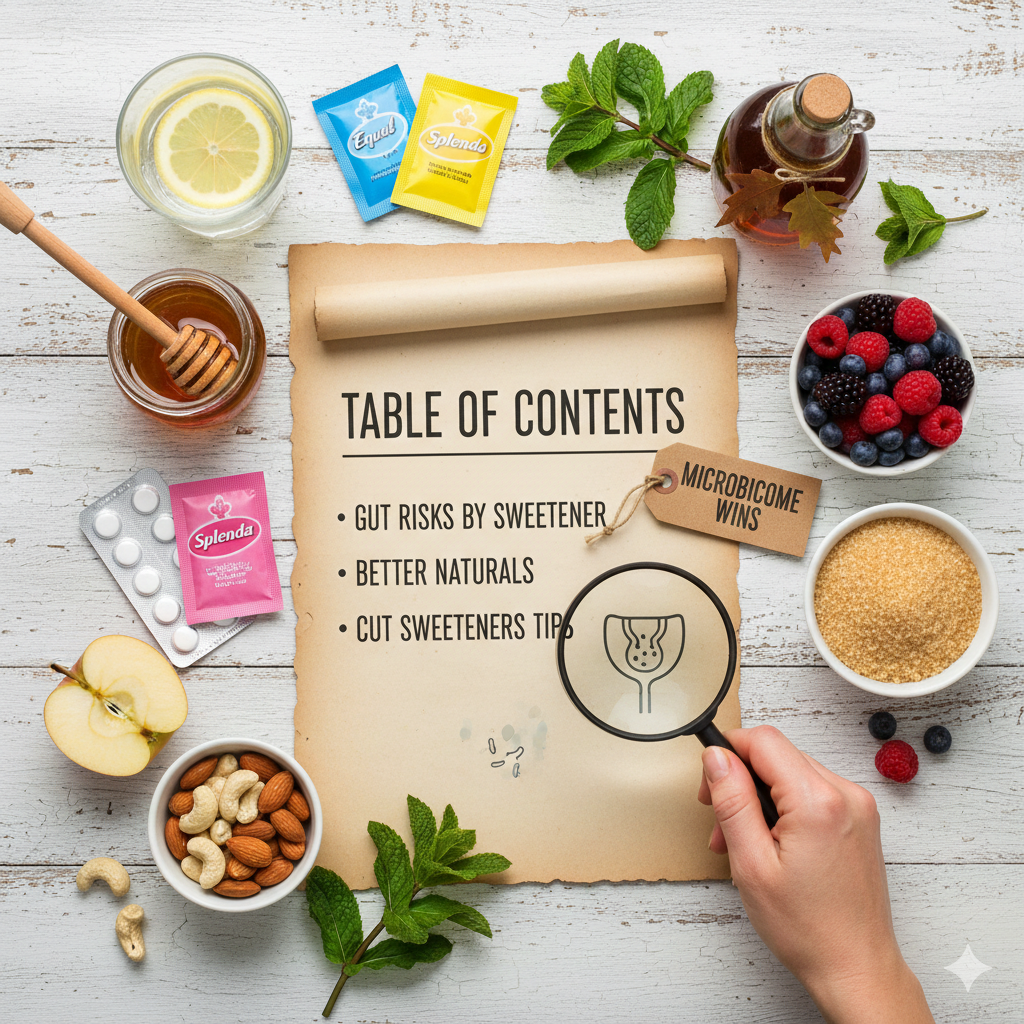
Table of Contents

  • Gut Risks by Sweetener

  • Better Naturals

  • Cut Sweeteners Tips

Gut Risks by Sweetener

No weight/diabetes wins; possible heart/stroke ↑ (PMC6389377). Biofilms aid invaders (IJMS, 2021).

SweetenerGut Issues (Mostly Animal)
Aspartame (Equal)Permeability ↑, biofilms, low diversity/heavy use (Gut Microbes, 2021); no short-term shift (Nutrients, 2020)
Acesulfame-KDysbiosis, injury (Microorganisms, 2021)
Sucralose (Splenda)Microbiome shift, lining damage (PMC6363527Chem Res Toxicol, 2020)
Saccharin (Sweet’N Low)Microbiome disruption (PMC6363527)
Xylitol/SorbitolLaxative/gas (dose-dependent); xylitol boosts SCFAs (Microbiome, 2021)
 

ADI Debate: FDA 50mg/kg aspartame vs EFSA 40mg/kg—avoid anyway.

Better Naturals

Moderation key—retrain tastebuds. No microbiome harm like synthetics.

SweetenerGut Perks
SteviaNo microbiome shift (12-wk human); no glucose/insulin spike (Foods, 2024)
Raw HoneyPrebiotics/enzymes; SIBO caution (wildflower post)
Maple SyrupInulin/polyphenols; ↓ biofilms/insulin resistance (PMC7469035)
Coconut Sugar/NectarInulin/minerals (K, Mg); antioxidants
FruitFiber/polyphenols; IBS/diabetes limit
Monk FruitNatural/GRAS; watch fillers (erythritol)
 

Cut Sweeteners Tips

  • Retrain: Fruit-first desserts; ⅓ less honey/maple (sweeter).

  • Avoid: Diet sodas/jellies.

  • Gut BoostButyrate foods.

Naturals > synthetics—microbiome wins.
One Response