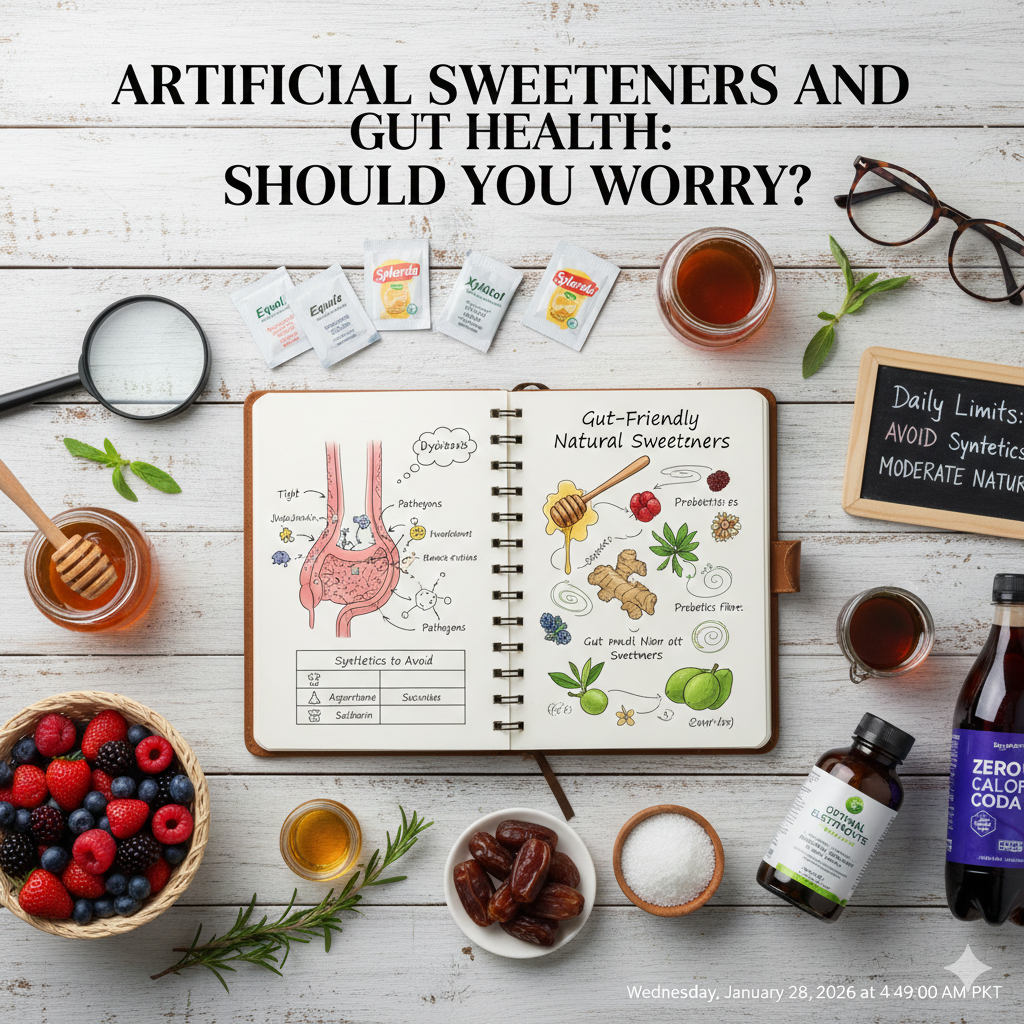
Artificial sweeteners promise sweetness without consequences.
Zero calories. No sugar spikes. “Diabetic-friendly.”
But emerging science is telling a very different story—especially when it comes to gut health, metabolism, and long-term disease risk.
While FDA and EFSA approvals reassure consumers, newer research links artificial sweeteners to gut microbiome disruption, metabolic dysfunction, and even cardiovascular risk.
At HealO, we don’t chase trends—we follow biology. Let’s break down what the evidence actually shows and how to sweeten your life without sabotaging your gut.
Why Artificial Sweeteners Harm the Gut
Artificial sweeteners were designed to bypass calories—not biology.
Instead of being metabolized like real food, many interfere with gut bacteria, leading to:
Dysbiosis (loss of beneficial bacterial diversity)
Increased gut permeability (“leaky gut”)
Impaired immune signaling
Disrupted gut–brain communication
Even more concerning:
Some sweeteners promote toxic bacterial biofilms, allowing pathogens like E. coli to adhere to and invade the gut lining—something natural sugars rarely do.
While most data comes from animal models (ethical limits restrict high-dose human trials), these models remain our best mechanistic evidence.
Let’s examine the major offenders.
Aspartame (NutraSweet™, Equal™)
Marketed as safe for decades, aspartame is now associated with:
Insulin resistance and abdominal fat gain—despite zero calories
Reduced gut barrier integrity
Damage to protective intestinal cells
Increased biofilm formation
Reduced alkaline phosphatase (a key gut-protective enzyme)
Short-term human trials show minimal changes—but long-term habitual users consistently show reduced microbial diversity.
HealO verdict: Avoid. The metabolic and gut risks outweigh any benefit.
Acesulfame Potassium (Ace-K)
Common in diet sodas, chewing gums, and “sugar-free” foods.
Animal studies show:
Significant dysbiosis
Intestinal inflammation
Structural gut damage
Human data is limited—but absence of evidence is not evidence of safety.
HealO verdict: Not worth the gamble.
Sucralose (Splenda™)
One of the most gut-damaging sweeteners studied.
Linked to:
Major microbiome alterations
Damage to the intestinal lining
Increased liver toxicity in offspring when consumed during pregnancy
Despite its popularity, sucralose behaves more like a chemical stressor than food.
HealO verdict: Hard no.
Saccharin
200–700 times sweeter than sugar and still widely used.
Evidence shows:
HealO verdict: Skip it.
Sugar Alcohols: “Natural” but Not Harmless
Sugar alcohols are partially absorbed and fermented in the gut—making them less toxic than synthetics, but still problematic in excess.
Xylitol
Use sparingly.
Sorbitol
HealO verdict: Occasional use only—listen to your gut.
Gut-Friendly Sweeteners (HealO-Approved)
Let’s be honest—Pakistanis oversweeten everything.
The solution isn’t artificial chemicals—it’s retraining the palate.
Stevia (Pure, No Fillers)
Avoid blends containing erythritol or maltodextrin.
Raw Honey
A true functional food:
Prebiotic
Antimicrobial
Enzyme-rich
Antioxidant-dense
Sweeter than sugar—use less.
⚠️ Avoid in active SIBO.
Real Maple Syrup
Must be 100% pure, not flavored syrup.
Coconut Sugar / Coconut Nectar
Lower glycemic impact than white sugar
Contains minerals (potassium, magnesium, zinc, iron)
Inulin supports gut bacteria
Still sugar—portion control matters.
Whole Fruits
Dates, berries, raisins—nature’s original sweeteners.
Ideal unless restricted by IBS or diabetes.
Monk Fruit: A Rising Star?
⚠️ Watch for blends mixed with erythritol.
HealO verdict: One of the safest sweet options available.
Daily Limits & HealO’s Clinical Advice
Yes, regulatory bodies allow:
But approval ≠ optimal health.
Artificial sweeteners:
Don’t reliably reduce weight
Don’t prevent diabetes
May increase cardiovascular risk
Act directly on the gut–brain axis
At HealO, we recommend:
Eliminate synthetic sweeteners
Use natural options sparingly
Focus on whole foods
Train your taste buds—not your dopamine receptors
Final HealO Takeaway
Your gut microbiome isn’t fooled by “zero calories.”
If a substance doesn’t exist in nature, your gut treats it like a chemical signal—not food.
Sweetness should support metabolism, not sabotage it.
Choose wisely.
Your gut, brain, and hormones are always listening.
References
Swithers SE.
Artificial sweeteners produce metabolic derangements in animal models.
Trends in Endocrinology & Metabolism, 2013.
Rogers PJ et al.
Does low-energy sweetener consumption affect energy intake and body weight?
International Journal of Obesity, 2016.
Debras C et al.
Artificial sweeteners and risk of cardiovascular disease.
BMJ, 2022.

2 Responses