
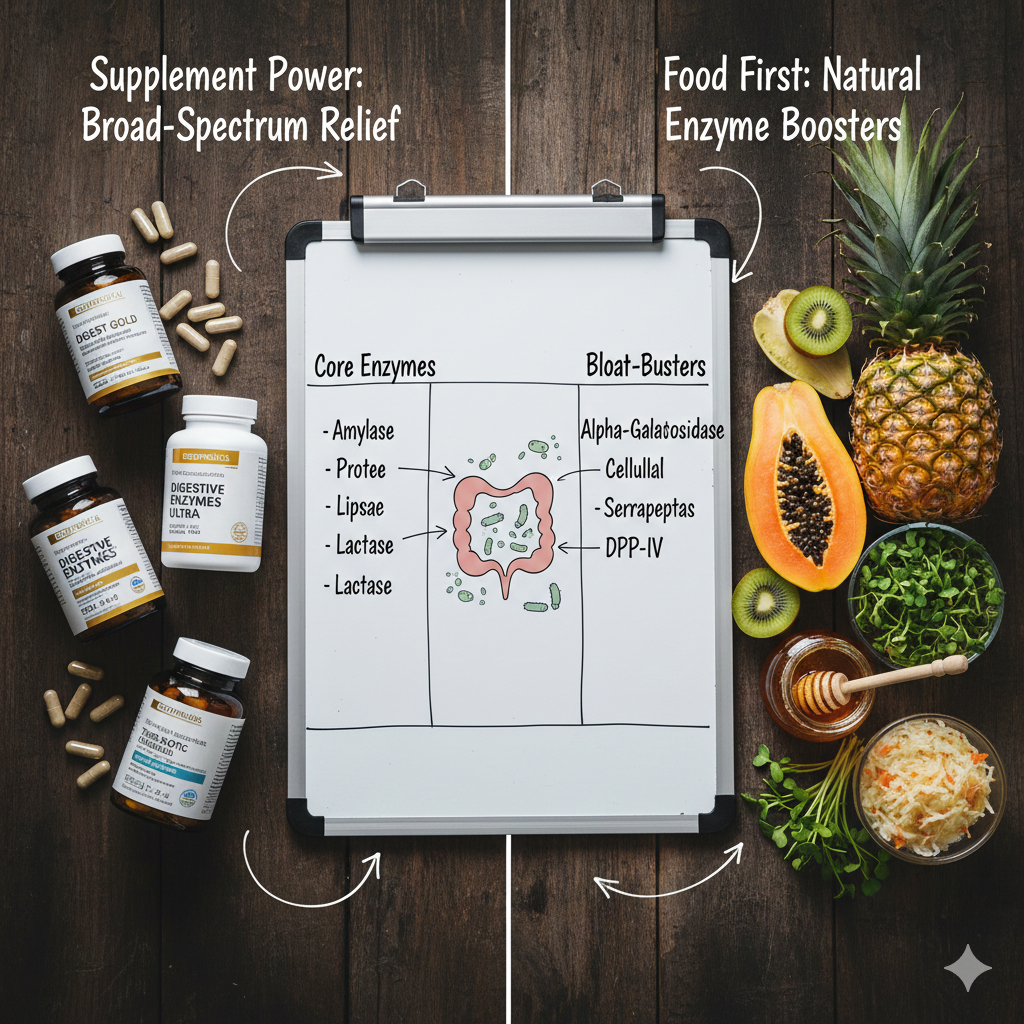
Bloating and IBS plague millions—often from undigested carbs, proteins, or fats fermenting in the gut. Broad-spectrum digestive enzymes tackle this by breaking down diverse foods, easing symptoms fast. Quality matters: choose high-potency, allergen-free brands for real results (World J Gastroenterol, 2009).
Table of Contents
Who Needs Enzymes?
Symptoms & Causes
What Makes a Good Enzyme?
Enzyme Types Explained
Top Picks for Bloating/IBS
Key Benefits
Enzyme-Rich Foods
How & When to Take
Personal Review & Precautions
Summary
Who Needs Enzymes?
Most diets lack fresh foods, killing natural enzymes via heat/processing. Add gut inflammation (leaky lining reduces brush border enzymes), pancreatic stress, or deficiencies—and you’re low.
Symptoms & Causes
Signs: Gas, bloating, heartburn, reflux, pain, low energy, poor skin, stalled weight loss.
Causes (Clin Educ, ongoing review):
Pancreatitis (diabetes, refined carbs), gallstones, alcohol
Deficiencies, high-sugar/seed oil diets, infections, antibiotics
Stress, smoking, aging, pregnancy, surgeries, sedentary life
What Makes a Good Enzyme?
Broad-spectrum: Covers carbs, proteins, fats, fibers.
High potency: Measured in units (e.g., ALU for lactase)—higher digests more.
GMP-certified: Third-party tested for purity.
Allergen-free: No gluten/soy; DPP-IV for gluten (test cautiously—not for celiac).
Enzyme Types Explained
Core Enzymes (Essentials)
| Enzyme | Breaks Down |
|---|---|
| Amylase | Starches/carbs |
| Protease | Proteins |
| Lipase | Fats |
| Lactase | Lactose (dairy) |
Bloat-Busters (FODMAPs, Fibers, More)
| Enzyme | Targets |
|---|---|
| Alpha/Glucoamylase | Starches to sugars |
| Sucrase/Invertase | Sucrose to glucose/fructose |
| Maltase | Maltose |
| Pullulanase | Alpha-glucan fibers |
| Cellulase/Hemicellulase | Fibers, candida, starches |
| Pectinase/Phytase | Fruit pectin, anti-nutrients |
| Beta-Glucanase | Beta-glucans (oats, mushrooms) |
| Alpha-Galactosidase | Legume glycoproteins (Beano) |
| Galactomannase | Galactomannan starches |
| Acid/Alkaline Protease/Endopeptidase | Proteins, allergies |
| Serrapeptase | Proteins; anti-inflammatory |
| Lysozyme | Bacterial cell walls |
| DPP-IV | Gluten peptides (limited use) |
Top Picks for Bloating/IBS
Prioritize broad-spectrum for mixed meals.
| Category | Top Brand/Product | Why It Wins |
|---|---|---|
| Overall Best | Enzymedica Digest Gold | 18+ enzymes, high potency, bloating/IBS relief |
| Fat Absorption | Pure Encapsulations Digestive Enzymes Ultra | Strong lipase blend for fatty meals |
| Chewable | Klaire Labs Ther-Biotic Complete Chewable | Kid/adult-friendly, broad coverage |
| For Men | NOW Super Enzymes | Protein/fat focus, value for heavy eaters |
| Best Value | Garden of Life FODMAPeaze | Targeted fibers, affordable daily use |
Key Benefits
Heavy Meals: Prevents post-feast bloat.
IBS Relief: Cuts gas from FODMAPs ([studies ongoing]).
Food Tolerance: Enjoy dairy/legumes fearlessly.
Bloating/Dyspepsia: Faster breakdown = less fermentation.
Immune/Anti-Inflammatory: Gut repair reduces systemic issues.
Weight Loss: Better nutrient uptake, less discomfort-driven undereating.
Enzyme-Rich Foods
Boost naturally:
Raw pineapple/papaya (bromelain/papain for proteins).
Kiwi (actinidin), mango, fermented honey.
Sprouts, raw honey—pair with meals.
How & When to Take
With first bite of meals/snacks.
Start low (half dose) to avoid die-off.
Refrigerate if needed; travel packs for potency.
Personal Review & Precautions
I’ve tested many—animal based whole foods diet resolved my bloating issue even after heavy meals; daughter’s gluten intolerance, belly twitching and discomfort also resolved to great extent (gluten enzymes didn’t fix her issues). Cautions: Not for ulcers/pancreatitis without doctor’s advice OK; test for allergies; celiac/gluten sensitivity? Consult pro—enzymes aid digestion, not cure autoimmunity.
Summary
Animal based diet crushes bloating/IBS by tackling carbs, fats, fibers head-on. Pair with fermented vegie sources—feel lighter fast.
3 Responses