The Inflammation Link Most People Miss
Struggling to lose weight despite “doing everything right”? Gluten intolerance may be the silent saboteur.
Up to 30% of people may react to gluten—not with classic celiac symptoms, but with low-grade, chronic inflammation that promotes fat storage, bloating, cravings, and metabolic slowdown. The result? Weight gain that feels stubborn and unexplained.
This isn’t only about carbs or calories—it’s also about immune activation.
Table of Contents
Gluten & Sensitivity 101
5 Ways Gluten Drives Weight Gain
Gluten-Free Diets: Wins & Myths
Try It Yourself: The 3-Week Elimination Plan
Gluten & Sensitivity 101
Gluten is a protein complex found in wheat, barley, rye—and commonly contaminated oats.
What Is Gluten Sensitivity?
Non-celiac gluten sensitivity (NCGS) involves an immune response driven by T-cells, not the antibody damage seen in celiac disease. There’s no definitive lab test.
Estimates suggest up to 30% of the population experiences some level of sensitivity, often unrecognized.
How It’s Identified
The gold standard is still clinical:
Remove gluten completely for 3 weeks
Monitor symptoms (weight, bloating, cravings, energy, mood)
Reintroduce → symptoms return = sensitivity confirmed
Interestingly, gluten-driven immune activation shares pathways seen in autoimmune diseases like multiple sclerosis—highlighting how systemic the reaction can be.
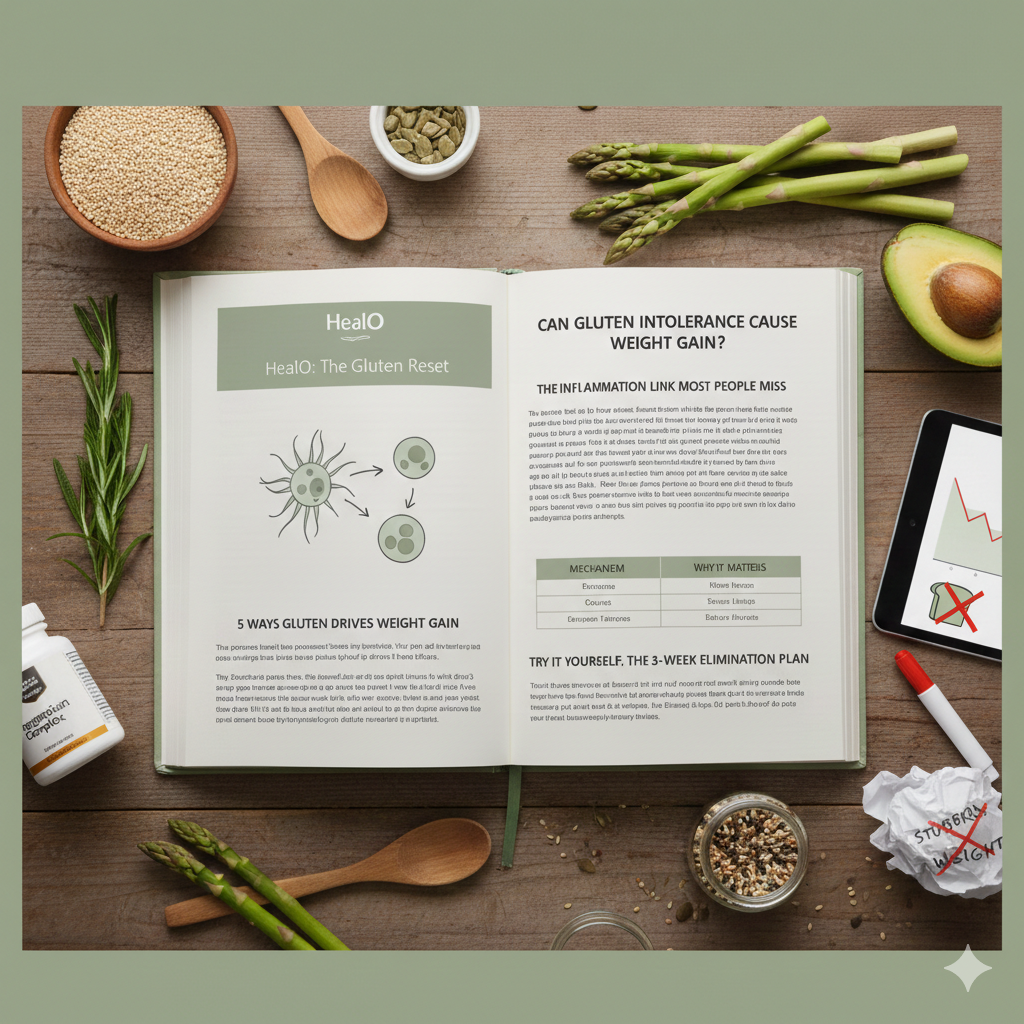
5 Ways Gluten Can Drive Weight Gain
Any food that provokes inflammation can impair fat loss. Gluten is particularly effective at doing so.
| Mechanism | What Happens | Why It Matters |
|---|
| Immune Activation | T-cells release “danger” signals | Body shifts into fat-storage mode |
| Systemic Inflammation | Cytokines disrupt insulin & metabolism | Linked to obesity and type 2 diabetes |
| Leaky Gut (↑ Zonulin) | Gut barrier opens → toxins enter | Larger waistlines, ↑ cholesterol |
| Nutrient Malabsorption | Iron, B-vitamins, magnesium drop | Cravings + fatigue despite eating |
| Lectins, Fructans & Endorphins | Bloating + opioid-like brain effects | Cravings and addictive eating cycles |
Important note:
Many people with celiac disease are now diagnosed overweight or obese, not underweight—challenging the old stereotype.
Gluten-Free Diets: Wins & Myths
Why Gluten-Free Often Helps Weight Loss
Automatic junk reduction (no buns, doughnuts, cookies, cola)
Higher vegetable and protein intake
Improved micronutrient absorption (magnesium, B-vitamins)
More mindful food choices → lower caloric higher nutrient density drift
Common Myth:
“Gluten-free diets are unhealthy” (BMJ claim)
Why this is misleading:
Based on pre-2010 data, before quality GF foods existed
Focused on celiac patients, who already have elevated heart risk
Did not study full gluten elimination
Ignored effects of modern wheat, hybridization, and processing chemicals
Truth:
A gluten-free diet built on whole foods is nutrient-dense and anti-inflammatory. A gluten-free diet built on packaged junk is not.
Try It Yourself: The HealO 3-Week Gluten Reset
Because antibodies and inflammatory signals linger, short trials don’t count.
Step 1: Prepare
Stock quinoa, rice, vegetables, fruits, legumes
Include quality protein (eggs, fish, meat)
Remove all wheat, barley, rye (including sauces)
Step 2: Eliminate (Weeks 1–3)
Zero gluten—no “cheats”
Track:
Weight
Bloating
Energy
Cravings
Mood and sleep
Step 3: Reintroduce
Step 4: Sustain
Stay gluten-free
Emphasize anti-inflammatory foods
Support nutrients often depleted (iron, B-complex, magnesium)
What to expect:
Rapid loss of water weight and bloating
Appetite normalization within weeks
Deeper metabolic benefits over months
HealO Key Takeaway
If weight loss feels impossible despite discipline, gluten-driven inflammation may be the missing piece.
This isn’t about fear or trends—it’s about identifying foods that push your immune system into fat-storage mode. For many, removing gluten unlocks weight loss without trying harder.
HealO principle:
You can’t out-diet inflammation.
References
- https://pubmed.ncbi.nlm.nih.gov/28928668/
- https://www.ncbi.nlm.nih.gov/pubmed/29362561
- https://www.ncbi.nlm.nih.gov/pmc/articles/PMC5738582/
- https://www.thyroidnutritioneducators.com/should-your-thyroid-remedies-include-a-gluten-free-lifestyle/
- https://www.ncbi.nlm.nih.gov/pmc/articles/PMC4011484/
- https://www.ncbi.nlm.nih.gov/pmc/articles/PMC2769364/
- https://www.ncbi.nlm.nih.gov/pubmed/22913724
- https://pubmed.ncbi.nlm.nih.gov/23253599/
- https://www.ncbi.nlm.nih.gov/pubmed/25642988
- https://pubmed.ncbi.nlm.nih.gov/35335996/
- https://www.ncbi.nlm.nih.gov/pmc/articles/PMC5372598/
- https://www.ncbi.nlm.nih.gov/pmc/articles/PMC5372598/
- https://www.ncbi.nlm.nih.gov/pubmed/25734566
- https://pubmed.ncbi.nlm.nih.gov/31658997/
- https://www.ncbi.nlm.nih.gov/pmc/articles/PMC3422768/
- https://www.ncbi.nlm.nih.gov/pubmed/23253599
- https://www.ncbi.nlm.nih.gov/pmc/articles/PMC5025969/
- https://www.bmj.com/company/newsroom/gluten-free-diet-not-recommended-for-people-without-celiac-disease/
- https://www.bmj.com/company/newsroom/gluten-free-diet-not-recommended-for-people-without-celiac-disease/
- https://www.ncbi.nlm.nih.gov/pmc/articles/PMC5421459/

2 Responses