Cinnamon is more than just a fragrant spice for your pastries and lattes—it’s also emerging as a powerful natural tool for blood sugar management and metabolic health. Let’s uncover what science reveals about cinnamon’s benefits, the best types to choose, and how to safely weave it into your diet.
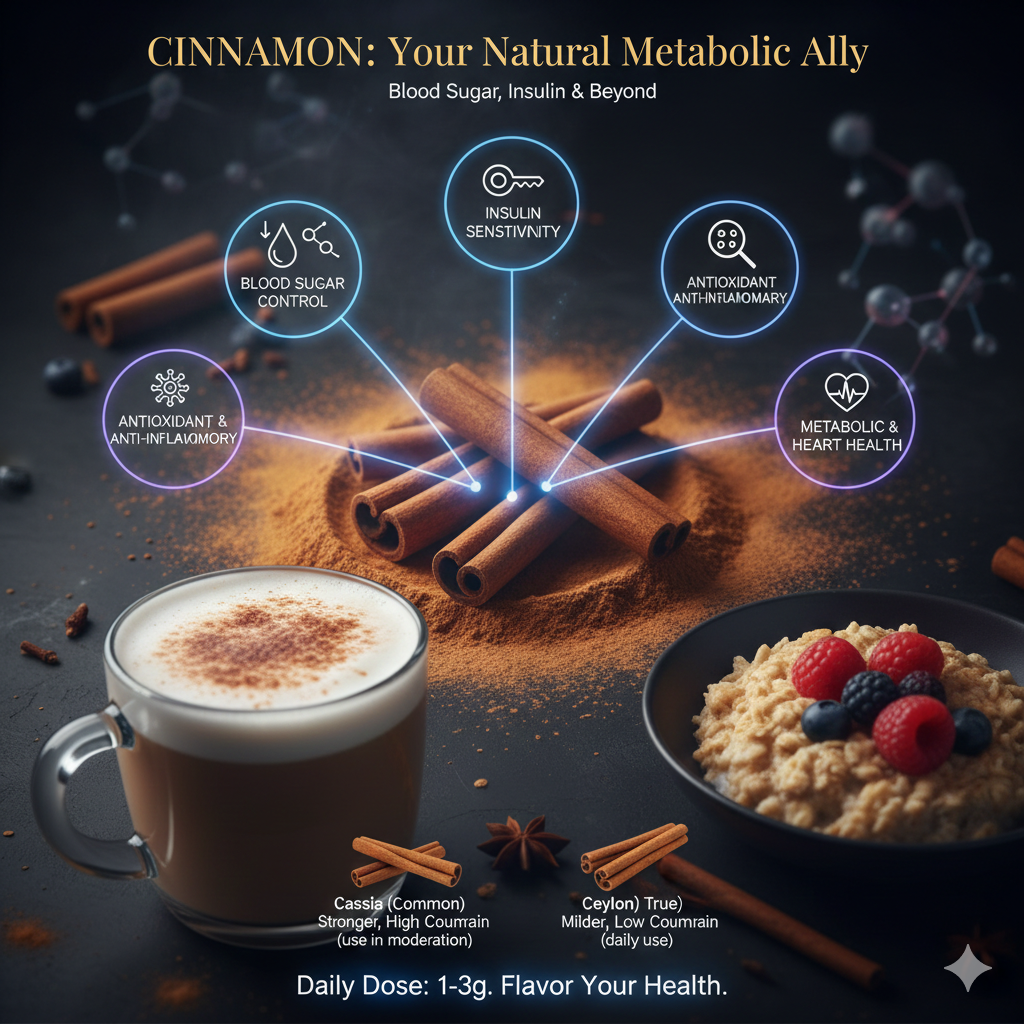
How Cinnamon Supports Blood Sugar and Insulin Sensitivity
1. Blood Glucose Control
Numerous studies show cinnamon can lower fasting blood glucose and even HbA1c (a long-term marker of blood sugar control) in people with type 2 diabetes or prediabetes. It acts as a natural complement to lifestyle and medical interventions, supporting steadier energy and easier weight management.youtube
2. Boosting Insulin Sensitivity
Cinnamon contains special polyphenolic compounds—especially in Cinnamomum cassia—that activate insulin pathways and boost insulin receptor function. This means your cells respond better to insulin, making it easier for your body to move sugar from the blood into muscles.
3. Mitigating Sugar Spikes After Meals
Research reveals just 6 grams of ground cinnamon before a carb-heavy meal can blunt the post-meal blood glucose spike. For people with unstable blood sugar or insulin resistance, this is a simple, flavorful tool for glycemic control.
4. Additional Perks
Cinnamon is also a potent antioxidant and anti-inflammatory. It supports overall heart and metabolic health by fighting oxidative stress and chronic inflammation, important factors for anyone dealing with metabolic syndrome or cardiovascular risks.
Not All Cinnamon Is Created Equal
Cinnamomum cassia (Cassia):
Most common in grocery stores, especially in the U.S.
Stronger effect on blood sugar, but high in coumarin—which can strain the liver in excess.
Cinnamomum verum (Ceylon, “true” cinnamon):
Lower in coumarin and safer for regular, long-term use.
Milder flavor and a bit pricier, but a better choice for daily consumption.
Tip: If you want maximum short-term effect on blood sugar (such as prediabetes), small amounts of cassia are OK. For daily use, choose Ceylon to avoid the risks from coumarin.
How to Add Cinnamon to Your Diet
Beverages: Stir ½–1 tsp into coffee, tea, or smoothies
Baking: Add to oatmeal, pancakes, muffins, or homemade granola
Savory Dishes: Use in curries, chilis, stews, or Moroccan-inspired spice blends
Supplements: For more precise dosing, try capsules or extracts with verified Ceylon or cassia origins
Dosage and Safety
Effective dose: 1–6 grams (about ½ to 2 teaspoons) daily; benefits plateau above 6 grams
Best practice: 1–3 grams per day for most, or 500 mg extract twice daily
Caution:
Cassia can harm the liver in large amounts—opt for Ceylon if you consume cinnamon every day
Anyone with liver disease or on blood thinners should consult a doctor before adding high-dose cinnamon supplements
Conclusion
Cinnamon offers more than warmth and flavor—it’s a proven booster for blood sugar management, insulin sensitivity, and metabolic health.
For short bursts: small amounts of cassia (with awareness of coumarin content)
For daily support: prioritize Ceylon (“true” cinnamon)
Whether sprinkled on your breakfast, blended into a smoothie, or carefully chosen in supplements, cinnamon is a safe, delicious way to add a bit more health to your daily life. As always, talk to your healthcare provider if you have specific conditions before supplementing in high doses.
References:
- Ting Lu, Hongguang Sheng, Johnna Wu, Yuan Cheng, Jianming Zhu, Yan Chen (2012) Cinnamon extract improves fasting blood glucose and glycosylated hemoglobin level in Chinese patients with type 2 diabetes. Nutrition Research 32(6), 408-412
- Anderson RA. Chromium and polyphenols from cinnamon improve insulin sensitivity: Plenary Lecture. Proceedings of the Nutrition Society. 2008;67(1):48-53. doi:10.1017/S0029665108006010
- Magistrelli, A. M., & Chezem, J. (2012). Effect of ground cinnamon on postprandial blood glucose concentration in normal-weight and obese adults. Journal of the Academy of Nutrition and Dietetics, 112(11), 1806-9.
- Qin, B., Panickar, K., & Anderson, R. (2010). Cinnamon: Potential Role in the Prevention of Insulin Resistance, Metabolic Syndrome, and Type 2 Diabetes. Journal of Diabetes Science and Technology, 4, 685-693.
- Anderson, R., Zhan, Z., Luo, R., Guo, X., Zhou, J., Kong, J., et al. (2015). Cinnamon extract lowers glucose, insulin and cholesterol in people with elevated serum glucose. Journal of Traditional and Complementary Medicine, 6, 332-336.
- Davis, P., & Yokoyama, W. (2011). Cinnamon intake lowers fasting blood glucose: meta-analysis. Journal of Medicinal Food, 14(9), 884-9.