How to Get High-Quality Protein Without Spiking Blood Sugar
Shifting towards a plant-centric diet from ultra-processed foods can reduce inflammation—but protein quality matters far more than most people realize.
After nearly three decades on a grain- and legume-heavy vegan diet, I learned this the hard way: rising blood sugar swings, declining energy, poor recovery. The solution wasn’t abandoning plants—it was changing which plants and how they’re used.
The HealO approach is Ketotarian:
➡️ high-fat, low-glycemic plants
➡️ protein that’s bioavailable, not excessive
➡️ minimal anti-nutrients
➡️ metabolic flexibility preserved
Protein isn’t about “more.” It’s about usable amino acids without insulin chaos.
How Much Protein Do You Actually Need?
Forget extreme targets. For most metabolically healthy adults:
Excess protein—especially paired with carbs—can drive insulin via gluconeogenesis. The goal is repair and signaling, not constant glucose elevation.
Essential Amino Acids (EAAs): The Non-Negotiables
Your body cannot synthesize these nine—daily intake matters more than meal-by-meal “combining.”
| Amino Acid | Why It Matters |
|---|
| Leucine | Triggers muscle protein synthesis |
| Lysine | Immunity, collagen |
| Methionine | Detox & tissue repair |
| Tryptophan | Serotonin, sleep |
| Threonine | Gut lining integrity |
| Isoleucine | Muscle recovery |
| Valine | Energy production |
| Phenylalanine | Dopamine & focus |
| Histidine | Immune signaling |
Animal foods deliver these effortlessly—but plants can too to some extent, if chosen wisely.
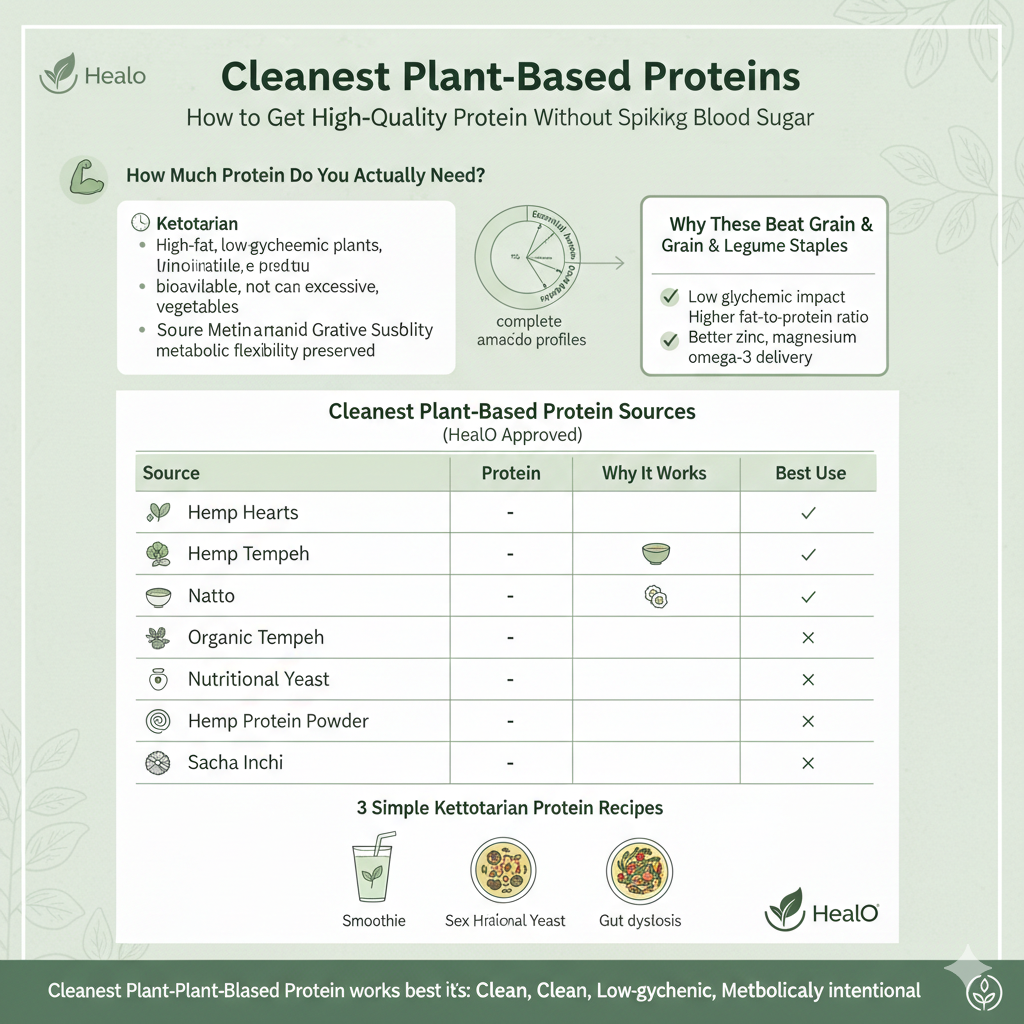
Cleanest Plant-Based Protein Sources (HealO-Approved)
Selection criteria:
✔ Complete or near-complete amino profile
✔ Low glycemic load
✔ Minimal processing
✔ Reduced phytates/lectins
✔ Supports insulin sensitivity
| Rank | Source | Protein | Why It Works | Best Use |
|---|
| 1 | Hemp Hearts | ~10g/Tbsp | Complete protein, omega-3s, magnesium | Smoothies, salads |
| 2 | Hemp Tempeh (Hempeh) | ~22g/4 oz | Fermented → better digestion | Stir-fries |
| 3 | Natto (non-GMO) | ~31g/cup | K2, enzymes, gut benefits | Small portions |
| 4 | Organic Tempeh | ~31g/cup | Fermentation reduces anti-nutrients | Grilled/sautéed |
| 5 | Nutritional Yeast | ~5g/Tbsp | B-vitamin support (fortified) | Savory topping |
| 6 | Spirulina | ~4g/Tbsp | Complete algae protein, anti-inflammatory | Drinks |
| 7 | Hemp Protein Powder | 12–15g/serve | Minimal processing + fiber | Post-workout |
| 8 | Sacha Inchi | ~24g/4 Tbsp | High omega-3, complete | Baking |
Key note: Fermentation dramatically improves mineral absorption and gut tolerance—especially relevant for insulin resistance and autoimmunity.
Why These Beat Grain & Legume Staples
Traditional “plant proteins” like lentils, quinoa, and chickpeas come with trade-offs:
❌ High carbohydrate load (often 40–60g per cup)
❌ Lectins & phytates impair mineral absorption
❌ Blood glucose spikes (problematic for diabetes & PCOS)
Clean plant proteins:
✔ Lower glycemic impact
✔ Higher fat-to-protein ratio
✔ Better zinc, magnesium, omega-3 delivery
For metabolic health, not all plants are equal.
3 Simple Ketotarian Protein Recipes
🥬 Hemp Power Smoothie (~25g protein)
Hemp hearts (½–1 cup)
Coconut milk
Spinach
½ avocado
Spirulina (1 Tbsp)
Why it works: fat-adapted fuel, zero glucose crash.
🍲 Natto + Tempeh Stir-Fry (~30g protein)
Natto (½–1 cup)
Organic tempeh
Broccoli
Olive oil, ginger
Why it works: gut + immune + protein in one meal.
🌊 “Toast” Protein Snack (~20g protein)
Nori sheets
Mashed avocado
Hemp seeds
Nutritional yeast
Why it works: iodine, protein, fats—under 10g carbs.
Pro-Level Optimization Tips
Diabetes & epidemiology angle:
Low-glycemic, plant-forward patterns consistently associate with improved insulin sensitivity when protein quality is respected.
HealO Bottom Line
Plant-based protein works best when it’s:
You don’t need extremes.
You need precision.
Dial in protein quality, protect insulin signaling, and let plants work with your physiology—not against it.
References
- National Center for Biotechnology Information. PubChem Database. Valine, CID=6287, https://pubchem.ncbi.nlm.nih.gov/compound/L-valine#section=Top (accessed on July 2, 2020)
- National Center for Biotechnology Information. PubChem Database. L-Threonine, CID=6288, https://pubchem.ncbi.nlm.nih.gov/compound/L-threonine (accessed on July 2, 2020)
- National Center for Biotechnology Information. PubChem Database. Tryptophan, CID=6305, https://pubchem.ncbi.nlm.nih.gov/compound/L-tryptophan (accessed on July 2, 2020)
- National Center for Biotechnology Information. PubChem Database. Methionine, CID=6137, https://pubchem.ncbi.nlm.nih.gov/compound/L-methionine (accessed on July 2, 2020)
- National Center for Biotechnology Information. PubChem Database. l-Isoleucine, CID=6306, https://pubchem.ncbi.nlm.nih.gov/compound/l-isoleucine (accessed on July 2, 2020)
- National Center for Biotechnology Information. PubChem Database. Lysine, CID=5962, https://pubchem.ncbi.nlm.nih.gov/compound/L-lysine (accessed on July 2, 2020)
- National Center for Biotechnology Information. PubChem Database. Histidine, CID=6274, https://pubchem.ncbi.nlm.nih.gov/compound/L-histidine (accessed on July 2, 2020)
- National Center for Biotechnology Information. PubChem Database. Phenylalanine, CID=6140, https://pubchem.ncbi.nlm.nih.gov/compound/L-phenylalanine (accessed on July 2, 2020)
- National Center for Biotechnology Information. PubChem Database. Leucine, CID=6106, https://pubchem.ncbi.nlm.nih.gov/compound/L-leucine (accessed on July 2, 2020)