With so much wellness advice online, it’s easy to be misled by popular myths. Let’s break down ten common health misconceptions—so you can focus on what actually works.
Myth 1: Detox diets cleanse your body.
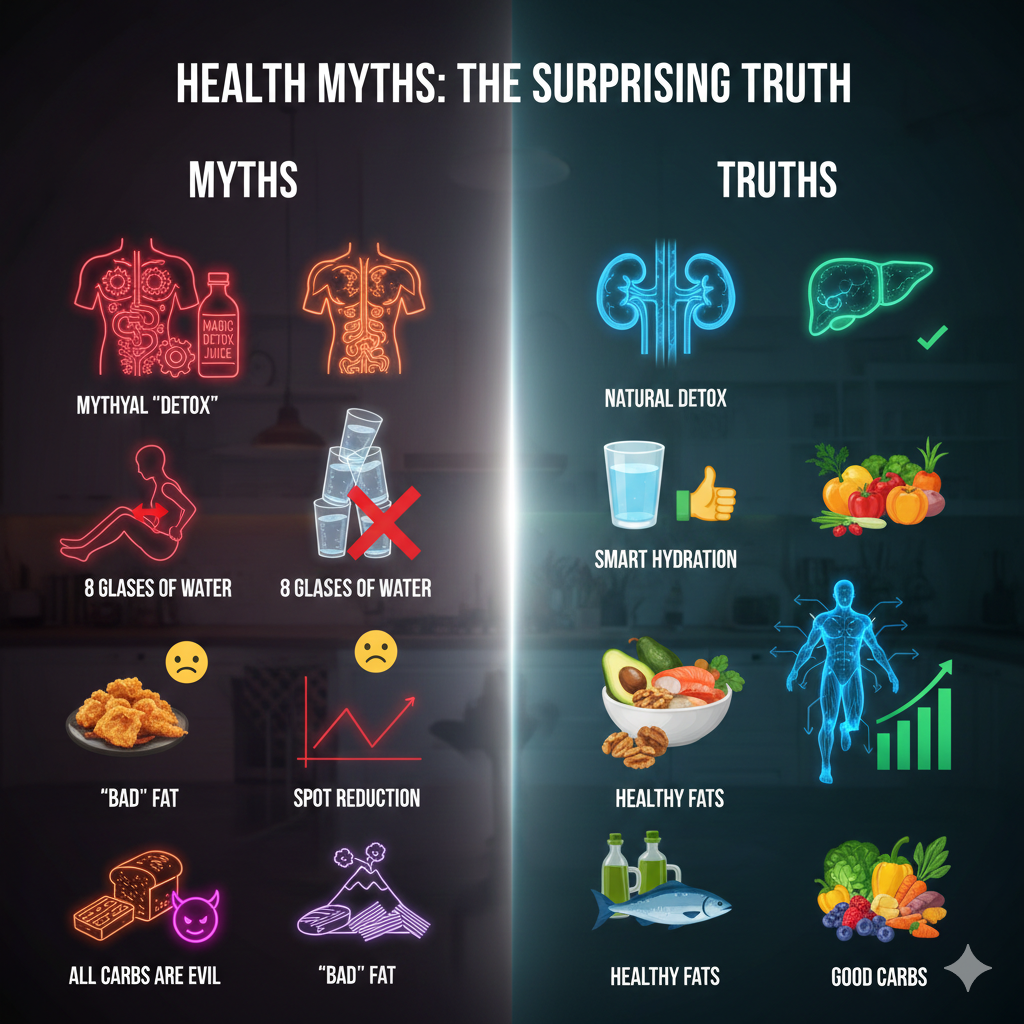
You don’t need special detox diets! Your liver and kidneys naturally eliminate toxins. Extreme cleanses can mess with your nutrition and may even do harm.
Myth 2: You must drink 8 glasses of water a day.
Hydration needs vary. Factors like age, activity, and climate matter more than hitting a set number. Listen to your thirst, and remember food also provides water.
Myth 3: Spot reduction burns fat in just one area.
Doing crunches won’t burn belly fat alone—targeted exercises strengthen specific muscles, but overall fat loss is a full-body process that comes with regular exercise and a healthy diet.
Myth 4: Eating fat makes you gain fat.
Not all fats are bad! Healthy fats are essential for your brain, heart, and hormones. The key is choosing the right kinds (like ghee, butter, olive oil, avocado, and fatty fish) and avoiding trans fats and excess processed foods.
Myth 5: All carbs are evil.
No need to avoid all carbs—just cut down on sugars and highly-refined grains. Fiber-rich, whole-food carbs (like veggies, beans, and berries) are actually good for your gut and energy.
Myth 6: Organic foods are always healthier.
Organic isn’t a guarantee of better nutrition. Sometimes it means fewer pesticide residues, but conventional foods can be just as healthy. Focus on a well-rounded, nutrient-dense diet overall.
Myth 7: Stretching before a workout prevents injury.
Static stretching before exercise doesn’t necessarily prevent injuries and might even reduce performance. Opt for a dynamic warm-up and do longer stretches after you’re done.
Myth 8: Supplements can make up for a poor diet.
Supplements fill gaps, but they can’t replace the full range of nutrients from whole foods. Aim for colorful, natural meals—use supplements if you’re deficient, not as your main nutrition source.
Myth 9: More sweat means a better workout.
Sweating is about cooling your body, not effort. You can have an excellent workout without drenching your clothes. Instead, focus on progress, strength, and how you feel.
Myth 10: More exercise is always better.
Working out every day without rest can backfire. Your body needs downtime to rebuild and avoid burnout. Rest days and recovery are just as vital as your toughest workouts.
Bottom line:
Don’t let myths guide your choices! Stick with what’s proven: a balanced diet, regular movement, enough sleep, and listening to your body. Smart, simple habits always win in the long run.