Low-carb diets are among the most trusted and popular strategies for weight loss—but how do they really work, and are they the right fit for you? Here’s a simple breakdown of low-carb eating, its benefits, and practical tips to help you start strong.
Why Try a Low-Carb Diet?
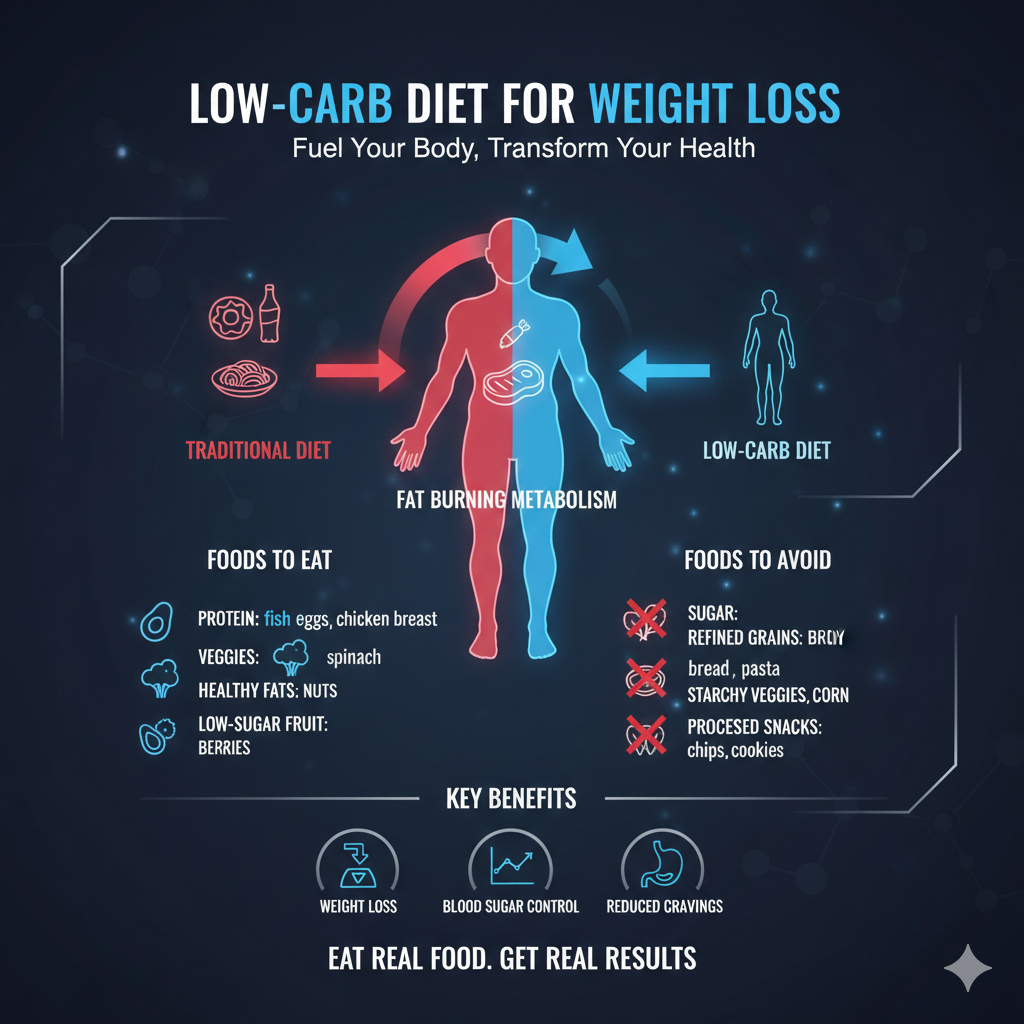
A low-carb diet works by cutting down your intake of sugars and starches and focusing on proteins and healthy fats. It’s not about starving or constant calorie counting—instead, it’s about changing how your body gets and uses energy.
Key benefits include:
Faster weight loss through increased fat burning
Better blood sugar control, especially for people with insulin resistance or diabetes
Simplicity—no need for tedious calorie tracking, just focus on real, satisfying foods
How Low-Carb Diets Work
By eating fewer carbs (typically 50–150 grams per day), your body first sheds water weight as it burns stored glycogen. Then it transitions to burning stored fat for fuel, leading to steady, sustained weight loss—usually 0.5 to 2 pounds per week.
Types of Low-Carb Diets
Keto: Under 10% of calories from carbs; aims for ketosis
Atkins: Start with 20g carbs, gradually increase
South Beach: Prioritizes lean protein and healthy fats
Paleo: Focuses on naturally low-carb, whole foods
Foods to Eat
Proteins: Chicken, beef, pork, fish, eggs
Non-starchy veggies: Spinach, broccoli, okra (lady finger), cauliflower
Low-sugar fruits: Berries
Healthy fats: Avocado, ghee, olive oil, nuts, seeds
Dairy: Cheese, full-fat yogurt, butter
Foods to Limit or Avoid
Sugar: Candy, soda, juice, ice cream
Refined grains: Bread, pasta, rice, crackers
Starchy veggies: Potato, sweet potato, corn, peas
Processed snacks or cereals
What to Expect: Results and Benefits
Short-Term:
Rapid water loss (first week)
Fat burning kicks in within 1–2 weeks
Long-Term:
Steady, lasting weight loss (1–2 pounds/week)
Reduced cravings as appetite hormones normalize
Lower risk for diabetes, metabolic syndrome, and heart disease
Side Effects & Risks
Fatigue & “Keto flu”: Tiredness, cramps, or irritability the first week
Potential nutrient gaps: Make sure to eat fibrous veggies, some fruit, and, if needed, consider a supplement
Digestive issues: Hydrate and eat more greens to avoid constipation
Tips for Eating Out
Choose grilled meat or fish as your main meal
Swap fries or bread for a side salad or extra veggies
Skip sugary drinks—opt for water or unsweetened tea
Managing Cravings and Side Effects
It’s normal to crave carbs at first. Stay hydrated, try a small portion of berries if you need sweetness, and persist—cravings will pass!
Exercise & Support
Pair your low-carb diet with light exercise like walking, swimming, or weight training for better and faster results. And connect with others—online or in person—for support!
FAQs
How quickly will I lose weight?
You’ll see water loss in 1–2 weeks and steady fat loss from week 2 onwards.
What foods should I avoid?
Sugary treats, refined grains, seed oils, and processed “low-carb” snacks with artificial ingredients.
Do I need to exercise?
Yes—movement accelerates weight loss and keeps you healthy.
Can I use protein shakes?
Absolutely! Choose those with whey, egg white, and collagen proteins. They’re filling, nutritious, and low in sugar. Look for shakes with natural, sugar-free sweeteners instead of artificial ones to stay in fat-burning mode.
Why not just cut calories?
Low-calorie diets often leave you hungry. A low-carb approach naturally reduces appetite so you eat less without feeling deprived.
The Bottom Line
A well-planned low-carb diet can help you lose weight, curb cravings, and improve your health—without the struggle of always counting calories. Focus on quality foods you actually enjoy, and remember: the best diet is the one you can stick to for the long term.