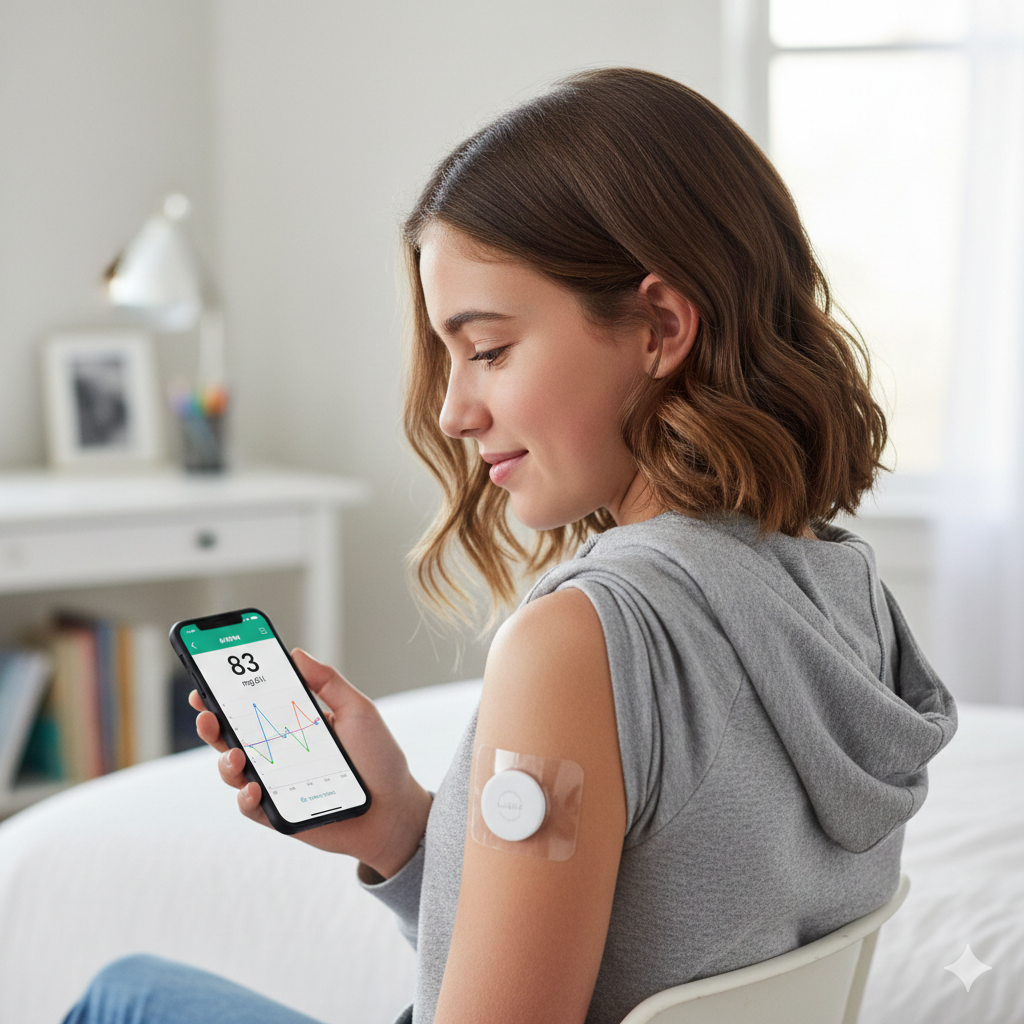
Continuous Glucose Monitors—once just for diabetics—are now a game-changer for anyone optimizing health. These tiny wearables track blood sugar 24/7, revealing how food, exercise, stress, and sleep truly affect your body. No more guessing—get data-driven insights for better energy, focus, and metabolic health.
What is a CGM?
A CGM features a small sensor inserted under the skin (arm or abdomen) that measures glucose in interstitial fluid. It wirelessly sends real-time data to your phone or receiver. Readings update every 5-15 minutes, showing trends, spikes, and stability.
Top Reasons to Start Wearing One
Personalize Your Diet
See exactly how foods hit your glucose—oatmeal might spike you more than ice cream. Tailor meals for steady energy and easier fat loss.
Optimize Workouts
Track how HIIT vs. walking affects glucose. Avoid crashes post-exercise; time carbs for peak performance and recovery.
Catch Issues Early
Spot prediabetes signals like frequent spikes or dawn phenomenon. Reactive hypoglycemia? CGM reveals patterns before doctors do.
Boost Mental Sharpness
Stable glucose = no brain fog. Identify crash triggers (stress, skipped protein) for sustained focus all day.
Fix Sleep Problems
Nighttime spikes from dinner carbs disrupt rest. CGM shows overnight trends, helping you eat for deep, restorative sleep.
Manage Stress Better
Cortisol spikes glucose—CGM quantifies it. Breathing breaks become targeted interventions.
Addressing Common Worries
Pain/Comfort: Insertion stings less than a finger prick. Worn discreetly; lasts 10-14 days.
Cost: $50-150/month, but cheaper models emerge. Health savings from prevented issues often offset it.
Privacy/Data: Apps encrypt readings; choose reputable brands compliant with health standards.
| Who Benefits Most | Key Win |
|---|
| Athletes | Performance timing |
| Weight loss seekers | Spike-free eating |
| Busy professionals | Fog-free focus |
| Type 1 Diabetic, Prediabetic family history | Early alerts |
Bottom Line
CGMs democratize metabolic insights—like a Fitbit for blood sugar. They turn “eat less, move more” into precise, personalized action. Not diabetic? Even better—prevent problems proactively.
References
- https://metabolichealth.com/exercise-and-metabolic-health/
- https://metabolichealth.com/sleep-how-to-optimize-it-for-metabolic-health/
- https://metabolichealth.com/stress-management-and-metabolic-health/


2 Responses