Calories look scientific.
In real bodies? They’re noisy, incomplete, and exhausting.
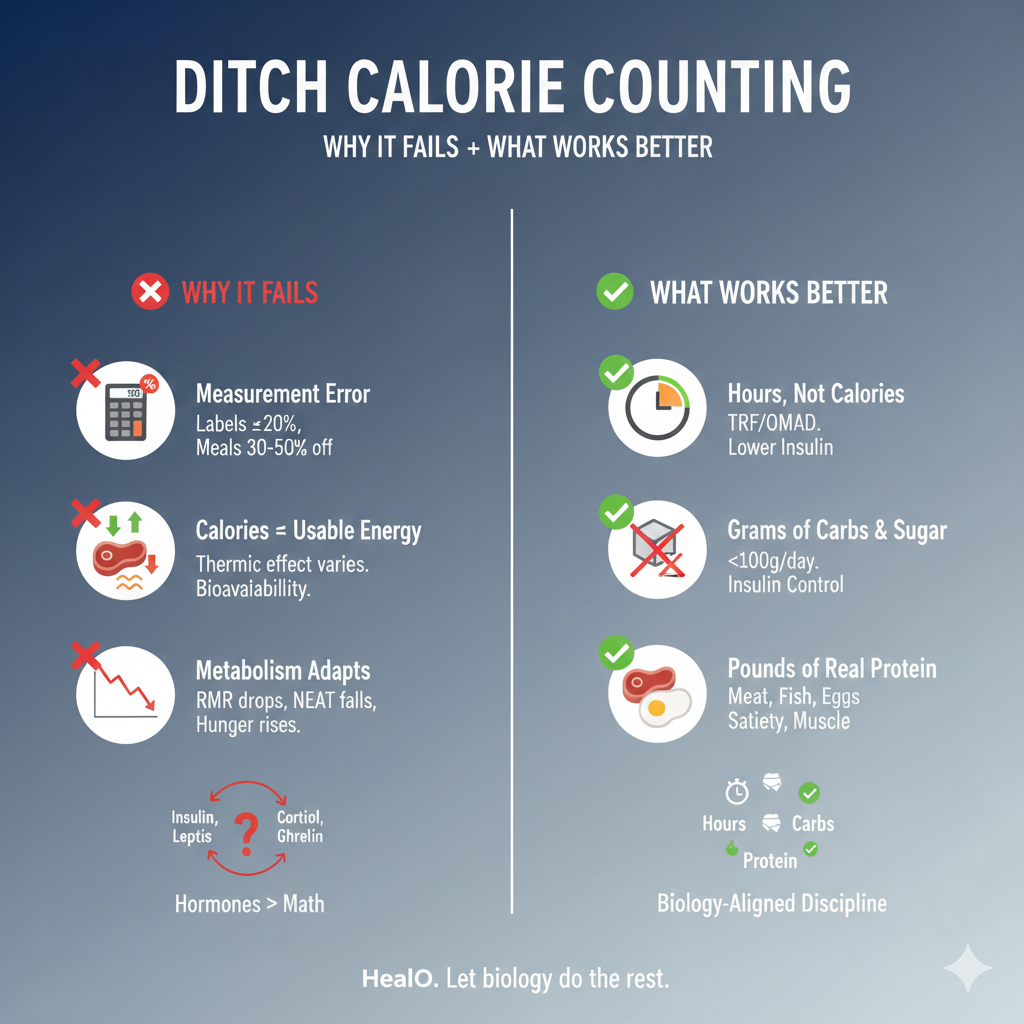
Why Calorie Counting Breaks Down
1. Measurement error is massive
Food labels: ±20% legally
Real meals/restaurants: 30–50% off
Even dietitians miss by 10–20%
You can’t win a math game with broken numbers.
2. Calories ≠ usable energy
Same calories, wildly different outcomes:
Protein → high thermic effect (20–30% burned)
Carbs → variable absorption
Fat → near-total storage efficiency
Labels ignore bioavailability.
3. Your metabolism adapts
Chronic deficit →
So the same calories stop working over time.
4. Hormones > math
Insulin, cortisol, leptin, ghrelin decide fate.
Calories don’t tell you:
The Better Bets (Low-Friction, High Return)
1. Hours, not calories
2. Grams of carbs & sugar
3. Pounds of real protein
You’ll stop eating naturally.
Why This Works Better
Instead of asking:
“How much can I eat?”
You ask:
When do I eat?
What spikes insulin?
What shuts hunger down?
That’s biology-aligned discipline.
The Mental Upgrade
Calorie counting:
Drains willpower
Obsessive
Unsustainable
Macro + timing focus:
Fewer decisions
Predictable hunger
Long-term compliance
Free the brain. Fix the body.
Bottom Line
Calories are a physics concept.
Fat loss is a hormonal process.
So redirect effort:
Let biology do the rest.

One Response