If you’re searching for a simple, sustainable way to get active and trim down, walking just might be your golden ticket. It’s easy, virtually free, and comes with a ton of health perks. But does walking one hour a day actually help you lose weight? Let’s break it down.
Is Walking Alone Enough for Weight Loss?
Absolutely—but it’s most effective with healthy eating.
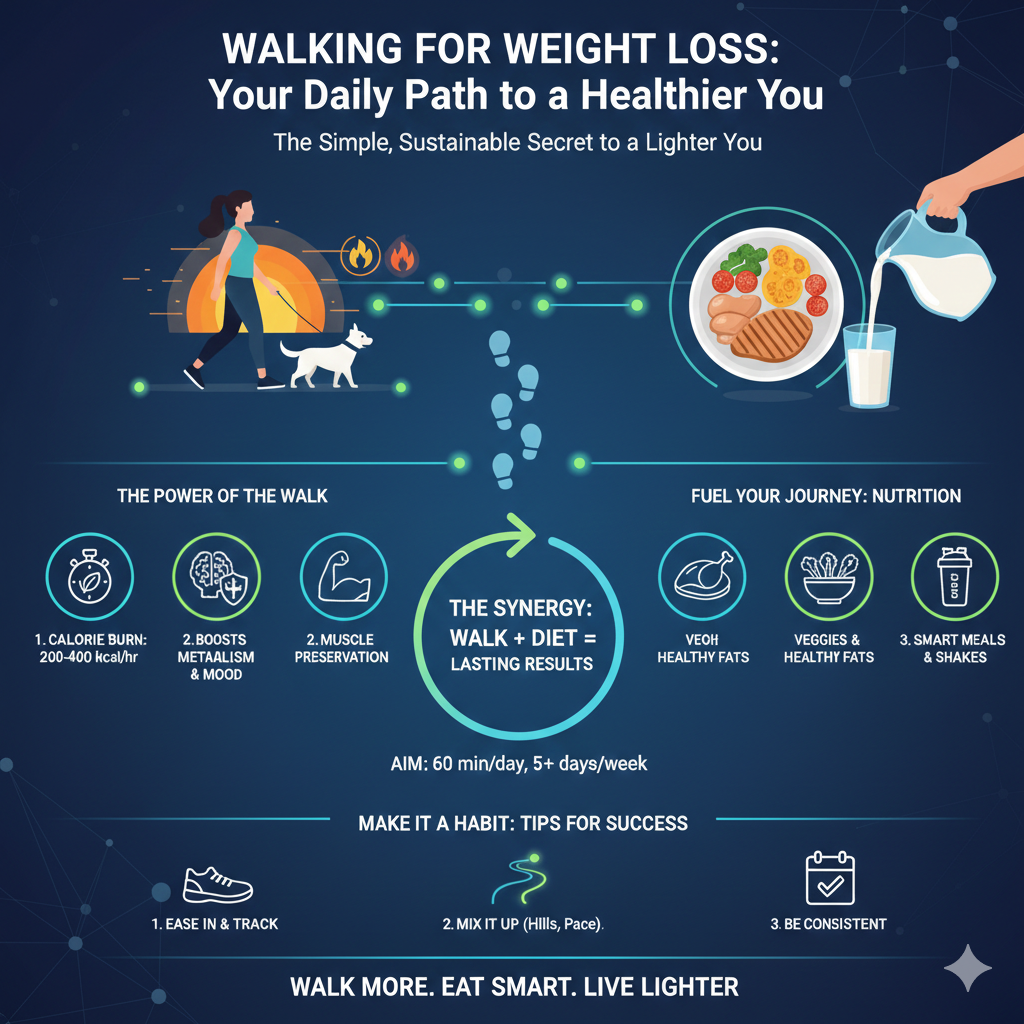
Walking burns calories (typically 200–400 in an hour, depending on your pace and size) and boosts insulin sensitivity. However, for real, sustained weight loss, you need to burn more calories than you take in—a calorie deficit. Walking helps create that deficit while preserving muscle and metabolism.
The Magic of Combining Diet and Exercise
Pair your daily walk with a balanced, higher-protein diet to:
Improve satiety (feel fuller, longer)
Preserve lean muscle (so you burn more calories, even at rest)
Reduce hunger and cravings
Support steady blood sugar (minimize spikes and crashes)
Bonus: Nutritious meals—including convenient, protein-rich shakes—can power your walks and recovery.
Five Major Benefits of Walking Plus Healthy Diet
Enhanced Weight Loss: Synergy between calorie burn and calorie control
Muscle Preservation: Exercise + protein keeps metabolism higher
Better Metabolism: Blunts blood sugar spikes, raises daily energy burn
Improved Health Markers: Lowers blood pressure, bad cholesterol, diabetes risk
Steadier Energy: Fewer slumps, more daily focus and movement
How Much Walking is Enough?
U.S. Health Guidelines: 150 min/week moderate or 75 min/week vigorous activity
For Weight Loss: Aim for 300+ min/week = about 1 hour/day, 5 days/week
Start Smart: Tips for Success
Ease in: Start with 20–30 min, build up to an hour
Track it: Use a pedometer, fitness app, or journal
Mix it up: Try new routes, walks with friends, intervals, or hills
Stay fueled: Eat enough protein, veggies, healthy fats
How Walking Targets Belly Fat
Brisk, consistent walking helps your body burn stored fat—including visceral (belly) fat linked to heart disease and diabetes. It also preserves muscle mass, which keeps your metabolism humming.
Make Walking a Habitable Routine
Break it up: Two 30-min sessions morning and night, or shorter walks after meals (aids blood sugar control)
Build it in: Walk to do errands, take stairs, stretch your break with a stroll
Make it fun: Listen to music or podcasts, walk with a buddy, track your progress
How to Burn Even More Calories Walking
Change pace: Alternate brisk walking with moderate (intervals)
Incline it: Walk hills or use a treadmill incline
Add resistance: Try a light weighted vest or hand weights
FAQ
Can walking help lose belly fat?
Yes, consistent aerobic exercise targets visceral fat, especially with a calorie-controlled diet.
How long to see results?
With daily walks and portion control, expect to see differences in 2–4 weeks.
Is walking better than running?
It’s gentler on joints and more sustainable for most; both work, but walking is more consistent for many.
Conclusion
Walking an hour a day is a proven, gentle way to lose weight, improve health, and feel great. Combine it with smart nutrition and small lifestyle tweaks, and you’ll set yourself up for lasting results. No fad diets, no extreme workouts—just step out, stay consistent, and your healthier body will thank you!