Joint pain—whether from arthritis, injury, or daily wear and tear—can be debilitating. While medications and physical therapy have their place, often-overlooked dietary changes can be just as powerful for providing relief. In particular, low-carb and ketogenic diets are now in the spotlight for their anti-inflammatory benefits.


Diet and Joint Pain: What’s the Connection?

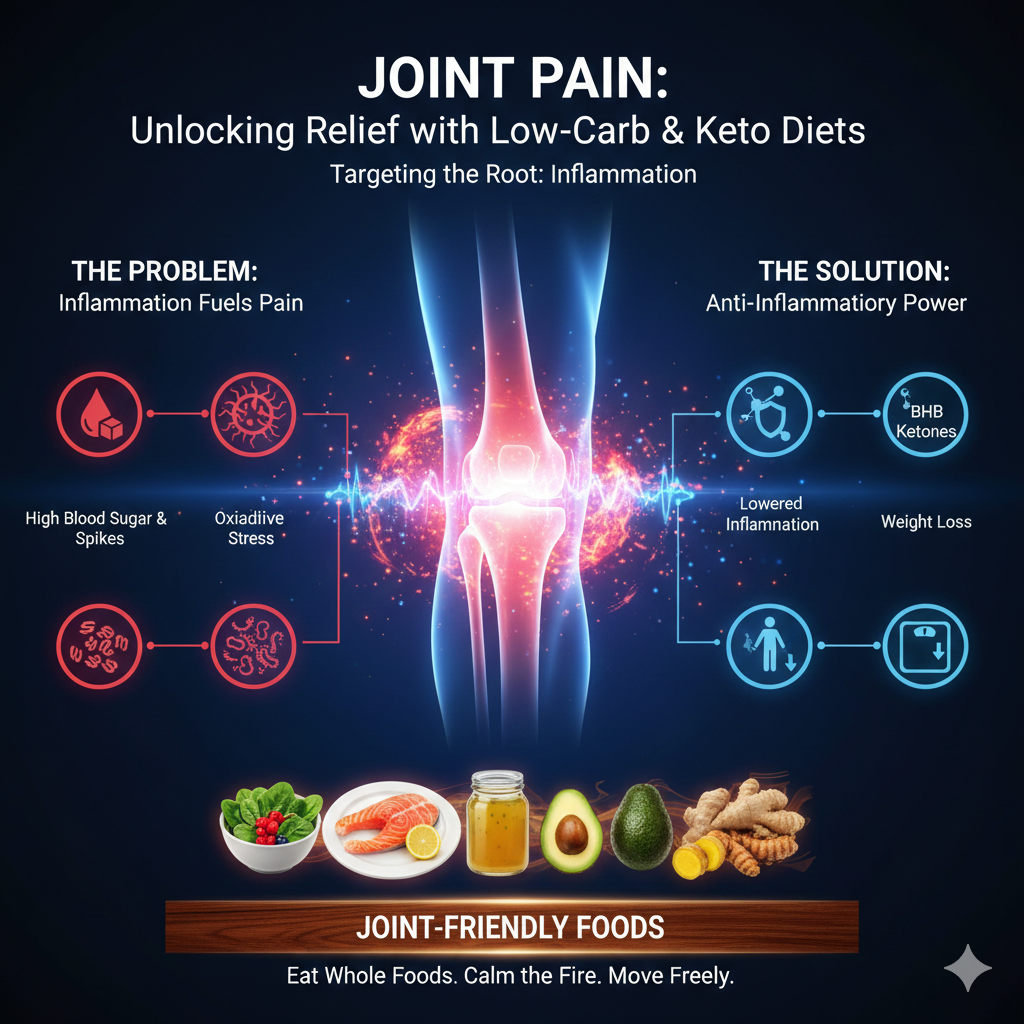
Most joint pain is driven by inflammation—whether from osteoarthritis, rheumatoid arthritis, or aging joints. The foods you eat can either fuel more inflammation or help put out the “fire.”

The typical Western diet—packed with processed carbohydrates, sugar, and unhealthy fats—spikes blood sugar, increases body fat, and triggers inflammatory chemicals (cytokines) that worsen joint pain and stiffness.

On the other hand, anti-inflammatory diets that prioritize nutrient-dense, unprocessed foods can reduce pain, improve flexibility, and even slow joint degeneration.


Why Low-Carb/Keto Diets Reduce Joint Inflammation

  • Lowered Inflammation:
    Cutting carbs reduces blood sugar spikes and insulin surges, both of which drive inflammation. Ketones (especially BHB) block proteins called “inflammasomes”—key players in chronic inflammation—offering direct joint-soothing effects.

  • Reduced Oxidative Stress:
    By minimizing processed carbs and bad fats, low-carb diets also lower oxidative stress on joint tissues, protecting them from long-term damage.

  • Weight Loss:
    Every lost pound means up to four pounds less pressure on your knees. Even modest weight reduction can ease pain and restore mobility.

  • Better Gut Health:
    A balanced microbiome keeps systemic inflammation in check. Low-carb/keto eating supports “good” bacteria by lowering sugar and processed grain intake and boosting fibrous veggies and healthy fats.


Best Joint-Friendly Foods for Low-Carb & Keto

  • Fatty Fish (salmon, mackerel, sardines): Rich in omega-3s that block inflammation.

  • Olive Oil: High in oleocanthal; works much like NSAIDs to reduce swelling.

  • Avocados: Loaded with healthy fats and antioxidants.

  • Green Leafy Veggies: Spinach, kale, swiss chard—low in carbs, high in vitamins and minerals.

  • Bone Broth: Packed with collagen, glucosamine, and chondroitin—key for cartilage.

  • Berries: Loaded with antioxidants and vitamin C, which supports collagen repair.

  • Eggs: A nutrient powerhouse, providing vitamin D and choline.

  • Turmeric, Ginger, Rosemary: Use these for their proven anti-inflammatory kick.

  • Cruciferous Veggies: Cabbage, broccoli, cauliflower; great for fiber and inflammation fighters.


Foods to Avoid

  • Refined carbs (white bread, pastries, etc.)

  • Sugary drinks (soda, juice)

  • Processed seed oils (soybean, corn, canola)

  • Alcohol (limit or avoid)

These drive inflammation and can worsen joint pain and stiffness.


Take-Home Tips

  • Simple swaps—like berries instead of cookies, olive oil instead of seed oil, and fish instead of processed meats—can yield big joint benefits.

  • Stay consistent: Anti-inflammatory changes build over time. Pair your new diet with regular movement and hydration.

  • Consult your doctor before dramatic diet changes, especially if you have underlying health conditions.


Conclusion

Eating well isn’t just about weight or energy—it can change your joints for the better. A low-carb, anti-inflammatory approach soothes pain, calms swelling, and protects your joints for the long term. Start with a few swaps, see how your body responds, and enjoy more flexible, pain-free movement—one bite at a time!


References:
  • Pinto, A., Bonucci, A., Maggi, E., Corsi, M., & Businaro, R. (2018). Anti-Oxidant and Anti-Inflammatory Activity of Ketogenic Diet: New Perspectives for Neuroprotection in Alzheimer’s Disease. Antioxidants7(5). https://doi.org/10.3390/antiox7050063
  • Schönenberger, K. A., Schüpfer, A. C., Gloy, V. L., Hasler, P., Stanga, Z., Kaegi-Braun, N., & Reber, E. (2021). Effect of Anti-Inflammatory Diets on Pain in Rheumatoid Arthritis: A Systematic Review and Meta-Analysis. Nutrients13(12), 4221. https://doi.org/10.3390/nu13124221
  • Goldberg, R. J., & Katz, J. (2007). A meta-analysis of the analgesic effects of omega-3 polyunsaturated fatty acid supplementation for inflammatory joint pain. Pain129(1-2), 210–223. https://doi.org/10.1016/j.pain.2007.01.020
  • Raad, T., Griffin, A., George, E. S., Larkin, L., Fraser, A., Kennedy, N., & Tierney, A. C. (2021). Dietary Interventions with or without Omega-3 Supplementation for the Management of Rheumatoid Arthritis: A Systematic Review. Nutrients13(10), 3506. https://doi.org/10.3390/nu13103506
  • Jalili, M., Kolahi, S., Aref-Hosseini, R., Mamegani, M. E., & Hekmatdoost, A. (2014). Beneficial Role of Antioxidants on Clinical Outcomes and Erythrocyte Antioxidant Parameters in Rheumatoid Arthritis Patients. International Journal of Preventive Medicine5(7), 835-840. https://www.ncbi.nlm.nih.gov/pmc/articles/PMC4124560/
  • Panche, A. N., Diwan, A. D., & Chandra, S. R. (2016). Flavonoids: An overview. Journal of Nutritional Science5https://doi.org/10.1017/jns.2016.41
  • Kunnumakkara, A. B., Sailo, B. L., Banik, K., Harsha, C., Prasad, S., Gupta, S. C., Bharti, A. C., & Aggarwal, B. B. (2018). Chronic diseases, inflammation, and spices: How are they linked? Journal of Translational Medicine16https://doi.org/10.1186/s12967-018-1381-2
  • Bustamante, M. F., Agustín-Perez, M., Cedola, F., Coras, R., Narasimhan, R., Golshan, S., & Guma, M. (2020). Design of an anti-inflammatory diet (ITIS diet) for patients with rheumatoid arthritis. Contemporary Clinical Trials Communications17https://doi.org/10.1016/j.conctc.2020.100524
  • Alkadi H. (2020). A Review on Free Radicals and Antioxidants. Infectious disorders drug targets20(1), 16–26. https://doi.org/10.2174/1871526518666180628124323
  • Landry, M. J., Crimarco, A., & Gardner, C. D. (2021). Benefits of Low Carbohydrate Diets: A Settled Question or Still Controversial? Current Obesity Reports10(3), 409. https://doi.org/10.1007/s13679-021-00451-z
  • Della Corte, K. W., Perrar, I., Penczynski, K. J., Schwingshackl, L., Herder, C., & Buyken, A. E. (2018). Effect of Dietary Sugar Intake on Biomarkers of Subclinical Inflammation: A Systematic Review and Meta-Analysis of Intervention Studies. Nutrients10(5). https://doi.org/10.3390/nu10050606
  • Mackus, M., Kwon, O., Krishnakumar, I. M., Garssen, J., Kraneveld, A. D., Scholey, A., & Verster, J. C. (2020). The Inflammatory Response to Alcohol Consumption and Its Role in the Pathology of Alcohol Hangover. Journal of Clinical Medicine9(7). https://doi.org/10.3390/jcm9072081
  • Schönenberger, K. A., Schüpfer, C., Gloy, V. L., Hasler, P., Stanga, Z., Kaegi-Braun, N., & Reber, E. (2021). Effect of Anti-Inflammatory Diets on Pain in Rheumatoid Arthritis: A Systematic Review and Meta-Analysis. Nutrients13(12). https://doi.org/10.3390/nu13124221
  • Hart, M. J., Torres, S. J., McNaughton, S. A., & Milte, C. M. (2021). Dietary patterns and associations with biomarkers of inflammation in adults: A systematic review of observational studies. Nutrition Journal20. https://doi.org/10.1186/s12937-021-00674-9