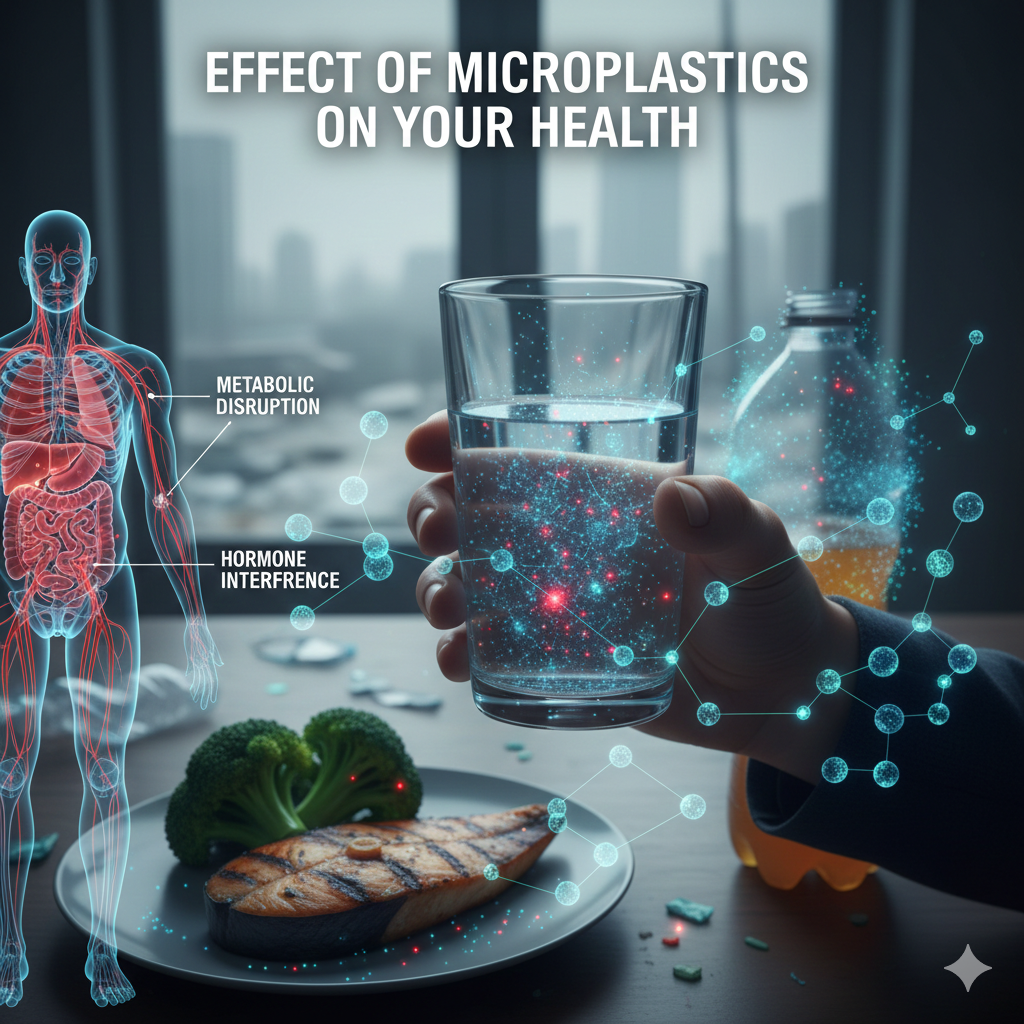
Microplastics have become one of the most pervasive environmental threats of our era. These tiny plastic fragments, barely visible to the naked eye, are everywhere—oceans, soil, the food we eat, and the water we drink. But how do they affect our health, and what can we do to protect ourselves?
What Are Microplastics?
Microplastics are plastic particles smaller than 5 millimeters, classified as:
Primary microplastics: Intentionally manufactured small (like microbeads in scrubs and toothpastes).
Secondary microplastics: Result from the breakdown of larger plastics—bottles, bags, nets—due to sun, wind, and water.
Where Are Microplastics Found?
Everywhere: Detected in soils, air, water, and even Arctic ice.
Ocean and Waterways: The largest reservoirs—microplastics are ingested by marine life and enter the human food chain.
Food and Drink: Seafood, salt, honey, bottled and tap water—even the air we breathe—contain microplastics.
A single meal of mussels can contain up to 90 microplastic particles.
Plastic pollution is so immense, some scientists now refer to our era as the “Plasticene.”
How Microplastics Affect Your Health
Microplastics and the chemicals they carry pose risks at multiple levels:
1. Physical Accumulation
Particles can enter the bloodstream and may settle in organs like the liver, kidneys, and brain.
2. Metabolic Health & Hormones
Endocrine Disruptors: Plastics often contain BPA and phthalates—known disruptors of hormonal regulation.
Impacts: Animal and human studies show these chemicals interfere with insulin function, encourage insulin resistance, and raise the risk of type 2 diabetes.[9-11]
Inflammatory Effects: Microplastics drive chronic inflammation, a key component in metabolic syndrome.
3. Additive Toxicity
Microplastics can leach compounds such as phthalates, heavy metals, and BPA into our bodies, which:
Interfere with hormones
Disrupt fat storage and glucose metabolism
Promote obesity and metabolic syndrome[12-14]
4. Other Health Concerns
Reproductive disruption
Effects on brain and nerve function
Accumulation of toxins with possible immune suppression
How to Reduce Microplastic Exposure
Elimination isn’t feasible, but you can lower your risk:
Ditch Single-Use Plastics: Choose reusable glass, stainless steel, or ceramic for storage.
Filter Drinking Water: High-quality activated carbon filters can reduce microplastics.
Limit Certain Seafood: Stick to wild-caught fish (like salmon, sardines) that are lower on the food chain.
Ventilate Indoors: Use HEPA filters in vacuums and purifiers; ventilate homes to minimize inhaled particles.
Read Product Labels: Skip personal care products with microbeads or glitter.
Choose Whole Foods: Reduce processed food intake (often higher in microplastics due to packaging and manufacturing).
Helping the Body Manage Microplastic Burden
Increase Fiber Intake: Berries, leafy greens, and veggies support gut clearance of toxins and microplastics.
Boost Antioxidants: Foods high in antioxidants (like nuts and greens) help battle inflammation and oxidative stress.
Stay Hydrated: Water supports kidney and liver health for detoxification.
Exercise Regularly: Aids lymphatic flow, helping your body flush toxins.
The Bottom Line
Microplastics are an urgent environmental and health challenge—linked to metabolic disturbances, hormone disruption, obesity, and chronic disease. While they’re nearly impossible to avoid completely, controlling your exposure and supporting your body’s detox systems can meaningfully reduce long-term risks.
Small, consistent lifestyle changes—including swapping single-use plastics for safer alternatives, eating whole foods, filtering water, and maintaining gut and metabolic health—can help you thrive in a plastic-filled world.
References:
- Thompson, R. C., et al. (2004). Lost at sea: where is all the plastic? Science, 304(5672), 838.
- Bergmann, M., et al. (2017). High quantities of microplastic in Arctic deep-sea sediments from the HAUSGARTEN observatory. Environmental Science & Technology, 51(19), 11000-11010.
- Cole, M., et al. (2013). Microplastic ingestion by zooplankton. Environmental Science & Technology, 47(12), 6646-6655.
- Liebezeit, G., & Liebezeit, E. (2013). Non-pollen particulates in honey and sugar. Food Additives & Contaminants: Part A, 30(12), 2136-2140.
- Van Cauwenberghe, L., & Janssen, C. R. (2014). Microplastics in bivalves cultured for human consumption. Environmental Pollution, 193, 65-70.
- Geyer, R., Jambeck, J. R., & Law, K. L. (2017). Production, use, and fate of all plastics ever made. Science Advances, 3(7), e1700782.
- Zalasiewicz, J., et al. (2016). The geological cycle of plastics and their use as a stratigraphic indicator of the Anthropocene. Anthropocene, 13, 4-17.
- Wright, S. L., & Kelly, F. J. (2017). Plastic and human health: A micro issue? Environmental Science & Technology, 51(12), 6634-6647.
- Hou, B., et al. (2021). Metabolic effects of microplastics and potential implications on human health. Environmental International, 151, 106439.
- Lu, L., et al. (2018). Interaction of microplastics and microorganisms: ecological consequences and potential effects on soil carbon cycling. Science of the Total Environment, 634, 1435-1441.
- Rochester, J. R. (2013). Bisphenol A and human health: A review of the literature. Reproductive Toxicology, 42, 132-155.
- Teuten, E. L., et al. (2009). Transport and release of chemicals from plastics to the environment and to wildlife. Philosophical Transactions of the Royal Society B: Biological Sciences, 364(1526), 2027-2045.
- Trasande, L. (2017). Exploring the health effects of endocrine disruptors in the context of metabolic disorders. Nature Reviews Endocrinology, 13(1), 53-60.
- Alonso-Magdalena, P., et al. (2011). Bisphenol A exposure during pregnancy disrupts glucose homeostasis in mothers and adult male offspring. Environmental Health Perspectives, 119(4), 447-452.
- Schymanski, D., et al. (2018). Analysis of microplastics in water by micro-Raman spectroscopy: Release of plastic particles from different packaging. Water Research, 129, 154-162.
- Kosuth, M., et al. (2018). Anthropogenic contamination of tap water, beer, and sea salt. PLOS ONE, 13(4), e0194970.
- Dris, R., et al. (2017). A first overview of textile fibers, including microplastics, in indoor and outdoor environments. Environmental Pollution, 221, 453-458.
- Alomar, C., et al. (2016). Microplastic ingestion by Mullus surmuletus from the W Mediterranean and implications for human health. Marine Pollution Bulletin, 102(1), 124-127.
- Li, J., et al. (2020). The impact of microplastic pollution on individual and population health and mitigation strategies. Journal of Hazardous Materials, 390, 121698.
- Verbeke, F., et al. (2018). Impact of microplastics on gut microbiota and immune system of mammals: A preliminary review. Environmental International, 124, 98-104.
- Smith, M., et al. (2018). Microplastics in seafood and the implications for human health. Current Environmental Health Reports, 5(3), 375-386.
- Bhattacharya, P., et al. (2020). The impact of physical exercise on microplastic exposure and human health. Journal of Environmental Health Science and Engineering, 18(2), 601-610.