Cholesterol has long been in the crosshairs of dietary debate. Once condemned as a dietary villain and a key player in heart disease, cholesterol’s reputation is undergoing a significant transformation. Thanks to new research, we now recognize cholesterol’s indispensable roles in the body and the complexity behind its health effects.
The Importance of Cholesterol
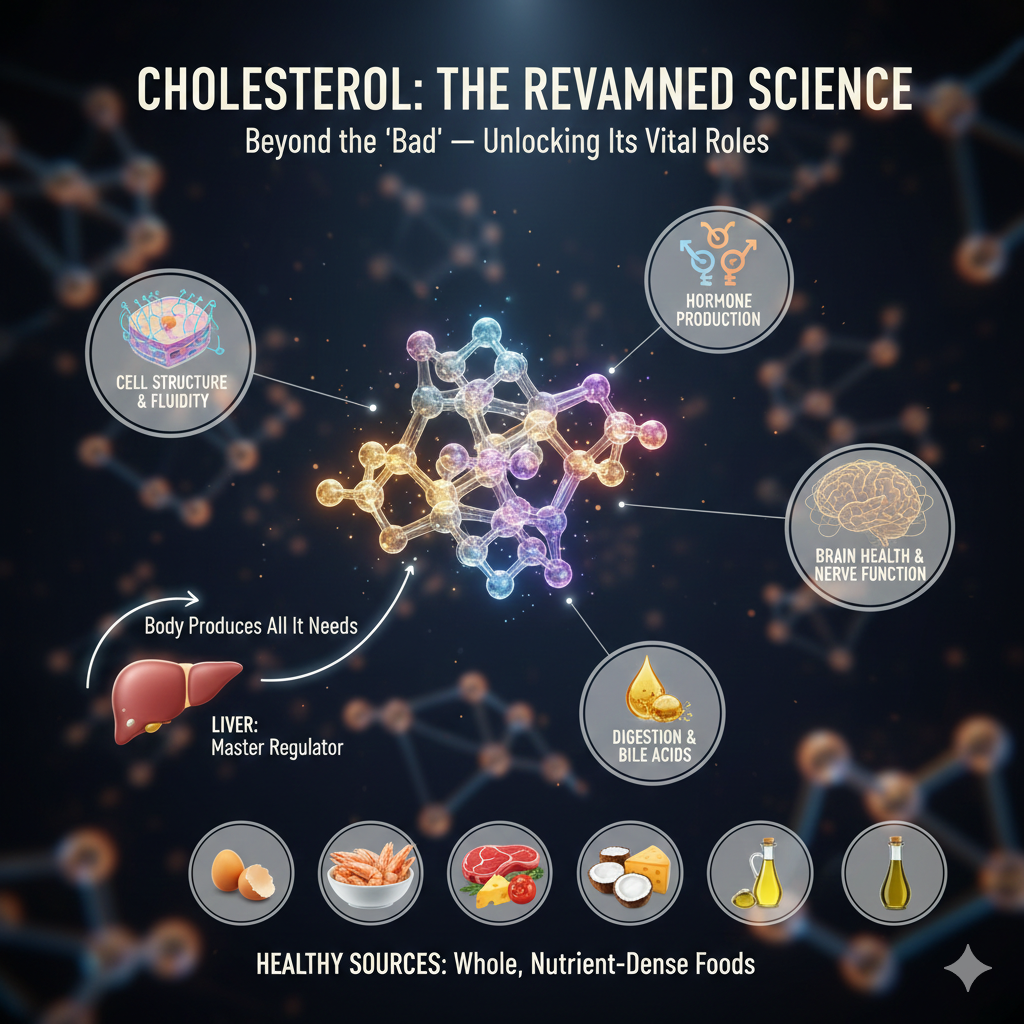
Cell Structure: Cholesterol is vital for the fluidity and strength of cell membranes throughout your body.
Hormone Production: It serves as a precursor to steroid hormones (e.g., estrogen, testosterone, cortisol) that regulate everything from metabolism and stress to reproductive function.
Digestion: Cholesterol is needed for bile acid synthesis, supporting the digestion and absorption of dietary fats.
Where Does Cholesterol Come From?
Your body can produce all the cholesterol it needs, with the liver as the key player. It balances cholesterol by making more when you eat less, and slowing production when dietary intake increases—showing just how adaptable cholesterol metabolism truly is.
Debunking Misconceptions:
1. Dietary Cholesterol ≠ Blood Cholesterol for Most
For decades, it was believed eating cholesterol would directly raise blood cholesterol and heart disease risk. But most people experience only minor increases (if any) in blood cholesterol from their diet, thanks to the body’s feedback mechanisms.
2. Cholesterol and Heart Disease
Large-scale studies and recent meta-analyses show no significant association between dietary cholesterol and heart disease in healthy individuals. The focus now is on cholesterol subtypes—LDL (“bad”), HDL (“good”)—and their roles in cardiovascular health.
3. Rethinking Saturated Fat
Not all saturated fats are bad. Evidence now highlights that saturated fats from whole-food sources like dairy or coconut oil may not carry the same risks as those in fast food or processed snacks. Recommendations to limit all saturated fat are increasingly being reconsidered.
Why You Need Cholesterol
Hormone Balance: Cholesterol is essential for making the hormones that keep your body running smoothly.
Brain Function: Your brain is the most cholesterol-dense organ in the body—crucial for myelin and nerve communication. Inadequate cholesterol can impair memory, mood, and cognition.
Cell Integrity & Nutrient Absorption: Cholesterol helps cells communicate and supports the absorption of fat-soluble vitamins like A, D, E, K.
What Are the Healthiest Sources?
Prioritize whole, nutrient-dense foods:
Eggs: High in cholesterol and choline, vital for brain health.
Shellfish: Nutrient-rich and packed with essential minerals.
Organ Meats: Dense in vitamins A, B12, iron, and zinc.
Full-fat Dairy: Cheese, yogurt, butter for calcium and healthy fat.
Red Meat: Minerals, vitamins, amino acids, and healthy animal fats.
Coconut Oil: Rich in MCTs, a unique saturated fat with proven metabolic benefits.
Conclusion
Our understanding of cholesterol has evolved: it’s no longer the dietary enemy it was once made out to be. In most people, eating cholesterol has a minimal impact on blood cholesterol—and both cholesterol and many saturated fats are essential for robust health. The real goal? Focus on whole, minimally processed foods and a varied, balanced diet. As science advances, it’s crucial to adapt our beliefs and dietary guidelines to reflect what truly supports long-term health.
References
- Nelson, D. L., & Cox, M. M. (2008). Lehninger Principles of Biochemistry. W.H. Freeman.
- Russell, D. W. (2003). The enzymes, regulation, and genetics of bile acid synthesis. Annual Review of Biochemistry, 72, 137-174.
- Goldstein, J. L., & Brown, M. S. (1990). Regulation of the mevalonate pathway. Nature, 343(6257), 425-430.
- Dietschy, J. M., & Turley, S. D. (2001). Cholesterol metabolism in the brain. Current Opinion in Lipidology, 12(2), 105-112.
- Fernandez, M. L. (2012). Dietary cholesterol provided by eggs and plasma lipoproteins in healthy populations. Current Opinion in Clinical Nutrition and Metabolic Care, 15(1), 80-86.
- Berger, S., Raman, G., Vishwanathan, R., Jacques, P. F., & Johnson, E. J. (2015). Dietary cholesterol and cardiovascular disease: a systematic review and meta-analysis. The American Journal of Clinical Nutrition, 102(2), 276-294.
- https://www.jacc.org/doi/full/10.1016/j.jacc.2020.05.077
- Mensink, R. P., Zock, P. L., Kester, A. D., & Katan, M. B. (2003). Effects of dietary fatty acids and carbohydrates on the ratio of serum total to HDL cholesterol and on serum lipids and apolipoproteins: a meta-analysis of 60 controlled trials. The American Journal of Clinical Nutrition, 77(5), 1146-1155.
- Brown, M. S., & Goldstein, J. L. (1986). A receptor-mediated pathway for cholesterol homeostasis. Science, 232(4746), 34-47.
- Dietschy, J. M., & Turley, S. D. (2004). Thematic review series: brain Lipids. Cholesterol metabolism in the central nervous system during early development and in the mature animal. Journal of Lipid Research, 45(8), 1375-1397.
- Simons, K., & Vaz, W. L. (2004). Model systems, lipid rafts, and cell membranes. Annual Review of Biophysics and Biomolecular Structure, 33, 269-295.
- Heaney, R. P. (2003). Long-latency deficiency disease: insights from calcium and vitamin D. The American Journal of Clinical Nutrition, 78(5), 912-919.
- Zeisel, S. H., & da Costa, K. A. (2009). Choline: an essential nutrient for public health. Nutrition Reviews, 67(11), 615-623.
- Mozaffarian, D., & Rimm, E. B. (2006). Fish intake, contaminants, and human health: evaluating the risks and the benefits. JAMA, 296(15), 1885-1899.
- Higdon, J. V., Delage, B., Williams, D. E., & Dashwood, R. H. (2007). Cruciferous vegetables and human cancer risk: epidemiologic evidence and mechanistic basis. Pharmacological Research, 55(3), 224-236.
- Thorning, T. K., Bertram, H. C., Bonjour, J. P., de Groot, L., Dupont, D., Feeney, E., … & Givens, I. (2017). Whole dairy matrix or single nutrients in assessment of health effects: current evidence and knowledge gaps. The American Journal of Clinical Nutrition, 105(5), 1033-1045.
- Nagao, K., & Yanagita, T. (2010). Medium-chain fatty acids: functional lipids for the prevention and treatment of the metabolic syndrome. Pharmacological Research, 61(3), 208-212.