
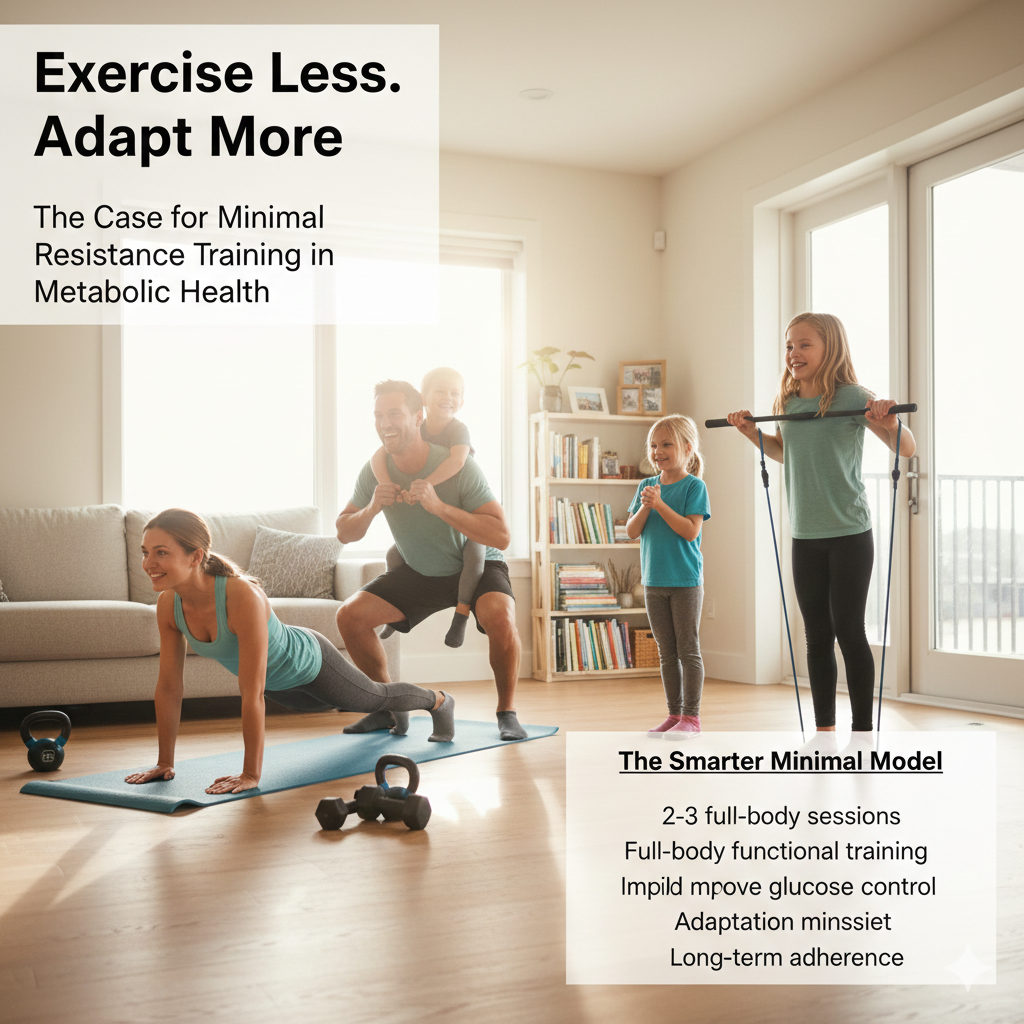
The Case for Minimal Resistance Training in Metabolic Health
Modern fitness culture sells intensity.
More sessions.
More sweat.
More calories burned.
More exhaustion.
But for fat loss, insulin resistance, and long-term metabolic health?
More is not always better.
Especially if you’re already eating low-carb or managing blood sugar.
The Exercise Myth That Backfires
Athletes
Bodybuilders
Endurance competitors
But most people are not training for sport.
They’re trying to:
Lose fat
Improve insulin sensitivity
Build resilience
Protect joints
Stay consistent
High-volume cardio can:
Elevate hunger hormones
Increase fatigue
Raise cortisol when excessive
Lead to compensatory eating
Yes, exercise burns calories.
But appetite compensation is real.
When activity becomes extreme, the body often increases hunger to defend energy balance.
For some people, especially those reducing carbs, too much volume can feel like chronic stress.
Activity vs. Exercise
Walking.
Playing with your children.
Gardening.
Taking the stairs.
That’s activity.
Structured exercise is different.
It’s intentional overload designed to stimulate adaptation — not exhaustion.
And for metabolic health, strength adaptation matters more than calorie burn.
The Minimal Effective Dose
Two to three full-body resistance sessions per week
(20–35 minutes each)
Can significantly improve:
Insulin sensitivity
Muscle mass retention
Resting metabolic rate
Glucose disposal capacity
Functional strength
That’s roughly 60–90 minutes per week.
Not 10 hours.
Not daily HIIT.
Not marathon prep.
Just focused effort.
Why Strength Training Works for Metabolism
Muscle is your largest glucose disposal organ.
When you increase muscle stimulus:
GLUT4 activity improves
Insulin sensitivity increases
Post-meal glucose control improves
Basal metabolic rate is better preserved during fat loss
Resistance training also improves satiety regulation compared to excessive steady-state cardio.
You build.
You stabilize.
You don’t trigger rebound hunger the same way high-volume cardio sometimes can.
A Simple Full-Body Framework
Twice per week:
Session Structure (25–30 minutes)
Squat pattern (bodyweight or loaded)
Push pattern (push-ups or presses)
Pull pattern (rows or band pulls)
Hip hinge (deadlift pattern or bridges)
Core stability (planks or carries)
2–3 sets each
Moderate-to-high effort
Controlled tempo
No machines required.
No gym membership required.
Consistency > intensity.
For Fat Loss & Low-Carb Living
When paired with:
Adequate protein
Whole-food fats
Controlled carbohydrate intake
Proper sleep
Minimal resistance training helps:
Preserve lean mass
Prevent metabolic slowdown
Reduce muscle loss during dieting
Improve appetite regulation
Excessive exercise can sometimes:
Increase cravings
Reduce recovery
Undermine consistency
The goal is adaptation, not exhaustion.
For Diabetes Management
Strength training improves:
Insulin receptor sensitivity
Muscle glucose uptake
Glycemic variability
Overall metabolic flexibility
For individuals with type 1 diabetes:
Resistance sessions can improve insulin sensitivity
Glucose monitoring remains essential
Adjustments must be individualized
For type 2 diabetes:
Strength training is one of the most effective non-pharmacological tools available
The Conventional Trap vs. The Smarter Path
| Conventional Model | Smarter Minimal Model | Outcome Focus |
|---|---|---|
| 5–6 cardio sessions/week | 2–3 full-body sessions | Better recovery |
| Body-part splits | Full-body functional training | Efficient stimulus |
| Burn calories | Build muscle | Improve glucose control |
| Exhaustion mindset | Adaptation mindset | Long-term adherence |
The HealO Perspective
You don’t need:
Daily grind
Two-hour workouts
Punishment-based training
Athlete volume
You need:
Progressive strength stimulus
Adequate protein
Real food
Deep sleep
Regular movement
Exercise should regulate appetite.
Not inflame it.
It should build you.
Not break you.
The Bottom Line
Metabolic health is not built in extremes.
It is built in consistency.
Train twice per week.
Walk daily.
Eat real food.
Sleep deeply.
Strength is metabolic insurance.
Minimal.
Intentional.
Sustainable.
- Recent Post