We’ve all heard the hype around “superfoods”—those magical berries, greens, or seeds promising to fend off heart disease and keep us forever young. But do they really deliver? Spoiler: not really. The term is more marketing magic than science, slapped on everything from kale to kale smoothies (even water gets the label sometimes!). In 2025, the global superfood market hit over $200 billion, fueled by headlines like “This one food cures everything.” Yet the EU banned the term back in 2007, calling it meaningless or even harmful.
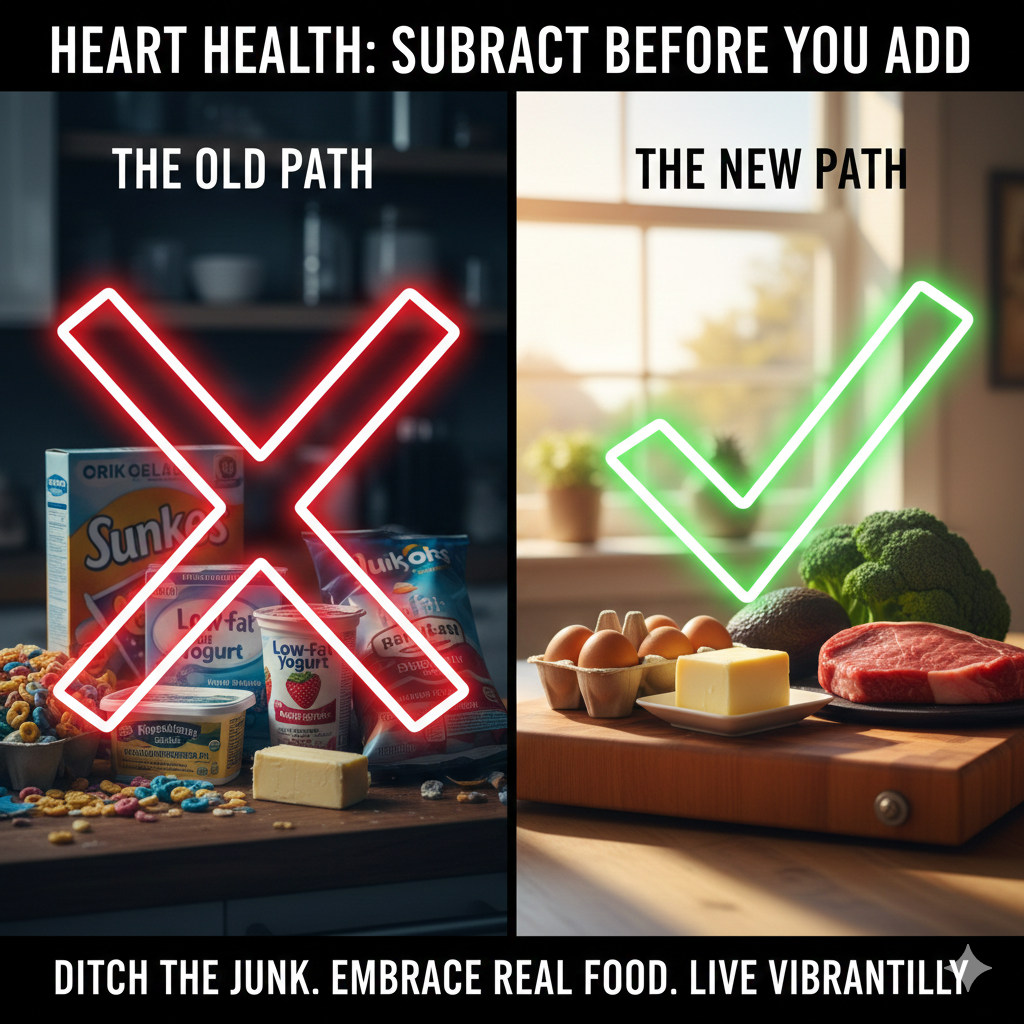
The real issue? No single food is a miracle worker. If your diet is packed with junk, a daily blueberry won’t save you. True heart health comes from metabolic balance through smart, consistent choices—like ditching the worst offenders. Let’s break down the top three foods to eliminate.
1. Processed Foods: The Sneaky Saboteurs
Processed foods sound vague, but they’re everywhere: cookies, chips, “heart-healthy” granolas, and cereals masquerading as breakfast heroes. Check your pantry—most list added sugars or sketchy oils as top ingredients.
These aren’t just empty calories; they crowd out real nutrients like healthy fats and proteins your body craves. A simple rule: Eat what grows in the ground (veggies, nuts) or what eats it (animal products). Better yet, if you can’t tell what’s inside by looking—no label needed—skip it. Ditching these restores balance and slashes inflammation linked to heart issues.
2. Artificial Trans Fats: The Heart’s Worst Enemy
When it comes to fats, opinions vary, but everyone agrees: artificial trans fats (think partially hydrogenated oils) are poison for your heart. They’ve sparked global bans, yet they lurk in veggie oils, cakes, fast food, fries, chips, and even some ice creams.
Manufacturers dodge labels by claiming “trans-fat free” if it’s under 0.5g per serving—still risky in bulk. Stick to whole foods, not boxes, to avoid this silent killer that raises bad cholesterol and clogs arteries.
3. Low-Fat Dairy: Sugar in Disguise
Even in 2026, groups like the American Heart Association push low-fat dairy (under 10% saturated fat). But stripping natural fats often means adding sugar to mask the bland taste—turning yogurt into dessert.
Full-fat dairy’s natural fats support blood vessels, hormones, and nerves. Low-fat swaps spike blood sugar, fueling diabetes, high cholesterol, and heart disease. It’s a cruel irony: fearing healthy fats leads us to the very processed stuff driving obesity epidemics.
The Bottom Line: Subtract Before You Add
Superfoods aren’t evil—add them to a solid diet by all means. But if fast food and sodas dominate your plate, start by removing the bad guys. Your heart will thank you with better energy, lower risks, and real vitality. Small changes, big wins.
References
- http://news.bbc.co.uk/1/hi/health/6252390.stm
- https://www.theguardian.com/uk/2007/may/13/health.healthandwellbeing1
- https://www.healthline.com/nutrition/why-trans-fats-are-bad#tips
- https://www.ahajournals.org/doi/abs/10.1161/CIR.0000000000001031
- https://www.bbcgoodfood.com/howto/guide/truth-about-low-fat-foods
- https://cdn.realfood.gov/DGA.pdf

One Response