The Gut–Brain Link No One Explains 🧠🔥
If you struggle with GERD or acid reflux, you’ve probably been told excess stomach acid is the problem—and prescribed acid-suppressing medication.
But here’s the paradox I see often in practice:
👉 Many reflux patients don’t have too much acid—they have too little.
And chronically low stomach acid doesn’t just affect digestion.
It can quietly impair brain chemistry, mood, focus, and sleep.
The Acid → Protein → Brain Chain
Healthy digestion starts in the stomach.
• Chief cells release pepsinogen
• Hydrochloric acid (HCl) activates it into pepsin
• Pepsin breaks protein into peptides
• Pancreatic enzymes finish the job → amino acids absorbed
Those amino acids are non-negotiable building blocks for neurotransmitters.
What disrupts this process?
• PPIs (omeprazole, esomeprazole, pantoprazole) → sharply reduce HCl
• H2 blockers (famotidine) → blunt acid production
• Chronic antacids → neutralize acid repeatedly
🧠 Result:
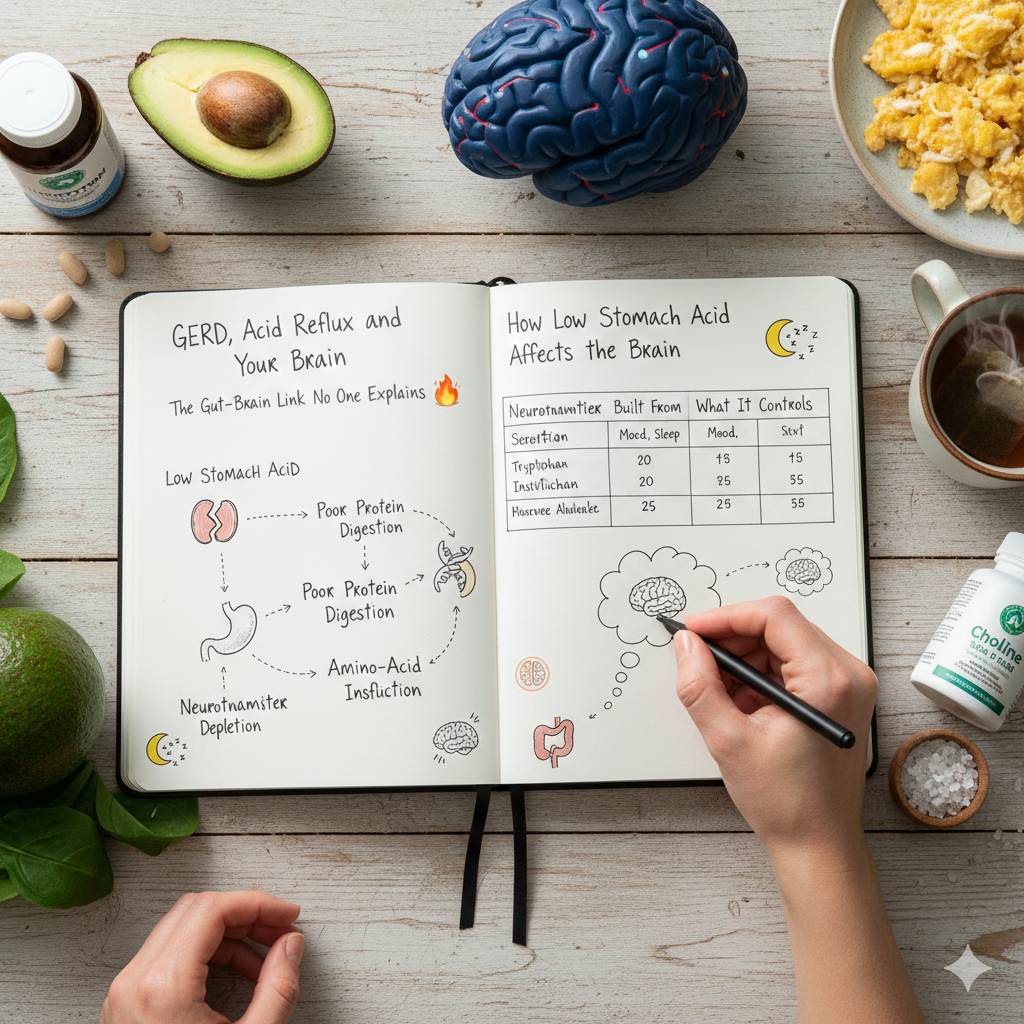
Poor protein digestion → amino-acid insufficiency → neurotransmitter depletion
How Low Stomach Acid Affects the Brain
Your brain runs on chemistry made from amino acids.
When digestion falters, supply drops.
| Neurotransmitter | Built From | What It Controls |
|---|
| GABA | Glutamate | Calm, anxiety control (often ↑ on keto) |
| Serotonin | Tryptophan | Mood, sleep, appetite |
| Dopamine | Tyrosine | Motivation, reward, focus |
| Norepinephrine / Epinephrine | Tyrosine | Alertness, stress response |
| Histamine | Histidine | Wakefulness, memory |
| Glutamate | Glutamine | Learning, cognition |
| Glycine | Serine | Inhibition, antioxidant defense |
| Acetylcholine | Choline | Memory, attention, gut motility |
Low acid doesn’t just cause bloating—it can show up as:
• Brain fog
• Low motivation
• Anxiety or low mood
• Poor sleep
• ADHD-like symptoms
Spotlight: Acetylcholine & Choline Genetics
Acetylcholine deserves special attention.
Some people carry genetic variants (SNPs) that reduce their ability to make choline efficiently. These individuals may require much higher dietary choline to maintain normal brain and gut function.
Signs of low acetylcholine can include:
• Brain fog
• Poor focus or memory
• Restless or fragmented sleep
• Sluggish digestion
• Reduced muscle performance
🥚 For some, even multiple eggs per day barely meet needs.
This is where nutrigenomics testing can be helpful—guiding targeted, not random, supplementation.
Why Reflux Often Improves When Digestion Improves
Low stomach acid can cause reflux by:
• Delaying stomach emptying
• Increasing fermentation and gas
• Forcing contents upward into the esophagus
Addressing digestion—not just suppressing acid—often reduces symptoms over time in appropriate people.
The Role of Low-Carb / Ketogenic Approaches
In practice, some patients experience GERD improvement when:
• Refined carbohydrates are reduced
• Inflammation decreases
• Gastric emptying improves
• Protein digestion normalizes
Low-carb or ketogenic approaches may also:
• Increase GABAergic tone (calming the nervous system)
• Stabilize blood sugar (less reflux pressure)
• Reduce bloating and intra-abdominal pressure
⚠️ This is not universal, and keto is not appropriate for everyone—but it can be transformative when individualized.
Practical, Safer Action Steps
If reflux and brain fog coexist, consider:
1️⃣ Do not stop PPIs abruptly
Always taper with medical supervision.
2️⃣ Support digestion during healing
• Digestive enzymes
• Amino acid support if protein tolerance is low
3️⃣ Evaluate nutrient status
• B12, iron, magnesium, zinc
• Consider choline needs if symptoms suggest deficiency
4️⃣ Reduce inflammatory triggers
• Refined carbs, ultra-processed foods
• Late-night eating
5️⃣ Work with a doctor
Especially if symptoms are chronic or worsening.
Final Truth
🧠 Your brain depends on your stomach.
Suppressing acid may quiet symptoms short-term—but long-term digestion matters.
GERD isn’t always an acid problem.
Sometimes it’s a digestive signaling problem.
Fix digestion.
Feed neurotransmitters.
Support the gut–brain axis.
✨ Clarity, calm, and comfort often follow.
References
- https://pmc.ncbi.nlm.nih.gov/articles/PMC8761750/


One Response