Where Prophetic Hygiene Meets Modern Protection
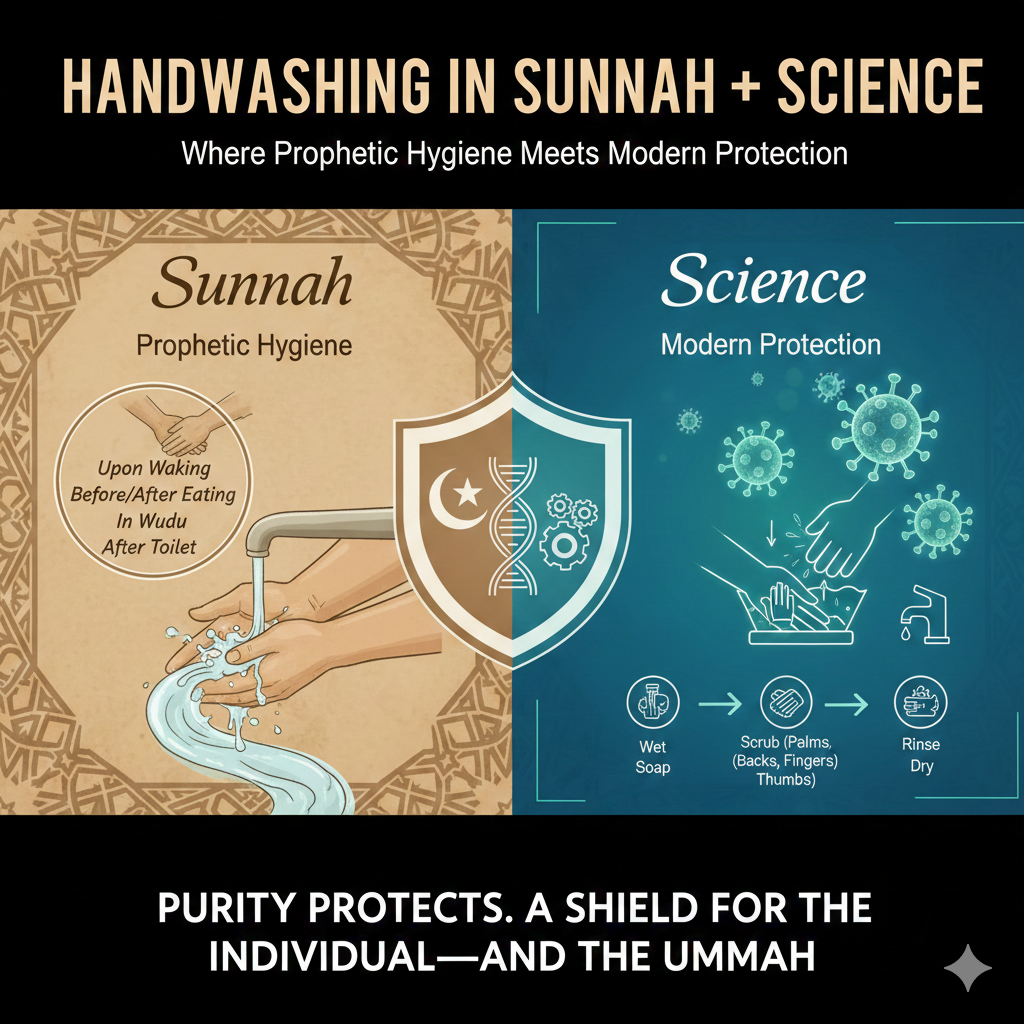
Handwashing isn’t a modern invention.
It’s a Prophetic Sunnah—and today, science confirms its power.
Proper handwashing reduces the spread of respiratory and gastrointestinal infections (including colds, flu, and COVID) by 20–40%.
Islam taught this 1,400+ years ago—as mercy, protection, and purification.
Purity isn’t just spiritual. It’s preventative.
Prophetic Guidance on Hand Hygiene (Key Ahadith)
1. Upon Waking from Sleep
The Prophet ﷺ instructed washing hands before touching water or food, acknowledging unseen contamination.
“When one of you wakes from sleep, he should not put his hand into the vessel until he washes it three times, for he does not know where his hand spent the night.”
— Bukhari (160), Muslim (278)
Science agrees: Overnight microbial exposure is real.
2. Before and After Eating
Handwashing increases barakah (blessing) in food.
“The blessing of food lies in washing the hands before and after eating.”
— Sunan Abi Dawud, Ibn Majah, Tirmidhi (Narrated by Salman al-Farisi)
Less illness. More gratitude. More barakah.
3. In Wudu (Ablution)
Wudu begins with washing the hands to the wrists, preferably three times.
— Muslim, An-Nasa’i (97–98)
This embeds hygiene into daily worship—five times a day.
4. After Using the Toilet
Clear division of cleanliness:
— Bukhari (5630), Muslim (262)
A powerful infection-control principle long before microbiology.
5. Food Contact & Cleanliness
Even dropped food was not wasted—but cleaned.
“If a morsel falls, remove what is harmful and eat it.”
— Muslim (2034)
Clean → then consume. Not ignore hygiene—honor provision.
Sunnah Technique (Timeless)
Simple. Consistent. Protective.
Modern Science Adds One Upgrade: Time + Soap
To fully deactivate germs:
Effective Handwashing (20 Seconds)
Wet hands (preferably warm water)
Apply soap
Scrub thoroughly:
Palms
Backs of hands
Between fingers
Thumbs
Fingertips & under nails
Scrub 20 seconds
Rinse well
Pat dry with a clean towel or air dry
Soap + friction breaks down viral and bacterial membranes.
Water alone is not enough.
When to Wash (Faith + Function)
Consistency beats panic.
Touchless Faucets: A Modern Ally to Taharah
Sensor-based (touchless) taps reduce recontamination after washing.
Benefits:
Fewer germs transferred
Less water waste
Easier with full or dirty hands
Automatic shutoff
Clean, modern fit for homes, masajid, clinics
Surveys show hygiene awareness spikes during outbreaks and travel—but daily habits protect best.
Habit Hacks (Make It Stick)
Link handwashing to prayer times
Phone reminders during outbreaks or travel
Kids: fun soaps, visual timers
Travel: portable hygiene kits
As hygiene experts say:
“Make it top-of-mind—every day.”
Final Reflection
Islam didn’t just command cleanliness—it designed protection.
Sunnah + science is not coincidence.
It’s mercy, wisdom, and prevention.
Purity protects.
A shield for the individual—and the Ummah.



One Response