
Cataracts remain the leading cause of blindness worldwide.
Glucose control plays a major role in lens health.
But does eating more carbohydrates double your cataract risk?
Let’s examine what the research actually shows.
The Nurses’ Health Study Signal 👁️
Large prospective cohorts like the Nurses’ Health Study have examined diet and cataract risk in women.
Key findings:
• Higher total carbohydrate intake was associated with increased cataract risk
• Risk appeared higher in those consuming the greatest total carb load
• Associations were observed independent of glycemic index in some analyses
This means:
Dietary patterns, lifestyle, and metabolic health all interact.
Why Glucose Affects the Lens
The eye’s lens is highly sensitive to metabolic stress.
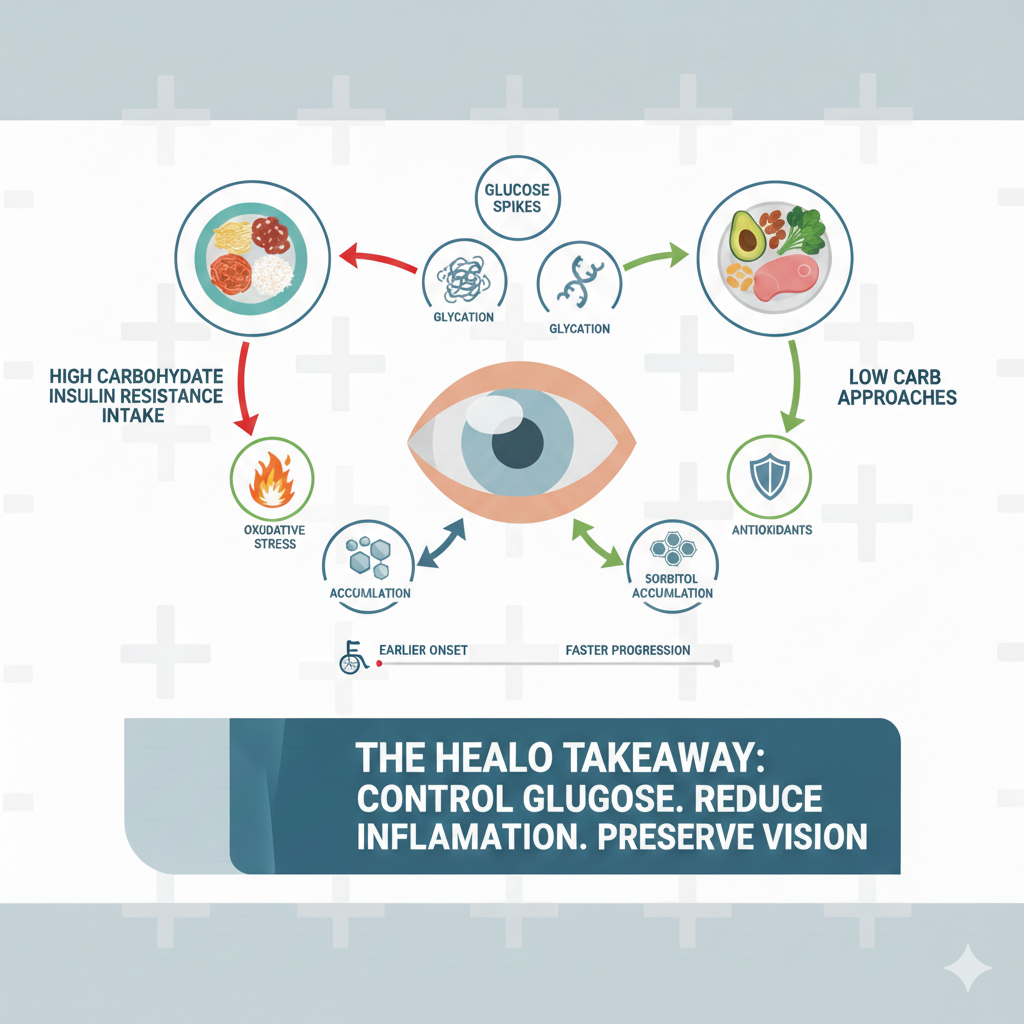
Chronic hyperglycemia contributes to:
• Glycation of lens proteins
• Oxidative stress
• Sorbitol accumulation (via aldose reductase pathway)
• Structural protein damage
Over time, this can contribute to lens opacification.
This mechanism is well established — especially in diabetes.
Total Carb Load vs Glycemic Spikes
Both matter.
High total carbohydrate intake can:
• Increase overall glucose exposure
• Raise average insulin demand
• Increase cumulative glycation load
But:
Refined carbohydrates and poor glycemic control drive risk more strongly than whole-food carbohydrates alone.
Quality and quantity both influence outcomes.
Diabetes & Cataracts
People with diabetes:
• Develop cataracts earlier
• Experience faster progression
• Have higher surgical rates
This is largely driven by chronic hyperglycemia and glucose variability.
Glucose stability is protective.
That is the real target.
In regions with:
• High rice and roti consumption
• Rising type 2 diabetes prevalence
• Limited early screening
Cumulative glycemic exposure becomes a major vision risk factor.
The issue is not traditional foods alone.
It is persistent metabolic overload.
Does Low-Carb Protect the Lens? 🥑
Low-carbohydrate approaches can:
• Reduce glucose variability
• Lower HbA1c
• Reduce insulin demand
• Lower triglycerides
• Improve overall metabolic stability
Improved glucose control reduces glycation stress.
That likely slows cataract progression risk.
What Actually Protects Eye Health
Evidence-supported strategies:
• Maintain stable blood glucose
• Keep HbA1c in target range
• Avoid chronic hyperglycemia
• Control blood pressure
• Avoid smoking
• Maintain healthy body weight
• Ensure antioxidant intake (vitamin C, E, lutein)
Low-carb can be an effective strategy — particularly for insulin-resistant adults.
Type 1 Diabetes Consideration
For type 1 families:
• Reducing glucose variability reduces glycation load
• Stable time-in-range protects long-term eye health
• Extreme restriction without supervision is risky
Vision protection equals glucose stability.
Not carb elimination alone.
The HealO Takeaway
High lifetime glucose exposure accelerates lens aging.
Chronic hyperglycemia increases cataract risk.
Total carbohydrate load may contribute — especially when paired with insulin resistance.
Low-carb approaches can:
• Improve glucose stability
• Reduce glycation stress
• Support metabolic repair
But protection comes from metabolic control — not fear of carbohydrates alone.
Control glucose.
Reduce inflammation.
Preserve vision.
That’s the strategy.
References
- http://www.ajcn.org/cgi/content/abstract/81/6/1411
- Recent Post