Beat Hormonal Acne for Good
Remember teenage acne—the stubborn pimples, crowded bathroom shelves, and mirror frustration? Many women expect it to disappear with age, yet breakouts often linger (or return) in adulthood.
That’s because acne isn’t just a skin issue.
🧠 It’s a hormonal conversation happening beneath the surface.
As a metabolic health and lifestyle coach, I’ve seen women reclaim clear skin not by adding more products—but by correcting the internal drivers. Here’s how hormones influence acne and what actually works long term.
Acne 101: Sebum, Clogs, Inflammation
Sebaceous glands produce sebum, an oily substance that protects the skin barrier. During puberty, sebum production surges—affecting nearly 80% of teenagers.
When excess sebum mixes with dead skin cells and acne-causing bacteria, pores clog. The immune system responds, and inflammation appears as acne vulgaris.
The key regulators? Hormones.
Skin cells and sebaceous glands have hormone receptors, meaning internal imbalances show up externally.
Hormones That Drive Acne
• Androgens (testosterone, DHT) – Increase sebum production
• Progesterone – Naturally blocks DHT conversion
• Estrogen – Thickens skin, supports collagen, balances oil
• Insulin – Enlarges sebaceous glands
• Stress hormones (CRH, cortisol) – Increase androgen signaling
• Melanocortins – Overactive in acne-prone skin
When these fall out of sync, acne thrives.
5 Ways Hormonal Imbalances Wreck Your Skin
1️⃣ Estrogen–Androgen Imbalance
Androgens stimulate oil production, while estrogen keeps them in check. When estrogen dips—especially before periods—breakouts appear.
Conditions like PCOS amplify this imbalance and may come with:
• Jawline acne
• Excess facial hair
• Irregular cycles
• Fertility challenges
📊 Around 42% of women report acne flares premenstrually—often a sign of hormonal sensitivity.
2️⃣ Chronic Stress Hormone Overdrive
Stress doesn’t directly cause acne, but it triggers cortisol and adrenal androgens, increasing oil output.
Many women notice breakouts around:
• Deadlines
• Exams
• Emotional stress
• Poor sleep
It’s not coincidence—it’s hormonal spillover.
3️⃣ Blood Sugar & Insulin Spikes
High-glycemic diets (refined carbs, sugars, low fat dairy) raise insulin, which:
• Stimulates sebaceous glands
• Increases androgen activity
Research consistently links high glycemic load diets to worse acne. A 2022 study found acne patients were twice as likely to develop metabolic syndrome later—highlighting acne as a metabolic warning sign, not just a cosmetic issue.
4️⃣ Toxic Load & Endocrine Disruptors
Daily exposure to endocrine-disrupting chemicals (EDCs)—like BPA and phthalates—can:
• Mimic androgens
• Suppress estrogen
• Disrupt detox pathways
These chemicals come from plastics, water, cosmetics, food packaging, and household products. Elevated levels are often seen in PCOS adolescents with acne.
5️⃣ Sleep Deprivation
Consistently sleeping less than 7–9 hours:
• Weakens the skin barrier
• Accelerates aging
• Elevates stress hormones
• Worsens inflammation
Poor sleep indirectly fuels androgen-driven acne while slowing repair.
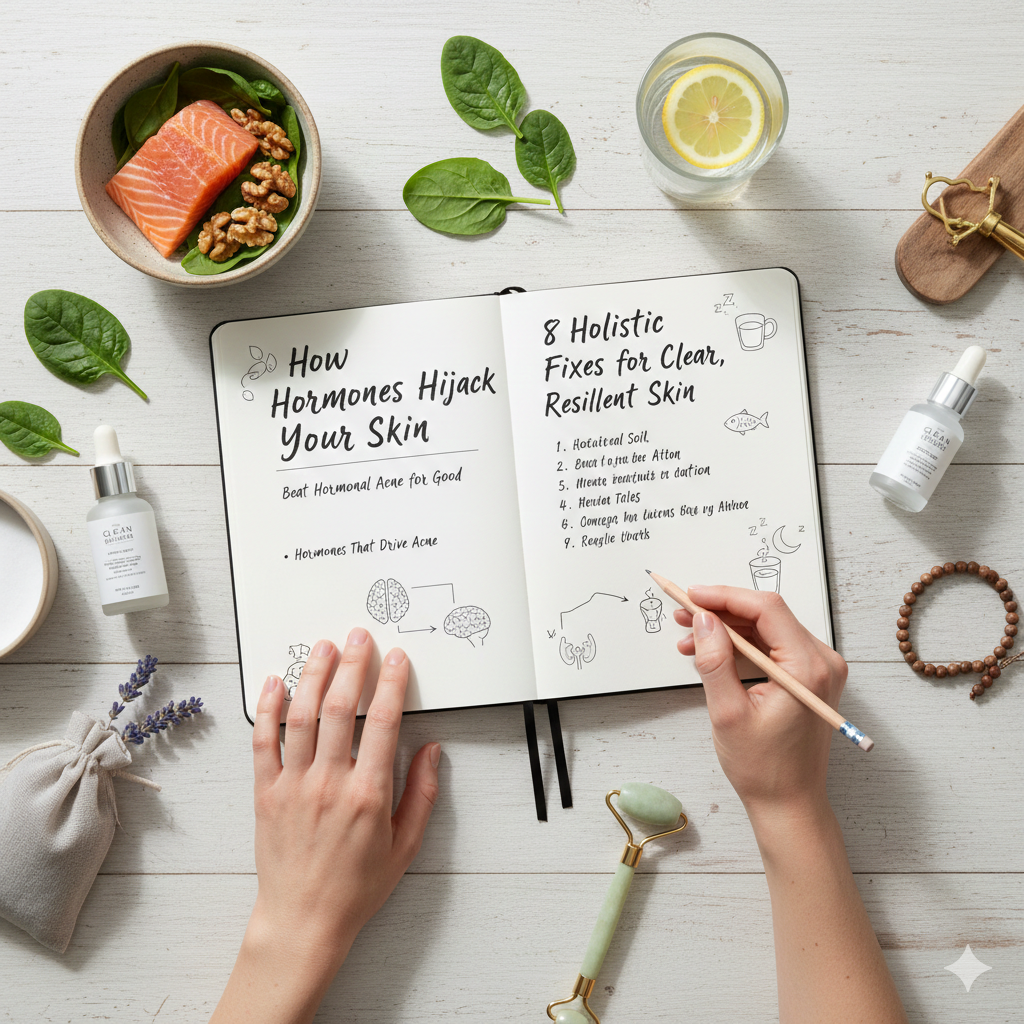
8 Holistic Fixes for Clear, Resilient Skin
Instead of chasing creams, support your hormones systemically:
-
Eat omega-3–rich foods
(Oily/Fatty Fish Salmon, Sardines, Mackerel, Tuna, Trout, sardines, eggs, walnuts, flax) → reduce inflammation
-
Stabilize stress daily
Prayer/Meditation, breathwork, yoga—even 10 minutes helps
-
Support liver detox (Phase I & II)
Cruciferous vegetables, herbs with guidance
-
Reduce toxic exposure
Filter water, avoid plastics, choose clean (animal fat based) skincare
-
Move your body regularly
~30 minutes most days improves circulation and insulin sensitivity
-
Hydrate well
Aim for hydration (electrolytes) as per thirst daily to support detox and skin barrier
-
Healthy intimacy & connection
Pleasure and bonding can increase estradiol and lower stress
-
Protect your sleep
Consistent bedtime, dark room, screen-free wind-down
Final Word
Hormonal acne can drain confidence—and money—but it doesn’t define you.
✨ Your skin is a messenger, not the enemy.
When you address insulin, stress, hormones, detox, and sleep, clarity follows naturally.
Stop fighting your skin.
Start listening to it.
Your glow isn’t gone—it’s waiting.
References
- https://www.ncbi.nlm.nih.gov/pmc/articles/PMC5015761/
- https://pubmed.ncbi.nlm.nih.gov/25683236/
- https://pubmed.ncbi.nlm.nih.gov/11705091/
- https://www.ncbi.nlm.nih.gov/pmc/articles/PMC5015761/
- https://www.ncbi.nlm.nih.gov/pmc/articles/PMC5015761/
- https://www.yourhormones.info/hormones/corticotrophin-releasing-hormone/
- https://pubmed.ncbi.nlm.nih.gov/15850843/
- https://pubmed.ncbi.nlm.nih.gov/17576233/
- https://www.tandfonline.com/doi/full/10.4161/derm.3.1.13900
- https://pubmed.ncbi.nlm.nih.gov/11705091/
- https://www.ncbi.nlm.nih.gov/pmc/articles/PMC5015761/
- https://www.ncbi.nlm.nih.gov/pmc/articles/PMC5300732/
- https://pubmed.ncbi.nlm.nih.gov/29241749/
- https://pubmed.ncbi.nlm.nih.gov/27061046/
- https://www.ncbi.nlm.nih.gov/pmc/articles/PMC9166482/
- https://www.ncbi.nlm.nih.gov/pmc/articles/PMC5913002/
- https://pubmed.ncbi.nlm.nih.gov/28707651/
- https://pubmed.ncbi.nlm.nih.gov/31219355/
- https://www.ncbi.nlm.nih.gov/pmc/articles/PMC8228950/
- https://pubmed.ncbi.nlm.nih.gov/25266053/
- https://www.aad.org/public/everyday-care/skin-care-secrets/routine/workout-affect-skin
- https://pubmed.ncbi.nlm.nih.gov/19138375/


One Response