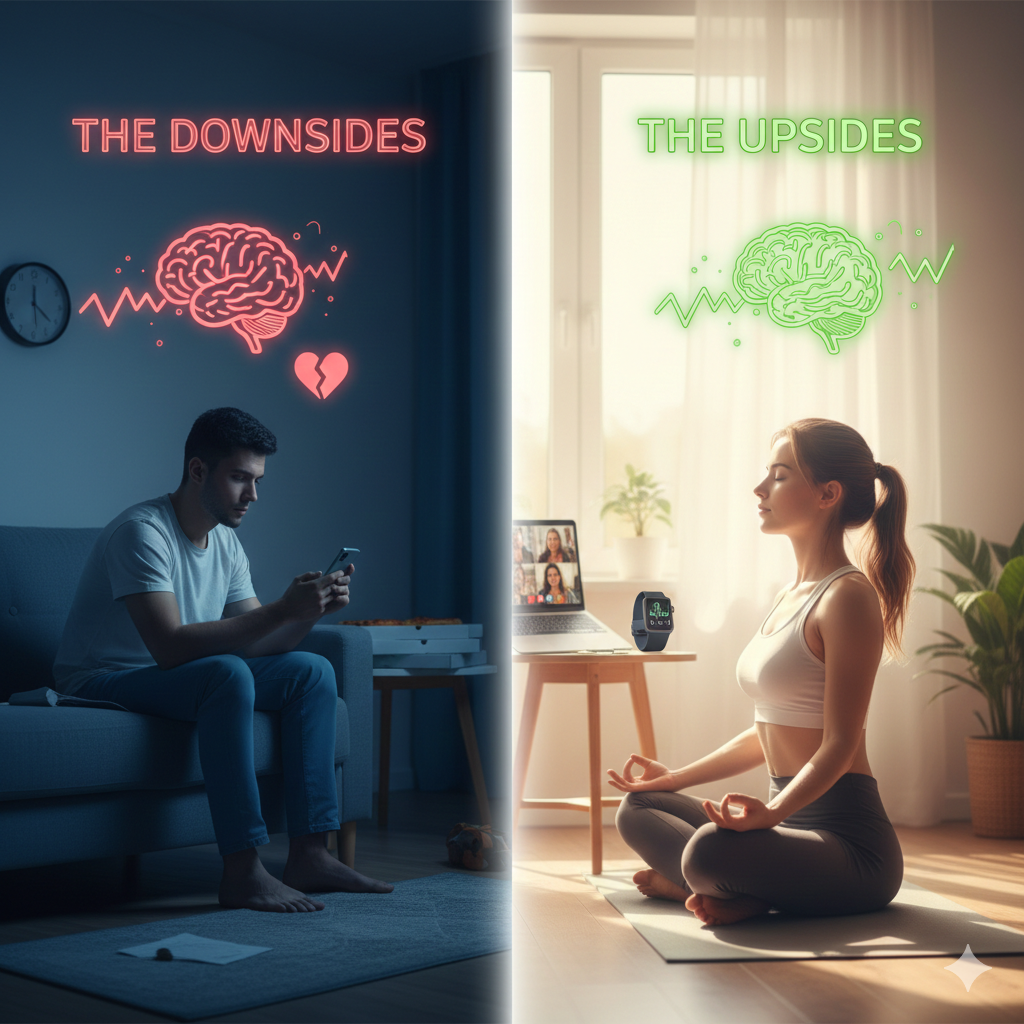
Technology is everywhere—shaping how we work, socialize, and even relax. From smartphones to social media and fitness apps, modern tech brings incredible convenience, fun, and productivity. But there’s a flip side. As our digital world expands, the ways technology can hurt our well-being are growing, too. Understanding both the risks and rewards can help you navigate the digital age with greater health and happiness.
The Downsides of Too Much Tech
1. Physical Health Challenges
All those hours glued to screens can hurt your posture, strain your eyes, and cause aches in your neck, back, or wrists. Sedentary habits linked to heavy tech use also mean less physical activity, raising your risk for weight gain and chronic health problems.
2. Mental and Emotional Wellbeing
Social media and constant notifications can bombard your brain, causing stress, distraction, and even anxiety or depression. Scrolling through picture-perfect posts may leave you feeling inadequate—or just plain overwhelmed.
3. Poor Sleep Habits
Blue light from screens can mess with your body’s natural sleep cycle, making it harder to fall and stay asleep. Late-night scrolling or binge-watching cuts into your rest, leading to fatigue and lower focus the next day.
4. Weaker Social Connections
Texting, messaging, or social media can’t fully replace meaningful, in-person conversations. Too much digital interaction can leave you feeling isolated or disconnected from real-world friendships and relationships.
Making Technology Work For Your Wellness
It’s not all doom and gloom! Used thoughtfully, technology can actually boost well-being. Here’s how to harness it for your health:
1. Use Mindfulness and Meditation Apps
From guided meditations to calming exercises, mindfulness apps can help you manage stress and elevate your mood—right from your phone.
2. Leverage Fitness and Health Trackers
Wearables and apps give you real-time insight into your activity, heart rate, sleep quality, and more—helping motivate you toward healthier habits.
3. Practice Digital Detoxing
Set aside regular times to unplug from devices. Engaging in screen-free hobbies or getting outside refreshes your mind and breaks the cycle of constant connectivity.
4. Seek Out Supportive Online Communities
Connecting online with others—whether for fitness, chronic illness, or emotional support—can create a sense of belonging and encouragement.
5. Use Built-In Digital Wellness Tools
Many smartphones now come loaded with features to help you limit screen time, track app use, and set reminders for bedtime. Use these to create healthy tech boundaries.
The Bottom Line
Technology is a double-edged sword. While it can make life easier and more fun, unchecked use may lead to physical, mental, or social health problems. By being mindful and intentional, you can enjoy the benefits of being connected—without letting it take over your well-being. Set boundaries, leverage positive tech, and make space for real-world connections to keep your health on track in our digital age.
References
- Healy, G. N., Matthews, C. E., Dunstan, D. W., Winkler, E. A., & Owen, N. (2011). Sedentary time and cardio-metabolic biomarkers in US adults: NHANES 2003–06. European Heart Journal, 32(5), 590-597.
- Tremblay, M. S., LeBlanc, A. G., Kho, M. E., Saunders, T. J., Larouche, R., Colley, R. C., … & Gorber, S. C. (2011). Systematic review of sedentary behaviour and health indicators in school-aged children and youth. International Journal of Behavioral Nutrition and Physical Activity, 8(1), 98.
- Primack, B. A., Shensa, A., Sidani, J. E., Whaite, E. O., Lin, L. Y., Rosen, D., … & Miller, E. (2017). Social media use and perceived social isolation among young adults in the US. American Journal of Preventive Medicine, 53(1), 1-8.
- Rosen, L. D., Lim, A. F., Carrier, L. M., & Cheever, N. A. (2017). An empirical examination of the educational impact of text message-induced task switching in the classroom: Educational implications and strategies to enhance learning. Educational Psychology, 37(3), 355-365.
- Fardouly, J., Diedrichs, P. C., Vartanian, L. R., & Halliwell, E. (2015). Social comparisons on social media: the impact of Facebook on young women’s body image concerns and mood. Body Image, 13, 38-45.
- Chang, A. M., Aeschbach, D., Duffy, J. F., & Czeisler, C. A. (2015). Evening use of light-emitting eReaders negatively affects sleep, circadian timing, and next-morning alertness. Proceedings of the National Academy of Sciences, 112(4), 1232-1237.
- Gradisar, M., Wolfson, A. R., Harvey, A. G., Hale, L., Rosenberg, R., & Czeisler, C. A. (2013). The sleep and technology use of Americans: findings from the National Sleep Foundation’s 2011 Sleep in America poll. Journal of Clinical Sleep Medicine, 9(12), 1291-1299.
- Medic, G., Wille, M., & Hemels, M. E. (2017). Short-and long-term health consequences of sleep disruption. Nature and Science of Sleep, 9, 151.
- Turkle, S. (2011). Alone together: Why we expect more from technology and less from each other. Basic Books.
- Hall, J. A., & Baym, N. K. (2012). Calling and texting (too much): Mobile maintenance expectations, (over) dependence, entrapment, and friendship satisfaction. New Media & Society, 14(2), 316-331.
- Mani, M., Kavanagh, D. J., Hides, L., & Stoyanov, S. R. (2015). Review and evaluation of mindfulness-based iPhone apps. JMIR mHealth and uHealth, 3(3), e82.
- Patel, M. S., Asch, D. A., & Volpp, K. G. (2015). Wearable devices as facilitators, not drivers, of health behavior change. Jama, 313(5), 459-460.
- Steers, M. L., Wickham, R. E., & Acitelli, L. K. (2014). Seeing everyone else’s highlight reels: How Facebook usage is linked to depressive symptoms. Journal of Social and Clinical Psychology, 33(8), 701-731.
- Naslund, J. A., Aschbrenner, K. A., Marsch, L. A., Bartels, S. J., & The McLean Recovery Research Team. (2016). Facebook for supporting a lifestyle intervention for people with major depressive disorder, bipolar disorder, and schizophrenia: an exploratory study. Psychiatric Rehabilitation Journal, 39(4), 346-353.
- Apple Inc. (2019). Introducing Screen Time. Retrieved from https://www.apple.com/ios/whats-new/screen-time/.