Uric acid—often overlooked until problems arise—is a crucial marker for your metabolic health. High levels, known as hyperuricemia, are associated with a range of metabolic and cardiovascular issues. But what exactly is uric acid, and what steps can you take to keep it in check?
What is Uric Acid?
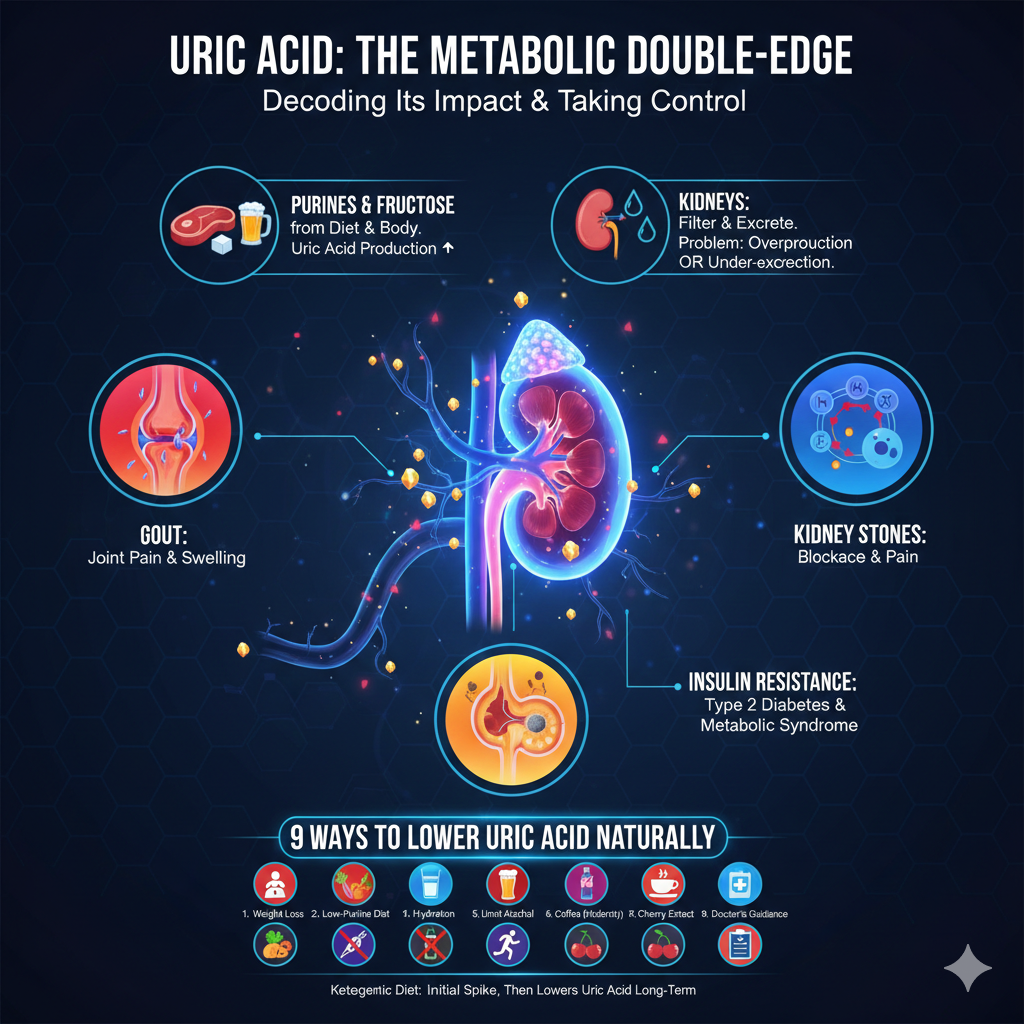
Uric acid is a natural waste product created as the body breaks down purines—compounds found in many foods and produced by the body. Normally, uric acid dissolves in the blood, is filtered by the kidneys, and excreted in urine. Trouble occurs when your body produces too much, or your kidneys can’t excrete enough, leading to elevated levels in the blood.
What Causes High Uric Acid Levels?
Diet and Lifestyle:
Purine-rich foods like red meat, organ meats, and certain seafood can raise uric acid.
Alcohol (especially beer) and sugary drinks (high in fructose) spike uric acid production, as fructose metabolism leads to higher purine levels in the body.
Genetics:
Some people are genetically predisposed to overproduce uric acid or under-excrete it, putting them at greater risk for gout and kidney stones.
Medical Conditions:
Obesity: Increases both production and decreases elimination of uric acid.
Kidney disease: Reduces the body’s ability to clear uric acid.
Diabetes and Insulin Resistance: Elevate uric acid through complex metabolic pathways.
Hypertension and Metabolic Syndrome: These conditions often cluster with high uric acid, amplifying risk.
The Risks of Elevated Uric Acid
Gout:
High uric acid leads to painful crystals forming in the joints—sudden, severe pain most commonly in the big toe, but also the knees, ankles, wrists, and more.
Kidney Stones:
Crystallized uric acid can block urinary flow, causing severe pain and risks of infection.
Insulin Resistance:
Research reveals a strong association between high uric acid and reduced insulin sensitivity—a foundational driver of type 2 diabetes and metabolic syndrome. Uric acid promotes inflammation and hinders the body’s ability to use insulin efficiently.
What Can You Do to Lower Uric Acid Naturally?
1. Manage Your Weight:
Losing even a small amount of excess weight lowers uric acid and eases the strain on your kidneys.
2. Modify Your Diet:
Limit sugary drinks and fructose-rich foods
Reduce high-purine foods (red meat, organ meats, some seafoods)
Eat more vegetables and fiber-rich foods
Stay hydrated—water supports the kidneys in flushing out uric acid
3. Avoid Excess Alcohol:
Particularly beer and spirits, which both boost production and reduce excretion of uric acid.
4. Exercise Regularly:
Physical activity improves insulin sensitivity, promotes healthy weight, and lowers uric acid.
How the Ketogenic Diet Fits In
The ketogenic diet (very low-carb, high fat) is popular for weight loss and improved metabolic health. While the initial adaptation to keto may spike uric acid (due to breakdown of body tissue and purines), sustained weight loss and improved insulin sensitivity over time actually help lower uric acid levels.
Key points:
Initial spike is temporary; over time, keto tends to lower uric acid by reducing obesity and insulin resistance.
Stay hydrated: This helps your kidneys flush uric acid efficiently while in ketosis.
Talk to your doctor: If you’ve had kidney stones, gout, or kidney disease, medical guidance is especially important for a safe diet transition.
Conclusion
Uric acid is far more than a gout marker—it’s a window into your metabolic health. Elevated uric acid signals increased risks for gout, kidney stones, and insulin resistance, all of which affect your longevity and quality of life. By embracing a healthier diet, achieving a balanced weight, getting regular exercise, and staying hydrated, you can keep your uric acid (and metabolic health) on track.
References
1. Choi, H. K., Mount, D. B., Reginato, A. M. (2005). Pathogenesis of gout. Annals of Internal Medicine, 143(7), 499-516.
2. Dalbeth, N., Merriman, T. R., Stamp, L. K. (2016). Gout. Lancet, 388(10055), 2039-2052.
3. Dehghan, A., van Hoek, M., Sijbrands, E. J. G., Hofman, A., Witteman, J. C. M. (2008). High serum uric acid as a novel risk factor for type 2 diabetes. Diabetes Care, 31(2), 361-362.
4. Paoli, A., Rubini, A., Volek, J. S., Grimaldi, K. A. (2013). Beyond weight loss: a review of the therapeutic uses of very-low-carbohydrate (ketogenic) diets. European Journal of Clinical Nutrition, 67(8), 789-796.