
Personalized nutrition designed for your unique health goals.
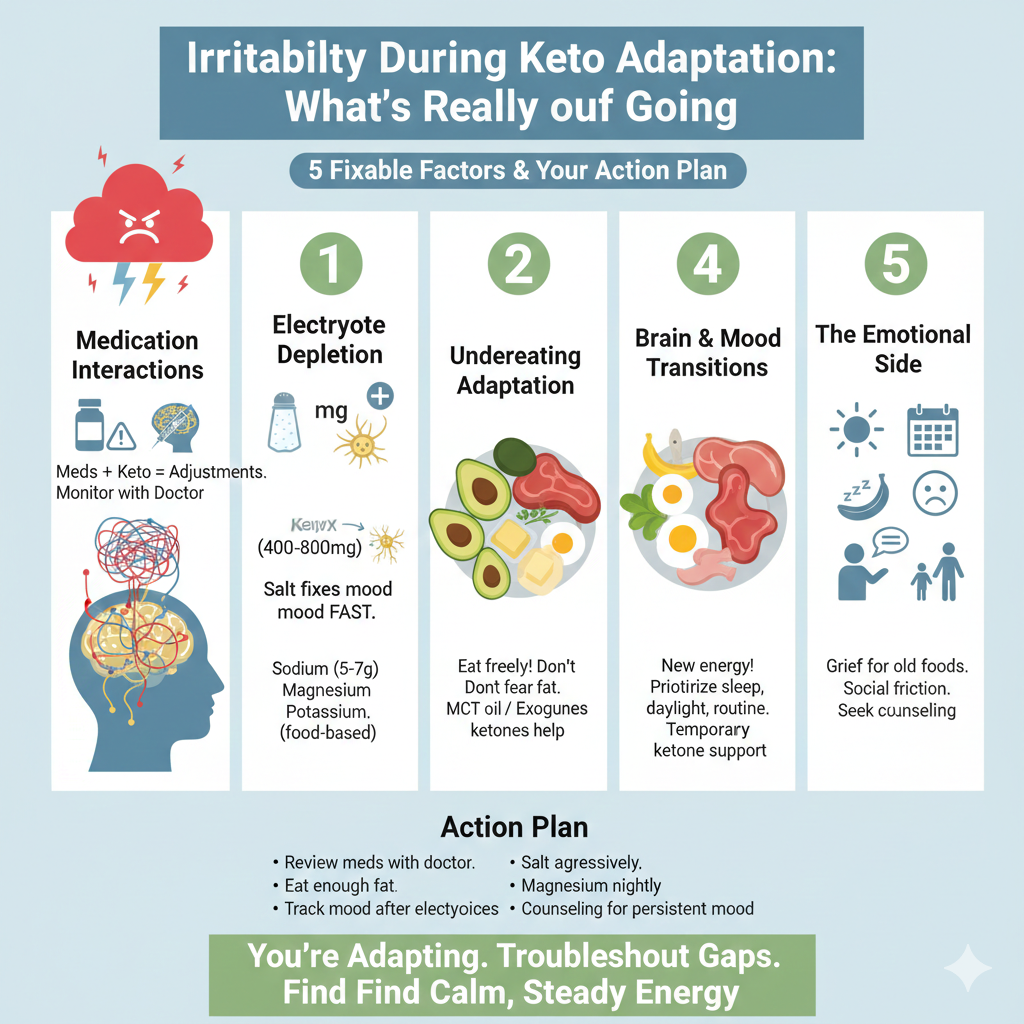
Feeling irritable when starting keto is common—but it’s rarely because your brain “needs carbs.”
Your body can make all the glucose your brain requires via gluconeogenesis. Mood changes during the first 3–6 weeks usually come from fixable factors, not failure.
Let’s break them down.
1. Medication Interactions (Often Overlooked)
Keto rapidly changes blood sugar and brain energy metabolism, which can alter how medications feel.
What can happen:
-
Glucose-lowering meds (e.g., metformin) may hit harder → mild hypoglycemia → irritability or “hangry” feelings
-
Steroids or glucose-raising meds disrupt ketosis → energy and mood swings
-
Psychiatric meds (SSRIs, benzodiazepines) may feel stronger as brain metabolism improves
-
Irritability is a known side effect
-
Mild withdrawal-like symptoms can appear during dose adjustments
-
👉 This doesn’t mean keto is unsafe—but meds may need monitoring or gradual adjustment with your doctor.
2. Electrolyte Depletion (The #1 Cause)
On keto, insulin drops → kidneys excrete more sodium, magnesium, and potassium.
Without replacement, neurons struggle to fire properly.
Why mood suffers:
-
Low sodium → impaired sodium-potassium pumps → brain fog, irritability
-
Low magnesium → nervous system hyper-excitability
Targets that actually work:
| Electrolyte | Daily Target | Practical Fix |
|---|---|---|
| Sodium | 5–7g+ | Salt food generously, broth |
| Magnesium | 400–800 mg elemental | Magnesium glycinate before bed |
| Potassium | Food-based | Avocado, spinach; supplement only if needed |
📌 Many people feel calmer within 20 minutes of salt—that’s diagnostic.
3. Undereating During Adaptation
Early keto raises energy demands:
-
Enzyme shifts
-
Mitochondrial upregulation
-
Fat-burning machinery coming online
If you:
-
Fear fats
-
Accidentally undereat
-
Combine keto + calorie restriction too early
👉 Stress hormones spike → irritability, anxiety, poor sleep.
Fix:
Eat freely during adaptation:
-
Fatty meats
-
Eggs, butter, ghee
-
Avocados, olive oil
For extra brain support:
-
MCT oil
-
Exogenous ketones (especially useful in mental-health-focused keto)
4. Brain & Mood Transitions
As ketones rise:
-
Energy-deficient brain regions wake up
-
Neural signaling recalibrates
In some (especially bipolar-spectrum individuals), this can briefly feel like:
-
Restlessness
-
Irritability
-
“Too much energy”
This is transitional, not pathological.
Support it with:
-
Prioritizing sleep
-
Morning daylight exposure
-
Consistent routines
-
Temporary ketone support during the gap
Improved metabolism often reduces withdrawal symptoms—but doesn’t magically erase them overnight.
5. The Emotional Side (Quiet but Real)
Irritability isn’t always biochemical.
Common hidden triggers:
-
“Why do I have to eat differently?”
-
Family or workplace stocked with carbs
-
Missing familiar comfort foods
-
Social friction or lack of support
That’s grief, not weakness—and grief often shows up as anger.
Practical coping:
-
Use flavour extracts (banana, vanilla, salted caramel) in keto foods
-
Recreate rituals, not just macros
-
Learn social scripts (“I’m testing this for health”)
-
Consider therapy familiar with dietary identity shifts and acceptance
This is a lifestyle pivot. It deserves emotional support.
Action Plan (Simple & Effective)
-
Review medications with your doctor
-
Salt aggressively (especially mornings)
-
Eat enough fat—don’t diet during adaptation
-
Supplement magnesium nightly
-
Track mood 20–30 min after electrolytes
-
Pair with counseling if mood symptoms feel layered or persistent
Final Reassurance
You’re not broken.
You’re adapting.
Keto doesn’t cause irritability—it reveals gaps that need support.
Troubleshoot correctly, and most people report calmer mood, steadier energy, and improved mental clarity once adaptation completes.
- Recent Post