For most of us, chocolate is the ultimate comfort treat—a little square of joy after a long day. But is it just a guilty pleasure, or could it actually be good for you? Exciting research suggests that, especially when it comes to dark chocolate, this delicious indulgence offers genuine health benefits when eaten in moderation.
Packed with Antioxidants
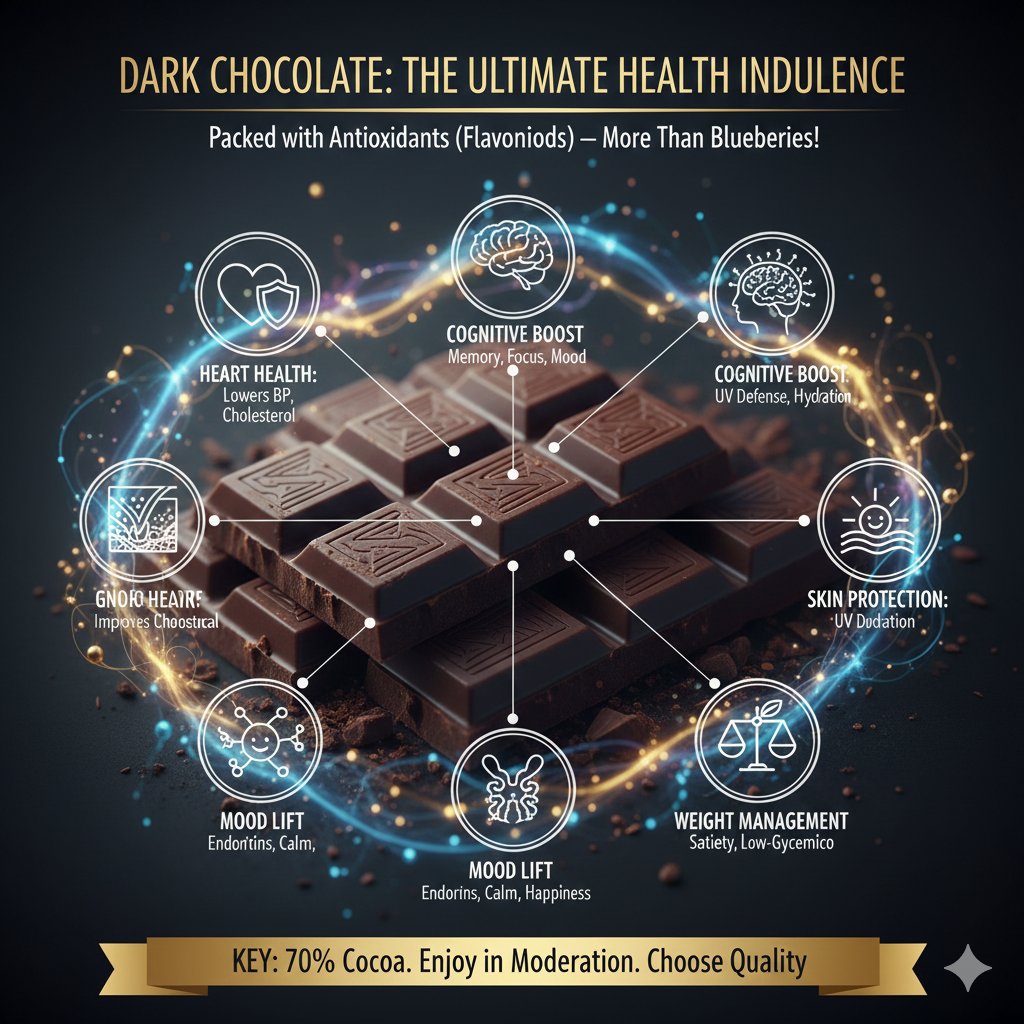
Chocolate, especially dark chocolate, is rich in antioxidants called flavonoids—powerful plant compounds that help fight oxidative stress and inflammation. Flavonoids neutralize free radicals in the body, reducing the risk of chronic conditions like heart disease and some cancers. Remarkably, dark chocolate boasts a higher antioxidant capacity than even well-known “superfoods” like blueberries!
Chocolate and Heart Health
The strongest evidence for chocolate’s health benefits comes from studies on cardiovascular health:
Flavanols in cocoa help relax blood vessels, lower blood pressure, and improve blood flow.
Regular, moderate consumption of dark chocolate is linked to lower blood pressure, improved cholesterol profiles, and reduced risk of coronary heart disease.
Enhancing Cognitive Function
Chocolate’s benefits go beyond the heart. Flavonoids can cross the blood-brain barrier and accumulate in areas crucial for learning and memory, such as the hippocampus. Research shows that, in older adults, three months of daily high-flavanol cocoa consumption significantly improved memory, attention, and executive function.
Lifting Your Mood
Chocolate is famous for its mood-boosting effects. It triggers the release of endorphins, our “feel-good” brain chemicals. Compounds like theobromine, caffeine, and phenylethylamine (the “love drug”) add a gentle stimulant effect and a dose of happiness. Studies confirm that cocoa flavanols can lower stress and promote feelings of calm and contentment.
Surprising Skin & Weight Benefits
Dark chocolate’s antioxidants also help protect your skin from UV damage, improving texture and hydration.
When eaten mindfully, dark chocolate may help with weight management. Its high satiety factor and fiber content curb cravings and make you feel fuller, longer—while its low glycemic index avoids blood sugar spikes that lead to overeating.
What to Watch Out For
Not all chocolate is equal:
The major health benefits come from dark chocolate (70% cocoa or higher). Milk and white chocolates have more sugar and less cocoa, so they lack most of these perks.
Chocolate is calorie-dense:
Too much can add up quickly. Moderation—just a few squares a day—delivers the benefits without unwanted weight gain.
Quality matters:
Choose chocolate with minimal added sugar, artificial ingredients, or hydrogenated fats.
Conclusion
Dark chocolate can be a genuinely healthy addition to your diet—supporting heart, brain, skin, and even mood. Choose it wisely, savor it in moderation, and you can enjoy its rich flavor guilt-free, knowing you’re feeding your body (and soul) something truly good.
So next time you reach for a piece of dark chocolate, enjoy every bite—you’re doing more for your well-being than you think!
References
- Andres-Lacueva, Cristina, et al. “Flavanol and flavonol contents of cocoa powder products: Influence of the manufacturing process.” Nutrients, vol. 15, no. 2, 2022, pp. 196-205.
- Ried, Karin, et al. “Effect of cocoa on blood pressure.” American Journal of Clinical Nutrition, vol. 95, no. 3, 2012, pp. 740-751.
- Buijsse, B., et al. “Chocolate consumption in relation to blood pressure and risk of cardiovascular disease in German adults.” British Journal of Nutrition, vol. 104, no. 3, 2010, pp. 610-618.
- Mastroiacovo, D., et al. “Cocoa flavonoids and cognitive function in aging: A randomized clinical trial.” Frontiers in Nutrition, vol. 2, 2015, p. 29.
- Crichton, G. E., et al. “Chocolate intake is associated with better cognitive function: The Maine-Syracuse Longitudinal Study.” Appetite, vol. 100, 2016, pp. 126-132.
- Scholey, Andrew B., et al. “The effects of chocolate on mood.” Journal of Psychopharmacology, vol. 27, no. 5, 2013, pp. 451-458.
- Heinrich, U., et al. “High flavanol chocolate consumption improves skin condition and UV sensitivity in women.” Journal of Nutrition, vol. 136, no. 6, 2006, pp. 1565-1569.
- Greenberg, James A., et al. “Dark chocolate causes satiety and reduces subsequent energy intake compared with milk chocolate.” Regulatory Peptides, vol. 99, no. 2-3, 2001, pp. 47-52.