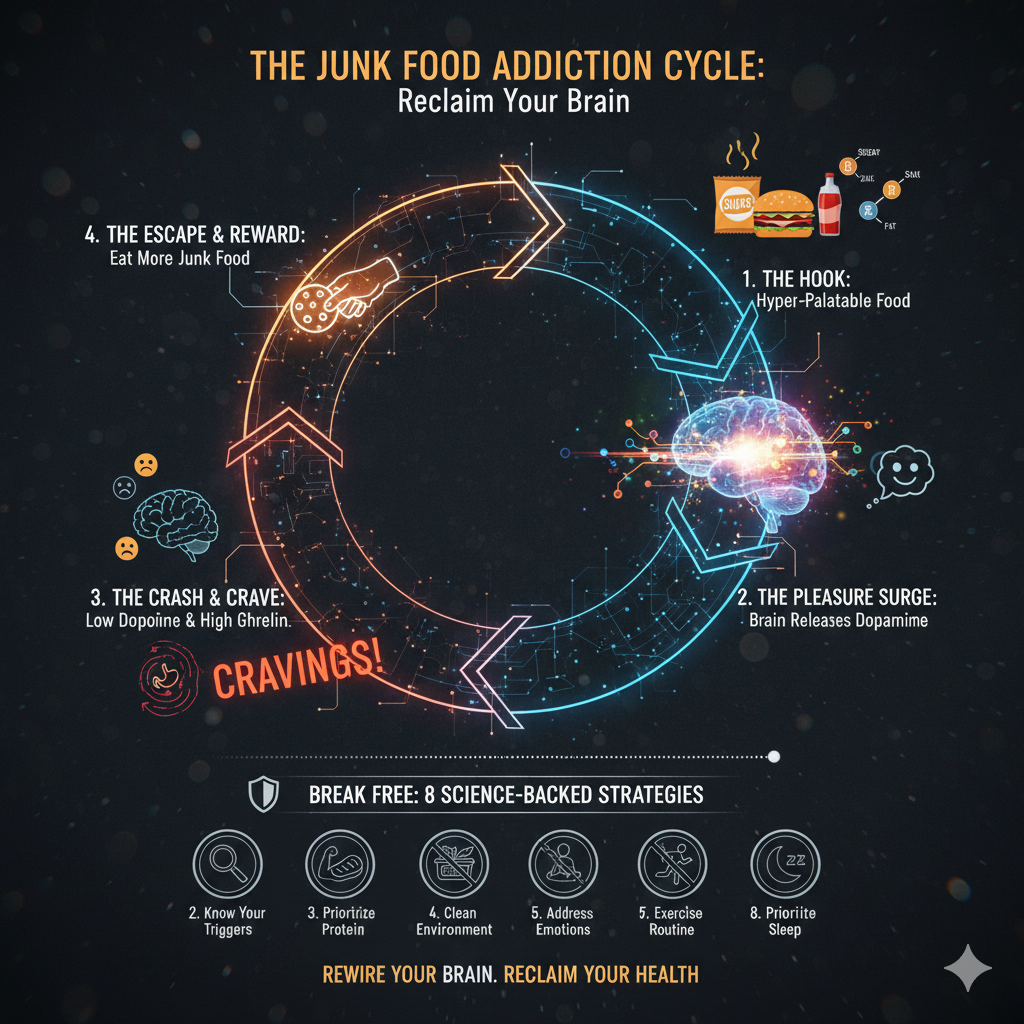
If you’ve ever found it hard to stop snacking on chips, cookies, or fast food—even when you’re not hungry—you’re not alone. Junk food, packed with sugar, salt, and unhealthy fats, is designed to be addictive. The good news? Understanding how junk food hijacks your brain can help you break the cycle and regain control.
Frequent, intense junk food cravings—even after meals
Overeating processed snacks despite feeling full
Shame, guilt, or regret after indulging
Eating in secret or lying about food habits
Failed attempts to cut back
Using junk food as comfort or reward
Feeling “withdrawal” (irritability, restlessness) without certain foods
Skipping social events to eat
Know Your Triggers
Pay attention to situations, emotions, or places that tend to spark your cravings. Is it stress, boredom, or late-night TV? The sooner you spot your triggers, the faster you can act.
Prioritize Protein
Protein-rich meals increase satiety and reduce cravings—even the brain regions involved in food addiction are less active after high-protein meals. Keep portable options like boiled eggs, cheese sticks, or lean meats handy to curb junk food temptations.
Meal Prep and Plan Ahead
Prepare balanced meals and snacks in advance. With healthy options close by, you’ll be less likely to reach for ultra-processed foods when hunger strikes suddenly.
Clean Your Environment
Remove junk food from your home, car, and workspaces. Out of sight, out of mind! Stock up on nutritious snacks and make your environment support your goals.
Address Emotional Eating
If you turn to junk food for comfort, try managing stress with exercise, meditation, or connecting with friends. If needed, speak with a counselor or therapist.
Practice Mindful Eating
Slow down, focus on the taste and texture of your food, and eat without distractions (turn off the TV/phone). Mindfulness improves awareness and helps you recognize fullness before you overeat.
Stick to an Exercise Routine
Regular movement reduces stress and naturally increases dopamine, giving you a “reward” that doesn’t require junk food.
Prioritize Sleep
Sleep deprivation worsens cravings by disrupting key appetite hormones (ghrelin, leptin, insulin). Aim for 7–9 hours nightly and maintain a calming bedtime routine.
Junk food addiction is real—but it’s not unbeatable. By understanding how processed foods manipulate your brain, recognizing the warning signs, and building new habits, you can free yourself from the cycle of cravings, regret, and overindulgence. Every small step toward better nutrition helps build a happier, healthier, and more empowered you.