Curious about the ketogenic diet but not sure how to start? You’re in the right place. This beginner-friendly guide breaks down the basics of keto, its benefits, what to eat (and avoid), and gives you step-by-step instructions to launch your keto journey with confidence.
Key Features of the Keto Diet
Macronutrient Breakdown:
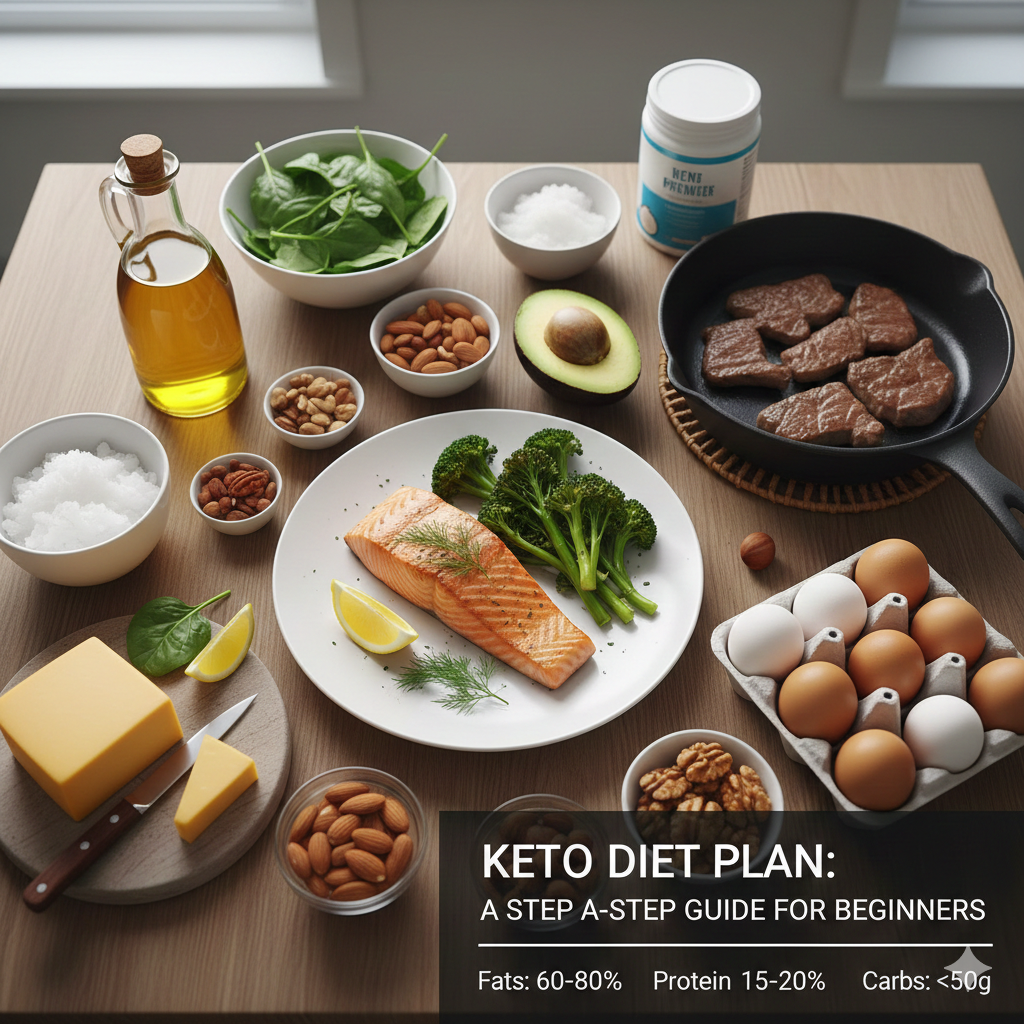
Fats: 60–80% of daily calories
Protein: 15–20%
Carbohydrates: 20–50 grams net carbs daily
Goal: Push your body into ketosis—where it switches from burning carbs (glucose) to burning fat for energy.
Difference: Not about starving or harsh calorie deficits; keto relies on eating satisfying, nutrient-dense meals.
How Does Keto Work?
When you cut carbs, your body’s glucose stores run out. This triggers fat breakdown and the creation of ketones, a clean, efficient fuel for both brain and muscles. Ketosis is the hallmark of the keto state and the driver of keto’s health benefits.
Foods to Include
Healthy fats: Ghee, avocado, olive oil, butter, coconut oil
Protein: Meat, fish, eggs, protein shakes (whey, collagen, and egg white blends)
Non-starchy vegetables: Spinach, broccoli, cauliflower, leafy greens
Dairy: Cheese, Greek yogurt, heavy cream
Nuts & seeds: Almonds, walnuts, pecans, chia, pumpkin seeds
Foods to Avoid
Bread, pasta, rice, cereals, and baked goods
Sweets, soda, fruit juices
Starchy vegetables (potatoes, corn, sweet potatoes, peas)
Beans and lentils
High-sugar fruits (bananas, apples, grapes)
Most alcohol (except low-carb options)
Keto Benefits
Weight loss: Burn fat for fuel, not just calories
Blood sugar control: Ideal for managing type 2 diabetes and insulin resistance
Mental clarity: Ketones are a premium fuel for your brain
Appetite reduction: Healthy fats keep you full and satisfied
Keto Risks & Side Effects
Keto flu: May feel tired or foggy while adapting
Electrolyte imbalance: Drink water and include mineral-rich foods or broth
Digestive issues: Lower fiber can lead to constipation—eat plenty of veggies!
High cholesterol: Only if you choose too many unhealthy, processed fats
Before You Start: Key Considerations
Consult your doctor (especially if you take meds or have health conditions)
Prepare mentally: The first week is the toughest
Customize: Protein shakes offer balanced, keto-friendly nutrition for a smooth start
How to Start Keto: A Simple 9-Step Plan
Plan Your Meals: Find tasty, low-carb, high-fat recipes
Stock Your Pantry: Swap out carbs for keto ingredients (almond flour, coconut oil, zucchini noodles)
Increase Fat Intake: Gradually add healthy fats to meals
Monitor Protein: Don’t go overboard; excess protein can kick you out of ketosis
Stay Hydrated: Drink water; use broth or salted veggies for electrolytes
Ease Into Exercise: Start with light activity—walking, yoga
Track Progress: Use an app to monitor carbs and ketones
Be Patient: Allow your body time to become fat-adapted
Build Support: Share goals with friends or join a keto group
Sample Keto Beginner Meal Plan (<25g net carbs)
Breakfast: Scrambled eggs with cheddar and sautéed onions (4.6g net carbs)
Lunch: Grilled chicken salad with spinach, avocado, olive oil (6g net carbs) or vanilla protein cream shake (4g net carbs)
Snack: Bell pepper slices with ranch (4.4g net carbs)
Dinner: Burger patty with cheese, lettuce wrap, tomato, and avocado (5.4g net carbs)
Key Takeaways
Keto is about eating smarter, not starving.
Focus on nourishing, low-carb foods, healthy fats, and moderate protein.
Prepare for an adjustment period, but the benefits—fat loss, steady energy, better focus—are well worth it.
Protein shakes with quality ingredients can simplify nutrition and support a healthy keto start.
FAQs
What is keto?
A high-fat, low-carb eating plan that triggers fat-burning for energy.
Is keto safe for beginners?
Yes. Always consult your doctor and start gradually.
How long should I do keto?
3–6 months is common; afterward, shift to a balanced eating plan if desired.
What is a protein shake?
A meal-replacement shake with whey, collagen, and egg white protein—ideal for low-carb, high-fat lifestyles.
Can I exercise on keto?
Definitely; start slow and ramp up as your energy stabilizes.
Ready to try keto? Preparation and balance are your best friends! Start slow, use quality foods (and shakes), and enjoy the transformation.
Keto Shopping List for Beginners
Proteins
Eggs
Chicken (breast, thighs, drumsticks)
Grass-fed beef (steak, ground beef)
Lamb (chops, tenderloin, fat)
Salmon, sardines, and other fatty fish
Shrimp or prawns
Protein powder (whey, collagen, egg white)
Healthy Fats & Oils
Olive oil, coconut oil, avocado oil
Ghee or butter
Avocados
Non-Starchy Vegetables
Spinach, kale, Swiss chard, arugula
Broccoli, cauliflower, cabbage
Zucchini, bell peppers
Asparagus, Brussels sprouts, green beans
Mushrooms, cucumber, celery
Dairy
Cheese (cheddar, mozzarella, parmesan)
Greek yogurt (unsweetened, full-fat)
Heavy cream
Nuts & Seeds
Almonds, walnuts, pecans, Brazil nuts
Chia seeds, flaxseeds, pumpkin seeds
Other Pantry Essentials
Almond flour or coconut flour (baking)
Shirataki noodles or zucchini noodles (zoodles)
Spices and herbs (oregano, basil, cumin, garlic powder)
Salt, pepper, mineral-rich salt
Broth (bone broth, chicken broth)
Low-Sugar Fruits
Berries (strawberries, raspberries, blackberries; in moderation)
Lemons and limes
Beginner’s Two-Week Keto Meal Planner
Week 1
| Day | Breakfast | Lunch | Snack | Dinner |
|---|
| Mon | Scrambled eggs with spinach | Chicken salad (avocado, olive oil) | Almonds | Bunless burger with cheese, salad |
| Tue | Greek yogurt with chia seeds | Tuna salad stuffed avocado | Celery with cream cheese | Grilled salmon with broccoli |
| Wed | Omelet (cheese, peppers) | Beef kebabs with greens | Walnuts | Lamb chops, sautéed cabbage |
| Thu | Protein shake (w/ almond milk) | Chicken & cheese lettuce wraps | Bell pepper slices | Zucchini noodles with beef sauce |
| Fri | Egg muffins (eggs, veggies) | Shrimp & fresh salad | Olives | Chicken thighs roasted in olive oil |
| Sat | Cottage cheese with berries | Steak and roasted tomato | Greek yogurt | Cauliflower crust pizza |
| Sun | Beef burgers & eggs | Leftover bowl (salads + protein) | Cheese cubes | Sheet pan roasted veggies & mince |
Week 2
| Day | Breakfast | Lunch | Snack | Dinner |
|---|
| Mon | Omelet (mushrooms, cheese) | Tuna or salmon patties, greens | Pumpkin seeds | Bunless chicken burger, sautéed spinach |
| Tue | Protein shake | Chicken Caesar salad (no croutons) | Boiled eggs | Lamb stir-fry with cabbage and peppers |
| Wed | Scrambled eggs with tomato | Beef lettuce wraps | Macadamia nuts | Baked fish with roasted tomato |
| Thu | Greek yogurt, chia, almonds | Egg salad on a bed of arugula | Cucumber slices/hummus/mince | Meatballs with marinara & parmesan |
| Fri | Breakfast sausage, eggs | Grilled shrimp with avocado salsa | Bell pepper slices | Herb-roasted chicken & broccoli |
| Sat | Cottage cheese, walnuts | FLT salad (fish, lettuce, tomato) | Pecans | Salmon fillet, cauliflower mash |
| Sun | Fried eggs with kale | Leftover protein bowl | Cheese sticks | Grilled lamb chops, green beans |
Tips for Using this Planner:
Mix and match meals as you like.
Snacks are optional—listen to your hunger cues.
Aim for 2–3 meals per day, keeping net carbs (carbs minus fiber) under 25–50g daily.
Adjust portions to fit your hunger, activity level, and goals.