Science, Not Bro-Science
Testosterone isn’t just about muscles or libido.
It’s a metabolic signal—driving energy, mood, insulin sensitivity, bone density, motivation, and resilience.
And it gets absolutely crushed by modern life.
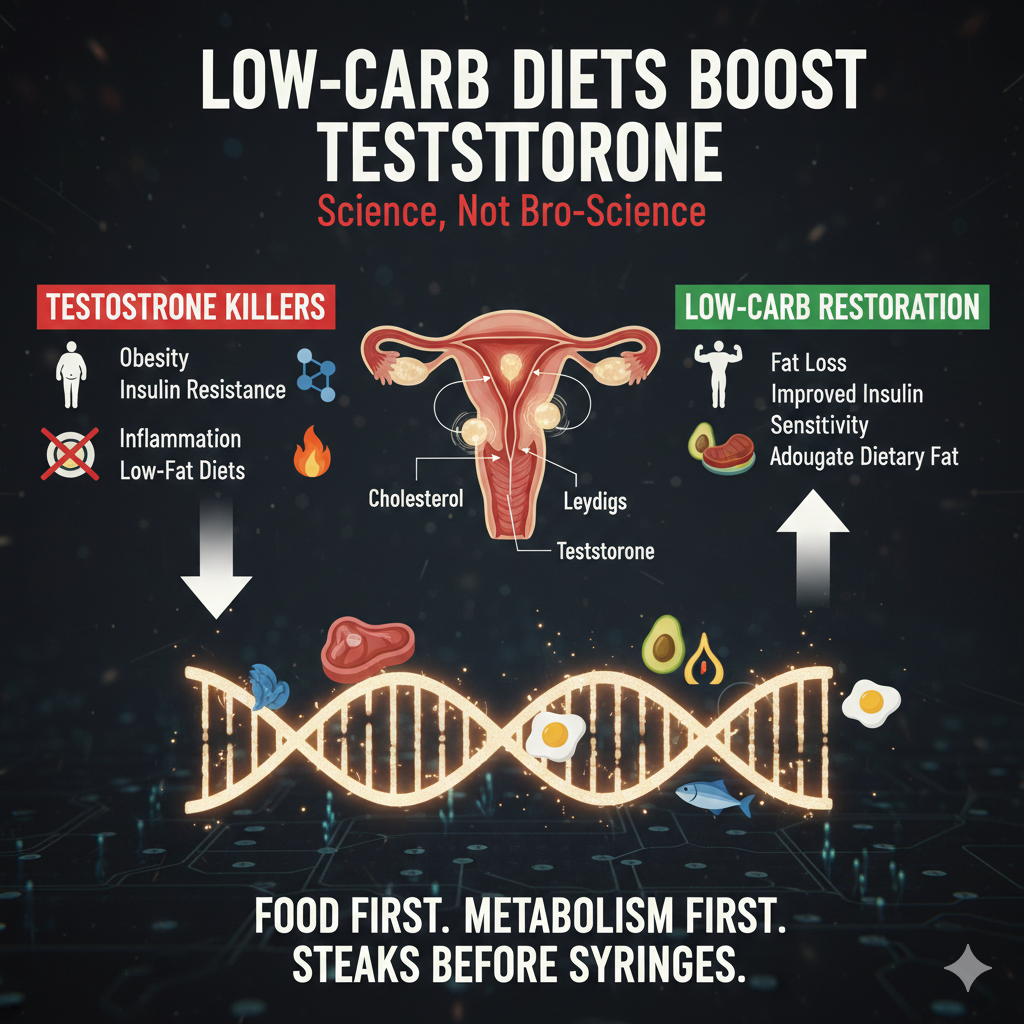
Obesity, insulin resistance, and low-fat/high-carb diets quietly drain testosterone long before men (or women) are told anything is “wrong.”
Low-carb and ketogenic diets flip that script—for biological reasons, not internet hype.
Let’s break it down.
Testosterone 101 (Quick but Critical)
Testosterone is made primarily in the Leydig cells of the testes (and ovaries in women), inside the mitochondria.
Key facts:
Cholesterol is the raw material for testosterone synthesis
The hypothalamus–pituitary–gonadal (HPG) axis regulates production
Fat tissue contains aromatase, which converts testosterone → estrogen
More fat = more aromatase = less testosterone.
This is why obesity and metabolic syndrome are consistently linked to low T.
The Real Testosterone Killers
The biggest enemies of testosterone aren’t age or bad luck—they’re metabolic dysfunction.
Well-documented suppressors:
Multiple meta-analyses show men with obesity and diabetes have significantly lower total and free testosterone than metabolically healthy peers.
This isn’t cosmetic—it’s systemic.
Why Low-Fat Diets Backfire
For decades, men were told:
“Eat low-fat for heart health.”
That advice quietly torpedoed testosterone.
The evidence:
Meta-analyses link low-fat diets to lower testosterone levels
Reducing saturated fat intake → measurable drops in T
Controlled feeding trials show:
High-fat, lower-fiber diets increase testosterone
The same diets, when flipped to low-fat/high-fiber, reduce it
This makes sense biologically:
Testosterone is synthesized from cholesterol
Dietary fat supports steroid hormone production
Chronic low-fat intake starves the pathway
How Low-Carb and Keto Restore Testosterone
Low-carb diets don’t “boost testosterone” magically.
They remove the suppressors.
Mechanisms that matter:
Fat loss → less aromatase → less T → estrogen conversion
Improved insulin sensitivity → healthier HPG signaling
Adequate dietary fat → restored steroid synthesis
Reduced inflammation → improved Leydig cell function
What the research shows:
Meta-analyses: Low-carb, higher-fat diets increase testosterone
Very-low-calorie diets that are fat-restricted drop T
Very-low-calorie diets that are fat-adequate preserve T
Clinically, this is common:
Men presenting with total testosterone around 200–300 ng/dL often rise into the 500–700 range within months of low-carb fat loss—without medications.
That’s not optimization.
That’s reversal of metabolic suppression.
Diagnosing Testosterone Properly (Not Lazily)
Testosterone should never be evaluated in isolation.
Minimum labs to assess:
Upstream metabolic context:
Fasting insulin or Lp-IR
Lipid panel
A1c / fasting glucose
TSH and prolactin
Vitamin D, B12, folate
And context matters:
A “normal” testosterone of 275 ng/dL in a 30- or 40-year-old man is not optimal—it’s common because metabolic disease is common.
We’ve normalized dysfunction before:
Prediabetes
High triglycerides
Vitamin D deficiency
Low testosterone is no different.
Symptoms + labs matter more than reference ranges.
Fix the Cause First—Then Treat if Needed
Step 1: Lifestyle correction
Low-carb nutrition addresses:
Obesity
Insulin resistance
Inflammation
Aromatase overload
For many, this alone restores testosterone meaningfully.
Step 2: Hormonal support (when appropriate)
When symptoms persist, medical therapy is not failure.
Options include:
Benefits often include:
Improved mood and confidence
Better energy and motivation
Increased strength and lean mass
Improved libido and sexual function
Risks exist—but they are often overstated when therapy is properly monitored.
Women are not excluded:
The Bottom Line
Low testosterone is rarely the primary problem.
It’s usually a metabolic signal of deeper dysfunction.
Low-carb diets work because they:
Food first.
Metabolism first.
Steaks before syringes—but don’t fear the syringes if quality of life demands them.
Testosterone isn’t vanity.
It’s metabolic health.
Fix the root. Optimize when needed. Thrive.
Refernces
- https://pubmed.ncbi.nlm.nih.gov/36732722/
- https://pmc.ncbi.nlm.nih.gov/articles/PMC4271636/
- https://pubmed.ncbi.nlm.nih.gov/38045510/
- https://pubmed.ncbi.nlm.nih.gov/36149528/
- https://pubmed.ncbi.nlm.nih.gov/28399015/
- https://www.ncbi.nlm.nih.gov/books/NBK537084/
- https://pubmed.ncbi.nlm.nih.gov/31393814/
- https://pmc.ncbi.nlm.nih.gov/articles/PMC9892661/
- https://pubmed.ncbi.nlm.nih.gov/33741447/
- https://pubmed.ncbi.nlm.nih.gov/36459060/

One Response