
Personalized nutrition designed for your unique health goals.
Stabilize Blood Sugar. Burn Fat. Restore Metabolic Health.
A low-carbohydrate lifestyle reduces refined sugars and starches to improve blood sugar control, lower insulin levels, and support fat metabolism.
It is especially powerful for people with:
Type 2 diabetes
Prediabetes
Fatty liver
PCOS
Central obesity
Metabolic syndrome
For South Asians — who have higher insulin resistance at lower BMIs — this approach can be particularly impactful.
Core Principles
1️⃣ Cut Refined Sugar — Completely
Remove:
Fizzy drinks
Fruit juices
Cakes, biscuits, mithai
Sweet tea
Processed foods with hidden sugars
A single daily soda can contribute thousands of excess calories yearly — much of which is converted into triglycerides and stored in the liver.
Remember:
Your bloodstream holds roughly one teaspoon of glucose at any time.
A sugary drink delivers 8–10 teaspoons at once — forcing a large insulin response.
Fructose (from sucrose and high-fructose syrups):
Is processed primarily in the liver
Promotes fatty liver
Worsens insulin resistance
2️⃣ Eliminate Starchy Carbs
All starch breaks down into glucose.
Reduce or remove:
Roti (white or brown)
Rice (even brown)
Pasta
Cereals
Potatoes
Even “whole grains” significantly raise blood sugar in insulin-resistant individuals.
This doesn’t mean carbs are toxic — but metabolic state, lifestyle and activity matters.
3️⃣ Prioritize Whole, Unprocessed Foods
Build meals around:
Meat (beef, mutton, chicken)
Fish (especially oily fish)
Eggs
Full-fat yoghurt
Paneer
Above-ground vegetables (spinach, bhindi, cabbage, karela, cauliflower)
Nuts (in moderation)
Olive oil, butter, ghee
Avoid ultra-processed low-fat products.
Food quality matters more than macro math.
Healthy Fats: The Fuel Shift
When carbs drop, fats become the primary fuel source.
Natural fats:
Improve satiety
Reduce hunger swings
Lower insulin demand
Support fat oxidation
Traditional fats like:
Desi ghee
Butter
Tallow
Coconut oil
Olive oil
are generally more stable than highly processed industrial seed oils.
The inflammation debate around omega-6 seed oils is still evolving, but minimizing ultra-processed oils is reasonable.
Why Skipping Snacks Helps
Frequent snacking keeps insulin elevated.
Constant insulin = constant fat storage.
Three balanced meals without grazing allows:
Insulin to fall
Fat burning to activate
Hunger hormones to reset
This metabolic flexibility is key.
The Science Behind Low-Carb
When carbohydrates are high:
Blood glucose rises
Insulin increases
Excess energy is stored as fat
Chronically high insulin leads to insulin resistance
Over time, this contributes to:
Type 2 diabetes
Fatty liver
Elevated triglycerides
Central obesity
Lowering carbs reduces insulin demand and can:
Improve insulin sensitivity
Reduce liver fat
Lower HbA1c
Reduce triglycerides
Increase HDL
Evidence & Clinical Data
DIRECT Trial (UK)
A structured low-calorie program led to:
Significant weight loss
Reduction in liver and pancreatic fat
Remission of type 2 diabetes in many participants
While not purely low-carb, carbohydrate restriction played a major role.
UK Primary Care Low-Carb Programs
Audits report:
Major HbA1c reductions
Medication reductions
Meaningful rates of drug-free remission
Meta-Analyses
Low-carb diets often show:
Greater short-term weight loss
Better glycemic control
Improved triglycerides
Increased HDL
Long-term success depends on adherence and food quality.
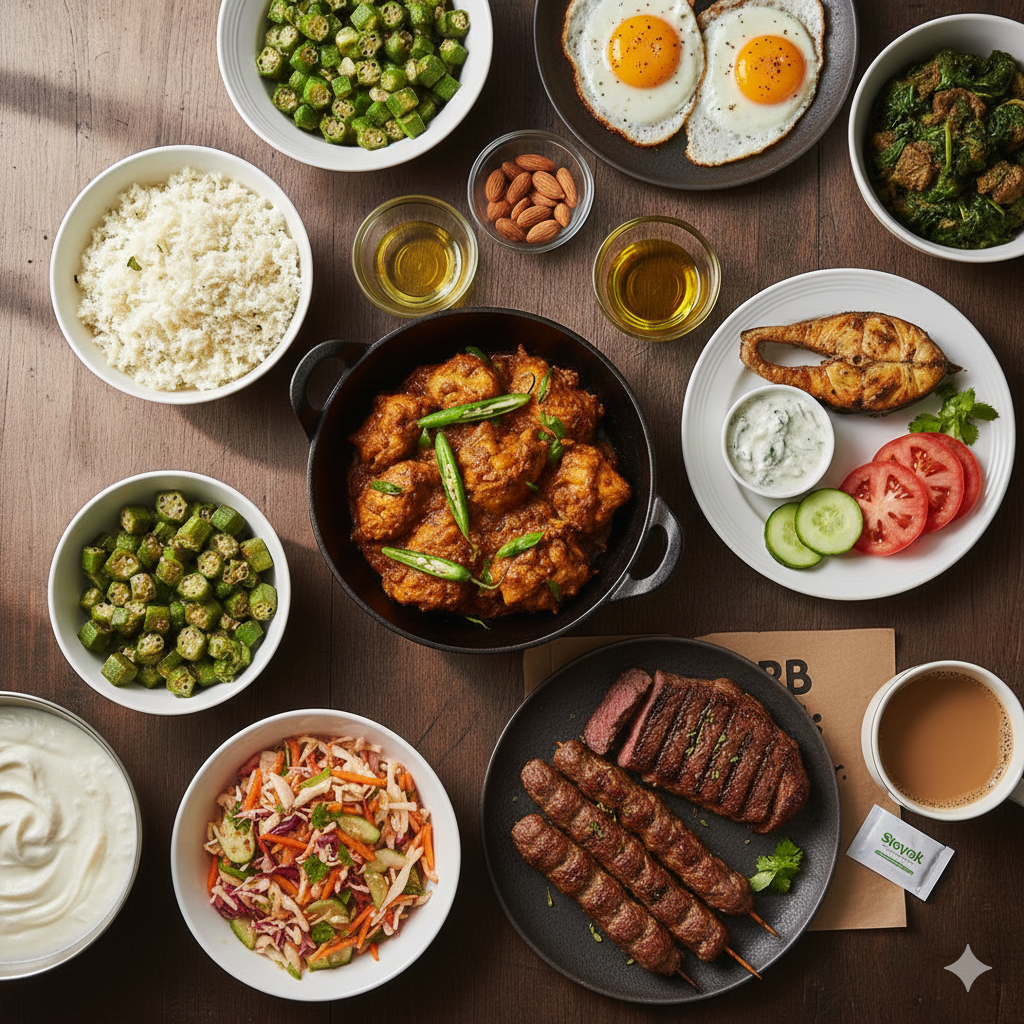
Pakistani Adaptation
Low-carb does not mean Western food only.
Instead of:
Basmati rice → Use cauliflower rice
Roti → Almond/coconut flour roti (occasionally)
Sugary chai → Unsweetened or stevia
Meal ideas:
Chicken karahi with sautéed bhindi
Mutton with palak
Paneer bhurji with cucumber salad
Grilled fish with raita
Eggs + leftover sabzi for breakfast
Focus on protein + vegetables + natural fats.
For Diabetes (Important Safety Note)
Type 2 diabetes:
Often improves significantly
Medications may need reduction
Blood sugar monitoring is essential
Type 1 diabetes:
Can use lower carb safely
But insulin must be adjusted carefully
Requires medical supervision
Never stop medication abruptly.
Common Benefits Reported
Reduced cravings
Stable energy
Improved mental clarity
Weight loss (especially abdominal)
Reduced hunger
Better triglycerides
Important Realities
Low-carb is effective — but:
It is not magic
Calories still matter
Protein must be adequate
Fiber intake should remain sufficient
Long-term sustainability is key
The best diet is the one that restores metabolic health and is sustainable culturally.
Practical Starting Plan
Start simple:
Three meals daily:
Protein (hand-sized portion)
Above-ground vegetables
Natural fats
No snacking
Hydrate well. Walk daily. Lift weights if possible.
Track fasting insulin, fasting glucose and HbA1c if diabetic.
Final Perspective
Low-carb is not about demonizing carbohydrates.
It is about:
Reducing insulin overload
Restoring metabolic flexibility
Reversing fatty liver
Breaking sugar addiction cycles
For insulin-resistant South Asians, it can be transformational.
But do it intelligently.
Do it supervised if diabetic.
And build it around real food — not packaged “keto” products.
References
- https://www.nutrisense.io/blog/low-carb-diet-benefits-risks-guide
- https://www.ncbi.nlm.nih.gov/books/NBK537084/
- https://www.diabetes.org.uk/living-with-diabetes/eating/meal-plans/low-carb
- https://lowcarbfreshwell.com/what-is-a-low-carb-lifestyle/dr-unwins-sugar-infographics/
- https://www.healthline.com/nutrition/10-benefits-of-low-carb-ketogenic-diets
- https://www.kitchenstewardship.com/how-to-avoid-seed-oils/
- https://pubmed.ncbi.nlm.nih.gov/35641199/
- https://pubmed.ncbi.nlm.nih.gov/17341711/
- https://pubmed.ncbi.nlm.nih.gov/26768850/
- https://www.ncbi.nlm.nih.gov/pmc/articles/PMC10202504/
- https://insight.jci.org/articles/view/128308
- https://www.bmj.com/content/363/bmj.k4583
- https://pubmed.ncbi.nlm.nih.gov/33274750/
- Recent Post