“Mitochondria” are finally getting attention—and deservedly so.
They sit at the center of energy, fat loss, brain function, and aging.
Neglect them?
Fatigue, brain fog, stubborn fat, faster aging.
Support them?
Steady energy, sharper thinking, metabolic resilience.
This isn’t wellness hype. It’s core biology.
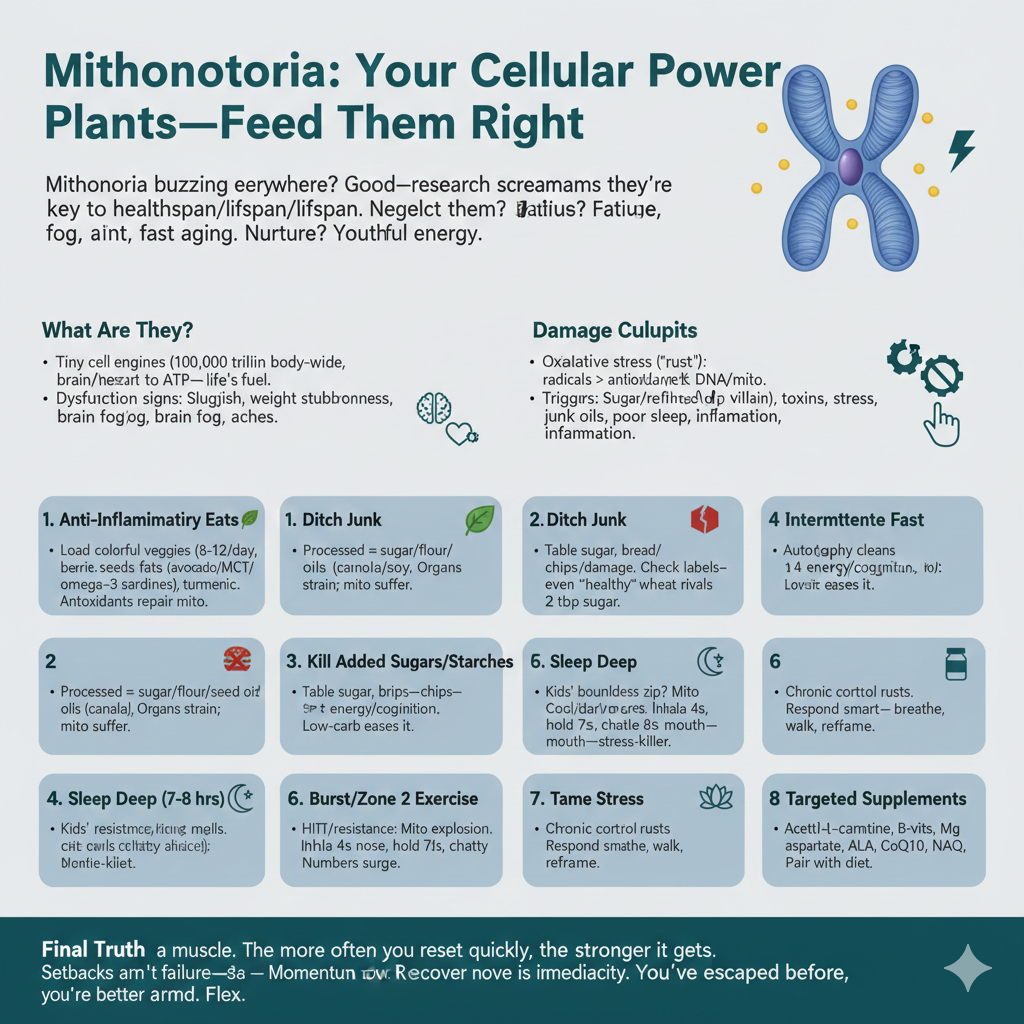
What Are Mitochondria?
Tiny engines inside your cells—about 100,000 trillion across the body, densely packed in the brain, heart, and muscles.
Their job: convert food + oxygen into ATP, the fuel of life.
Think rechargeable batteries.
Abuse them, they “rust.”
Care for them, they multiply and perform better.
Early signs of dysfunction
These are mitochondrial signals—not personal failures.
What Damages Mitochondria?
The main enemy is oxidative stress—too many free radicals, not enough antioxidant defense. Over time, this damages mitochondrial DNA and output.
Top triggers
Sugar & refined carbs (biggest offender)
Chronic stress (elevated cortisol)
Industrial seed oils
Toxins & ultra-processed foods
Poor sleep
Chronic inflammation
Modern life is essentially a mitochondrial stress test.
Protect & Boost: 8 Low-Carb Strategies
1. Anti-Inflammatory Eating
Flood cells with antioxidants:
Protein
Berries (small portions)
Nuts & seeds (measured)
Healthy fats: avocado, olive oil, MCT, butter, ghee
Omega-3s: salmon, sardines, eggs
Spices: turmeric, ginger
Antioxidants don’t just protect—they signal mitochondria to adapt and grow.
2. Ditch Ultra-Processed Foods
Processed foods = sugar + refined starch + seed oils.
Your liver struggles, inflammation rises, mitochondria suffer.
If it comes in a box with a health halo, question it.
3. Eliminate Added Sugar & Refined Starch
Sugar is mitochondrial rust.
Bread, chips, crackers, sweets spike glucose and accelerate damage.
Label reality check: many “healthy” grains spike glucose like tablespoons of sugar.
4. Use Intermittent Fasting Strategically
Fasting activates autophagy—cellular cleanup of damaged mitochondria.
Benefits:
Improved fat oxidation
Cleaner energy
Better cognition
Low-carb eating makes fasting easier and safer.
5. Sleep Deep (7–8 Hours)
Kids have boundless energy for a reason: healthy mitochondria + sleep.
Priorities:
Cool, dark room
No late screens
Simple downshift tool:
4-7-8 breathing — inhale 4s, hold 7s, exhale 8s.
6. Train Your Mitochondria
Exercise is a mitochondrial signal, not just calorie burn.
HIIT + resistance training → mitochondrial growth
Zone 2 cardio (60–70% max HR, conversational pace) → more mitochondria, better efficiency
Both matter. Walking counts.
7. Tame Chronic Stress
Short stress builds resilience.
Chronic stress corrodes mitochondria.
Daily tools:
You don’t need zero stress—just less marinating in it.
8. Targeted Supplements (Adjuncts, Not Replacements)
Helpful when paired with diet:
You can’t out-supplement sugar.
Why Low-Carb Works So Well
Low-carb eating:
Reduces glucose-driven oxidative stress
Improves fat-adapted mitochondrial fuel use
Stabilizes insulin and inflammation
Less rust. Better batteries.
Bottom Line
Mitochondria decide how you feel, think, age, and burn fuel.
Feed them junk → exhaustion.
Feed them well → energy, clarity, resilience.
This isn’t just about lifespan—it’s about healthspan.
Your cells are listening. Start today.
Refernces
- https://academic.oup.com/biomedgerontology/article/56/11/B475/cleeuwen@ufl.edu
- https://www.sciencedaily.com/releases/2015/12/151202132521.htm
- https://www.sciencedaily.com/releases/2017/03/170307155214.htm
- Linnane AW, Kovalenko S, Gingold EB. The universality of bioenergetic disease: age-associated cellular bioenergetic degradation and amelioration therapy. Ann N Y Acad Sci. 1998 Nov 20;854:202-13
- https://www.ncbi.nlm.nih.gov/pubmed/25404320
- https://www.ptpioneer.com/?msID=15768997-fe01-4674-b10d-451c89bd225a

2 Responses