Protein isn’t just for athletes or bodybuilders—it’s an indispensable nutrient, foundational to every cell and process in your body. Without enough protein, everything from your muscles to your immune system and even your mood can take a hit. Let’s explore why protein is so important, how deficiency manifests, and how much you should actually be aiming to eat.
Why Protein is Essential
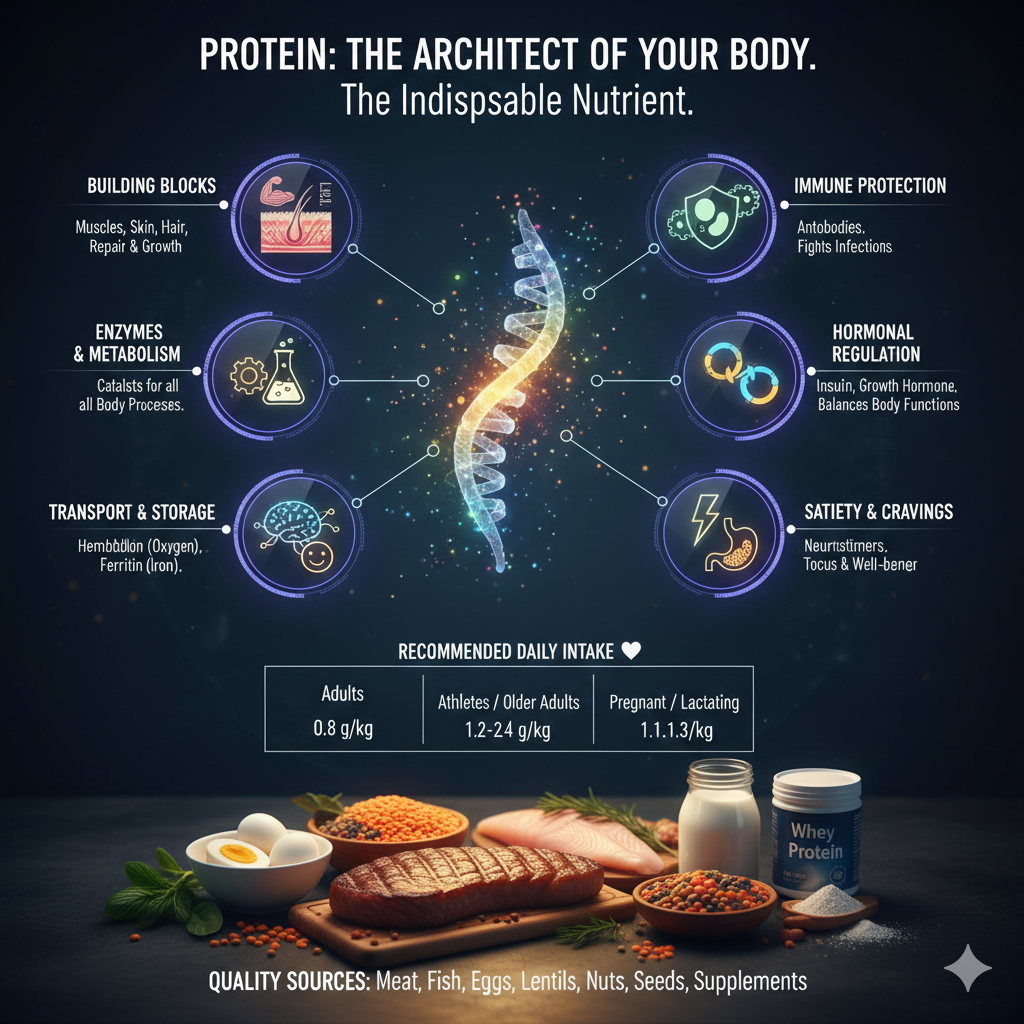
1. Building Blocks of Life
Proteins form the structural framework for skin, hair, nails (collagen, keratin), and even bone. They repair damaged cells and build new ones, keeping you strong and resilient.
2. Catalysts for Chemical Reactions
Most enzymes that drive metabolism are proteins, enabling every process you need to survive—from digesting food to detoxifying your body.
3. Transport and Storage
Hemoglobin (a protein) carries oxygen; ferritin stores iron. Without adequate protein, you can’t efficiently move or store vital nutrients.
4. Immune Protection
Antibodies—your body’s soldiers in the fight against infection—are proteins. Protein deficiency weakens your defenses.
5. Hormonal Regulation
Many hormones, like insulin and growth hormone, are proteins, helping coordinate everything from blood sugar control to tissue growth and repair.
6. Energy Source
When needed, protein can be used for fuel, especially if carbohydrates and fat are in short supply.
Consequences of Inadequate Protein Intake
A diet lacking in quality protein can result in a surprising range of health issues:
-
Muscle loss and weakness (sarcopenia): Particularly common in older adults, leading to frailty and reduced mobility.
-
Hormonal Imbalances: Disruptions in insulin, thyroid hormone, sex hormones—impacting everything from metabolism to fertility.
-
Poor Immunity: More frequent infections, slower recovery from illness.
-
Swelling (edema): Due to low levels of proteins like albumin that help regulate fluid balance.
-
Hair loss, brittle nails, and flaky skin: All structural proteins.
-
Fatty liver: Insufficient protein can lead to fat building up in the liver.
-
Stunted growth (children): Protein is essential for proper growth and cognitive development.
-
Bone weakness and fractures: Protein supports bone remodeling and strength.
-
Mood changes and “brain fog”: Neurotransmitters—protein-based—are vital for clear thinking and a stable mood.
-
Slow wound healing: Your body can’t repair damage, so recovery lags.
-
Anemia: Hemoglobin is a protein; without enough, you’ll feel tired and weak.
-
Digestive problems: Protein builds the gut lining and helps absorb nutrients.
-
Hunger and sugar cravings: Protein helps you feel full and tames cravings.
-
Malabsorption of vitamins and minerals: Protein is needed for the absorption and transport of many key nutrients.
-
Cardiac health issues: Your heart is a muscle; weak protein intake may weaken the heart muscle itself.
How Much Protein Do You Really Need?
Needs vary, but here are standard guidelines:
| Population |
Recommended Protein Intake (g/kg body weight) |
| Healthy Adult |
0.8 (some experts recommend up to 1.8) |
| Athletes/Highly Active |
1.2–2.4 |
| Older Adults |
1.2–1.5 |
| Pregnant Women |
1.1 |
| Lactating Women |
1.3 |
Divide total protein intake across all meals for best effect on muscle maintenance and satiety.
Quality Matters: Where Should You Get Your Protein?
-
Animal: Beef, lamb, chicken, fish, eggs, dairy, collagen
-
Plant: Lentils, beans, tofu, nuts, seeds (combine for complete amino profile)
-
Supplements: Whey, collagen, and fermented plant-based proteins—can help fill gaps
Conclusion
Protein plays a starring role in structural integrity, muscle strength, immunity, hormones, mental health, and much more. Consuming enough—especially as you age, get more active, or face health challenges—is the foundation for a strong, resilient, and healthy body. Don’t let protein be an afterthought—make it central to your plate and your well-being.
References
- Morley, J. E., Argiles, J. M., Evans, W. J., Bhasin, S., Cella, D., Deutz, N. E., … & Fearon, K. C. (2010). Nutritional recommendations for the management of sarcopenia. Journal of the American Medical Directors Association, 11(6), 391-396.
- Bauer, J., Biolo, G., Cederholm, T., Cesari, M., Cruz-Jentoft, A. J., Morley, J. E., … & Boirie, Y. (2013). Evidence-based recommendations for optimal dietary protein intake in older people: a position paper from the PROT-AGE Study Group. Journal of the American Medical Directors Association, 14(8), 542-559.
- Calder, P. C. (2013). Immunonutrition in critically ill patients: time to move on from interesting ideas to confirming efficacy. Proceedings of the Nutrition Society, 72(4), 339-349.
- Moon, J. L., Kim, K., Kim, K. J., Park, S., Park, S. H., & Ko, J. K. (2015). Effects of dietary protein restriction on edema, metabolic acidosis, and anemia in patients with chronic kidney disease. Journal of Renal Nutrition, 25(1), 50-55.
- Trostler, N. (1997). Malnutrition in the elderly. Journal of Nutrition, 127(6), 990S-993S.
- Kumar, N., & Garg, S. (2013). Protein deficiency and skin health. Journal of Clinical and Diagnostic Research, 7(11), 2555-2558.
- Marchesini, G., Bugianesi, E., Forlani, G., Cerrelli, F., Lenzi, M., Manini, R., … & Melchionda, N. (2003). Nonalcoholic fatty liver, steatohepatitis, and the metabolic syndrome. Hepatology, 37(4), 917-923.
- Williams, P., & Sharpe, L. (2010). Protein deficiency and the developing brain. The Journal of Nutrition, 140(6), 1213-1217.
- Heaney, R. P. (2013). Protein intake and bone health: the influence of belief systems on the conduct of nutritional science. The American Journal of Clinical Nutrition, 97(4), 1100-1107.
- Le Floc’h, N., Otten, W., & Merlot, E. (2011). Tryptophan metabolism, from nutrition to potential therapeutic applications. Amino Acids, 41(5), 1195-1205.
- Wolfe, R. R. (2012). The role of dietary protein in optimizing muscle mass, function and health outcomes in older individuals. British Journal of Nutrition, 108(S2), S88-S93.
- McLean, R. R., Mangano, K. M., Hannan, M. T., Kiel, D. P., & Sahni, S. (2016). Dietary protein intake is protective against loss of grip strength among older adults in the Framingham Offspring Cohort. The Journals of Gerontology: Series A, 71(3), 356-361.
- Smith, T. J., & Wahlqvist, M. L. (2015). Protein intake and the risk of osteoporosis and bone fractures in older adults: a systematic review and meta-analysis. British Journal of Nutrition, 114(8), 1269-1277.
- Benton, D. (2010). The influence of dietary status on the cognitive performance of children. Molecular Nutrition & Food Research, 54(4), 457-470.
- Denny, S. D., & Nicklas, B. J. (2006). Protein and its effect on skeletal muscle: quality vs. quantity. Current Opinion in Clinical Nutrition and Metabolic Care, 9(6), 568-572.
- Paddon-Jones, D., & Rasmussen, B. B. (2009). Dietary protein recommendations and the prevention of sarcopenia. Current Opinion in Clinical Nutrition and Metabolic Care, 12(1), 86-90.
- Volpi, E., Campbell, W. W., Dwyer, J. T., Johnson, M. A., Jensen, G. L., Morley, J. E., & Wolfe, R. R. (2013). Is the optimal level of protein intake for older adults greater than the recommended dietary allowance? The Journals of Gerontology Series A: Biological Sciences and Medical Sciences, 68(6), 677-681.
- Lemon, P. W. (1998). Effects of exercise on dietary protein requirements. International Journal of Sport Nutrition and Exercise Metabolism, 8(4), 426-447.
- Tang, J. E., & Phillips, S. M. (2009). Maximizing muscle protein anabolism: the role of protein quality. Current Opinion in Clinical Nutrition and Metabolic Care, 12(1), 66-71.
- Tarnopolsky, M. (2004). Protein requirements for endurance athletes. Nutrition, 20(7-8), 662-668.

One Response