
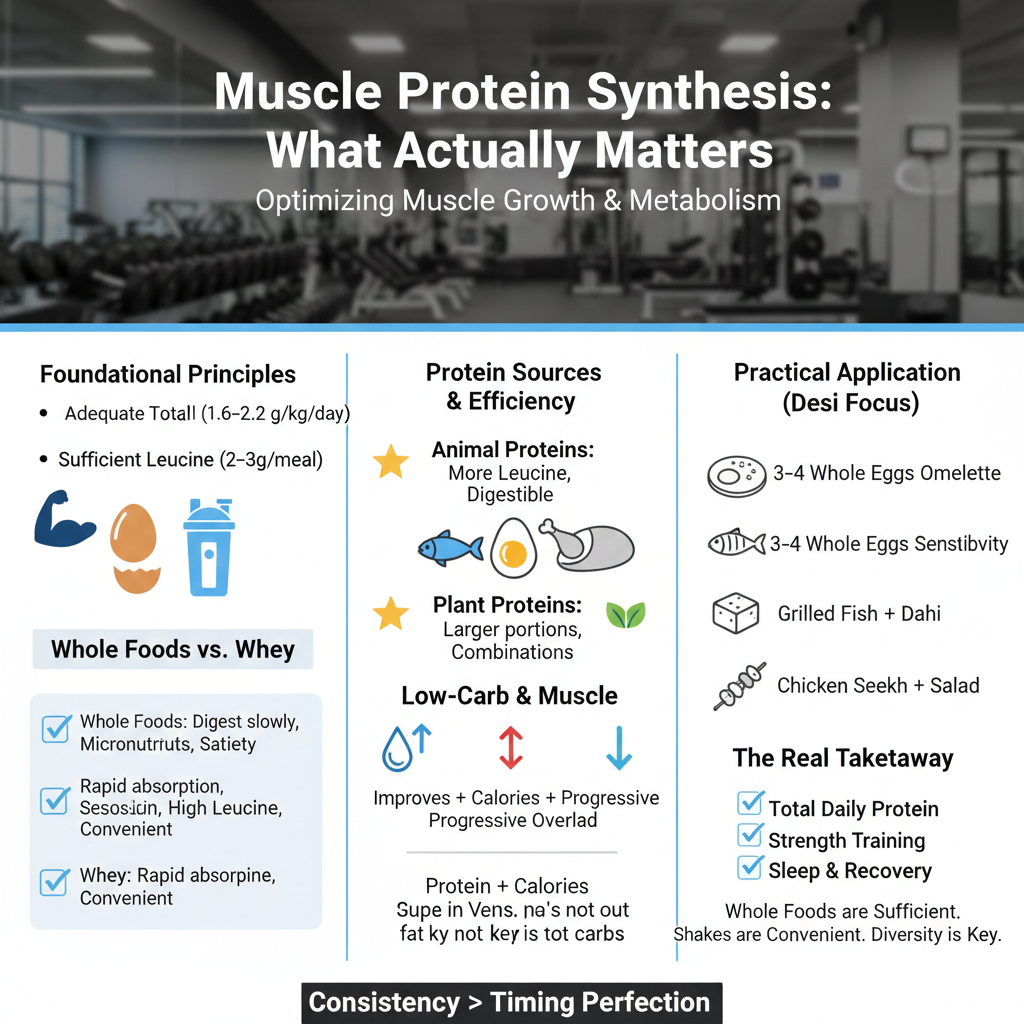
After resistance training, your body increases:
Muscle protein synthesis (MPS)
Protein breakdown (to a lesser degree)
Net muscle gain depends on:
Adequate total protein
Sufficient leucine (~2–3g per meal)
Overall daily intake (≈1.6–2.2 g/kg bodyweight for lifters)
The source matters less than many marketers suggest.
Whole Eggs vs Egg Whites
Myofibrillar muscle protein synthesis is similar when protein is matched
Whole eggs may improve net protein balance slightly
The “food matrix” (fats, phospholipids, micronutrients) may influence anabolic signaling
But the difference is modest — not dramatic.
Whole eggs are simply more nutrient-dense.
Animal vs Plant Proteins for Muscle
Salmon
Lamb
Eggs
Legumes
Mycoprotein
All can stimulate muscle protein synthesis.
However:
Animal proteins generally:
Contain more leucine per gram
Are more digestible
Reach the anabolic threshold more easily
Plant proteins can work — but often require:
Larger portions
Strategic combinations
So it’s efficiency vs possibility.
Do Whole Foods “Beat” Whey?
Not exactly.
Whey protein:
Is rapidly absorbed
Is high in leucine
Is convenient
Stimulates strong acute MPS
Whole foods:
Digest more slowly
Provide additional micronutrients
May suppress breakdown longer
Improve satiety
For most people, long-term muscle gain is similar if total daily protein is adequate.
Shakes are tools. Not magic.
Low-Carb & Muscle Building
For those managing insulin resistance or diabetes:
Resistance training:
Improves glucose disposal
Increases insulin sensitivity
Expands glycogen storage capacity
Adequate protein:
Supports muscle retention during fat loss
Reduces hunger
Stabilizes blood sugar
You do not need high-carb post-workout sugar spikes to build muscle.
Protein + sufficient calories + progressive overload is enough.
Practical Post-Workout Options
Instead of a shake:
3–4 whole eggs
Grilled fish + dahi
Chicken seekh + salad
Lamb mince + sautéed vegetables
Palak [paneer
Aim for:
30–40g protein
Within 1–2 hours post-training
Consistency > timing perfection
For Type 1 Diabetes
Muscle mass acts as a glucose buffer.
More muscle:
Improves insulin sensitivity
Smooths glucose variability
Enhances long-term metabolic control
But:
Very high-fat meals may delay glucose rise
Insulin dosing adjustments matter
Monitoring remains key.
The Real Takeaway
You don’t need isolated shakes.
You don’t need to avoid them either.
Muscle growth depends on:
Total daily protein
Progressive strength training
Sleep
Recovery
Caloric adequacy
Whole foods are sufficient.
Shakes are convenient.
Diversity across protein sources likely supports broader micronutrient coverage and long-term health.
References
- https://ajcn.nutrition.org/article/S0002-9165(26)00040-7/fulltext
- Recent Post