Understanding Visceral vs. Subcutaneous Fat
Did you know not all body fat is created equal? Where your body stores fat can affect your health just as much as how much you have. Let’s break down the two main types—visceral fat and subcutaneous fat—and learn why getting rid of the “hidden” fat is vital for long-term wellness.
Visceral Fat: The Hidden, Risky Kind
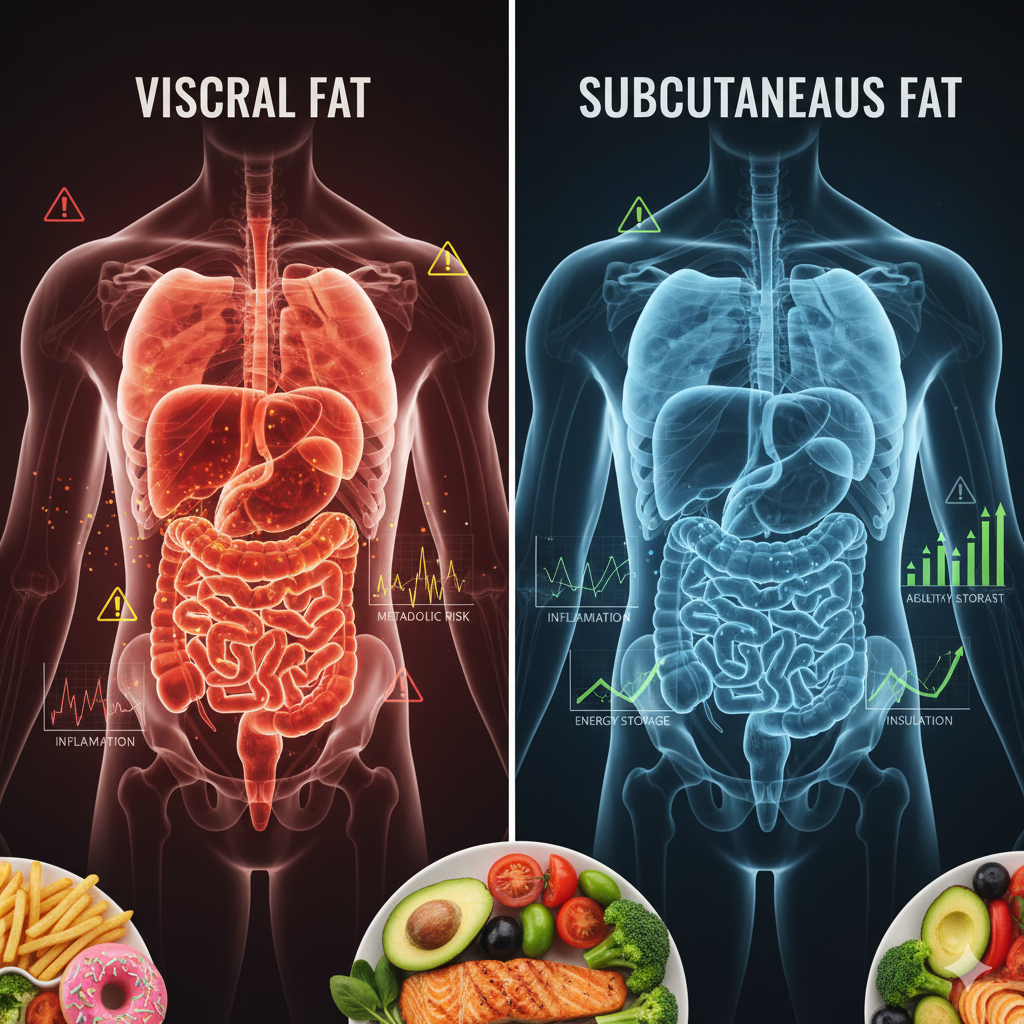
Where it’s found: Deep inside your belly, packed around organs like your liver, pancreas, and intestines.
Why it matters: Visceral fat is metabolically active—it releases hormones and inflammatory chemicals that can disrupt how your body works.
How to spot it: Because it’s hidden, you can’t pinch it! Scans like CT or MRI measure visceral fat, but a large waistline is often a clue.
Subcutaneous Fat: The Surface Layer
Where it’s found: Right under your skin—think of the fat you can pinch on your arms, thighs, or belly.
Main job: Stores energy and insulates your body.
Health impact: Less harmful than visceral fat, and not strongly linked to chronic disease.
What Causes Fat to Gather?
Diet & Lifestyle: Diets high in processed foods, sugar, and low physical activity allow both kinds of fat to accumulate.
Genetics: Some people are predisposed to store more fat around the organs.
Hormones: Changes, especially during menopause in women, can shift fat from under the skin to around the organs.
Chronic stress: Triggers hormones (like cortisol) that encourage storing more visceral fat.
Why Is Visceral Fat So Dangerous?
Inflammation: Visceral fat releases substances that fuel chronic inflammation, raising the risk for heart disease and diabetes.
Metabolic Disruption: Linked to higher blood sugar and cholesterol, as well as poorer insulin sensitivity.
Hormonal Disruption: Visceral fat behaves like an endocrine organ, churning out hormones that disrupt your metabolism and health.
How to Prevent and Reduce Visceral Fat
Eat smarter: Focus on whole foods, cut back on sugar and processed carbs.
Get moving: Both cardio and strength training help lower visceral fat.
Manage stress: Practice relaxation techniques, meditation, or yoga.
Prioritize sleep: Quality sleep keeps hunger hormones and fat-storing hormones in check.
Takeaway
Both visceral and subcutaneous fat add to your body weight, but it’s the deep, hidden visceral fat that’s most harmful to your health. By making simple changes in your diet, exercise habits, stress levels, and sleep, you can target the “dangerous” fat and support both your appearance and your long-term health.

References
- Tchernof, A., & Després, J. P. (2013). Pathophysiology of human visceral obesity: an update. Physiological Reviews, 93(1), 359-404.
- Sam, S. (2007). Differential effect of subcutaneous abdominal and visceral adipose tissue on cardiometabolic risk. Hormone and Metabolic Research, 39(09), 1-8.
- Wronska, A., & Kmiec, Z. (2012). Structural and biochemical characteristics of various white adipose tissue depots. Acta Physiologica, 205(2), 194-208.
- Gesta, S., Tseng, Y. H., & Kahn, C. R. (2007). Developmental origin of fat: tracking obesity to its source. Cell, 131(2), 242-256.
- Mozaffarian, D., Hao, T., Rimm, E. B., Willett, W. C., & Hu, F. B. (2011). Changes in diet and lifestyle and long-term weight gain in women and men. New England Journal of Medicine, 364(25), 2392-2404.
- Locke, A. E., Kahali, B., Berndt, S. I., Justice, A. E., Pers, T. H., Day, F. R., … & Speliotes, E. K. (2015). Genetic studies of body mass index yield new insights for obesity biology. Nature, 518(7538), 197-206.
- Lovejoy, J. C., Champagne, C. M., de Jonge, L., Xie, H., & Smith, S. R. (2008). Increased visceral fat and decreased energy expenditure during the menopausal transition. International Journal of Obesity, 32(6), 949-958.
- Epel, E., Lapidus, R., McEwen, B., & Brownell, K. (2001). Stress may add bite to appetite in women: a laboratory study of stress-induced cortisol and eating behavior. Psychoneuroendocrinology, 26(1), 37-49.
- Tilg, H., & Moschen, A. R. (2006). Adipocytokines: mediators linking adipose tissue, inflammation and immunity. Nature Reviews Immunology, 6(10), 772-783.
- Després, J. P. (2012). Body fat distribution and risk of cardiovascular disease: an update. Circulation, 126(10), 1301-1313.
- Ibrahim, M. M. (2010). Subcutaneous and visceral adipose tissue: structural and functional differences. Obesity Reviews, 11(1), 11-18.
- Reilly, M. P., Lehrke, M., & Wolfe, M. L. (2005). Resistin is an inflammatory marker of atherosclerosis in humans. Circulation, 111(7), 932-939.
- Mozaffarian, D., Hao, T., Rimm, E. B., Willett, W. C., & Hu, F. B. (2011). Changes in diet and lifestyle and long-term weight gain in women and men. New England Journal of Medicine, 364(25), 2392-2404.
- Lee, S., Kuk, J. L., Davidson, L. E., Hudson, R., Kilpatrick, K., Graham, T. E., & Ross, R. (2005). Exercise without weight loss is an effective strategy for obesity reduction in obese individuals with and without type 2 diabetes. Journal of Applied Physiology, 99(3), 1220-1225.
- Dallman, M. F., Pecoraro, N. C., La Fleur, S. E., & Warne, J. P. (2005). Glucocorticoids, chronic stress, and obesity. Progress in Brain Research, 153, 75-105.
- Spiegel, K., Leproult, R., & Van Cauter, E. (1999). Impact of sleep debt on metabolic and endocrine function. The Lancet, 354(9188), 1435-1439.
- Recent Post