
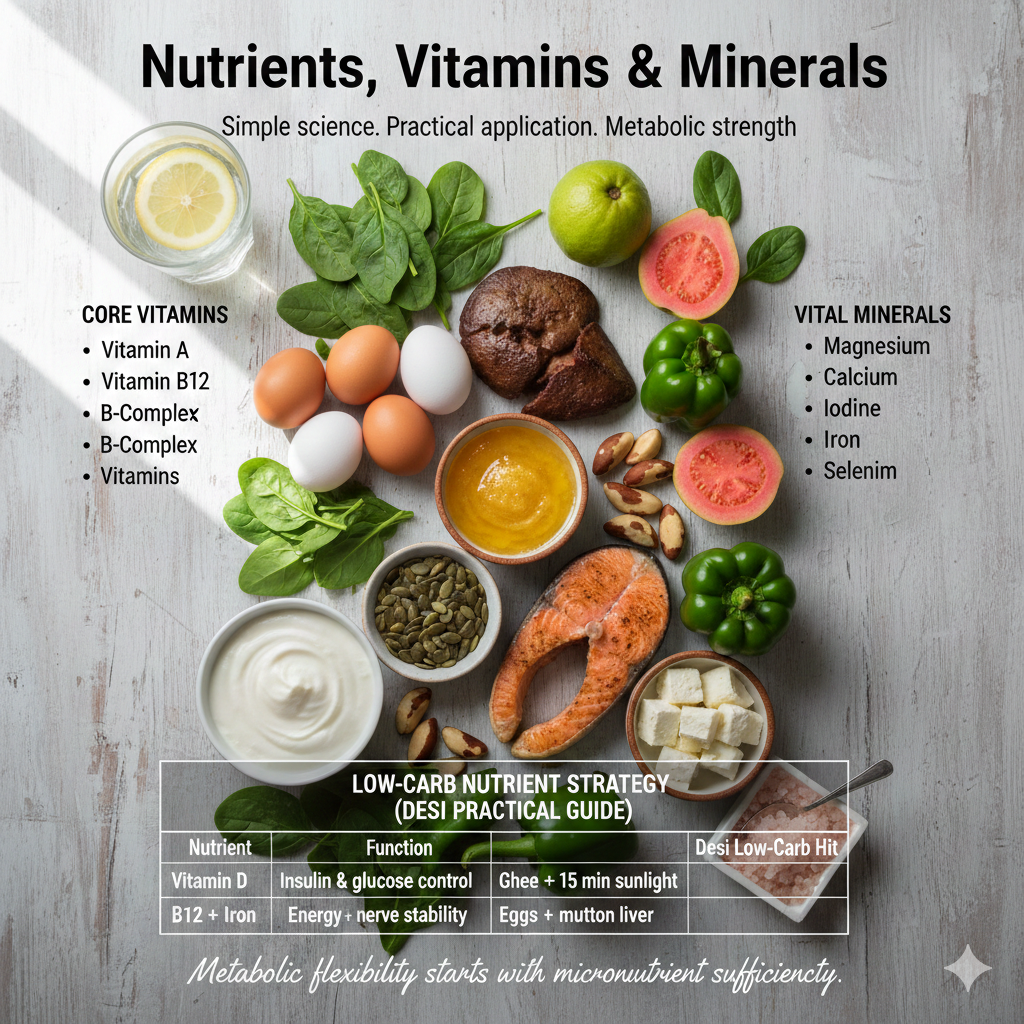
Simple science. Practical application. Metabolic strength.
Essential vitamins and minerals power metabolic health, immunity, hormone balance, and diabetes control. When blood sugar is unstable, nutrient demand rises — yet absorption often falls.
In Pakistan, widespread nutrient gaps exist due to refined grains, low animal protein intake, indoor lifestyles, and poor soil quality.
Low-carb, whole-food eating — especially animal-based sources like ghee, eggs, and organ meats — delivers highly bioavailable nutrients without carbohydrate interference.
Prioritizing these foods improves absorption, stabilizes insulin, and supports long-term metabolic resilience.
CORE VITAMINS
Vitamin A (Retinol)
Role: Vision, immune defense, epithelial repair.
Best source: Liver (most concentrated), egg yolks.
Why it matters: Retinol from animal foods is preformed and fully usable — unlike plant beta-carotene conversion, which is inefficient.
Deficiency signs: Night blindness, dry skin, weak immunity.
Vitamin B12
Role: Nerve integrity, red blood cell formation, DNA synthesis.
Best source: Meat, liver, eggs.
Why it matters: Vegans frequently become deficient. Low B12 contributes to anemia, neuropathy, fatigue.
Metabolic link: Essential in Type 1 and Type 2 diabetes to protect nerves.
Vitamin D
Role: Insulin sensitivity, immune regulation, bone strength.
Optimal range: 40–60 ng/mL (lab tested).
Sources: Sun exposure (15–20 min), ghee, egg yolks, fatty fish.
Note: Deficiency is extremely common in Pakistan.
Vitamin C
Role: Collagen production, antioxidant defense, adrenal support.
Sources: Guava, citrus, bell peppers.
Insight: On low-carb diets, requirement often decreases due to reduced oxidative stress. Pair with copper-rich foods for balance — avoid excess fruit if managing blood sugar.
B-Complex Vitamins (B1, B2, B3)
• B1 (Thiamine): Carbohydrate metabolism, nerve health
• B2 (Riboflavin): Energy production
• B3 (Niacin): Lipid metabolism
Low-carb diets reduce thiamine demand by lowering glucose load.
Fatty fish, eggs, and meat provide these efficiently — without reliance on fortified grains.
VITAL MINERALS
Magnesium
Role: 300+ enzyme reactions, glucose control, sleep, stress regulation.
Food sources: Seafood, poultry, dairy, pumpkin seeds, spinach, almonds.
Supplement form (if needed): Magnesium glycinate (~400 mg).
Deficiency signs: Cravings, anxiety, muscle cramps.
Zinc
Role: Immunity, testosterone production, wound healing.
Best sources: Organ meats, red meat, pumpkin seeds.
Metabolic note: Critical for blood sugar balance.
Calcium
Role: Bone density, muscle contraction.
Best sources: Cheese, yogurt, sardines.
Balance rule: Aim for roughly a 1:1 ratio with magnesium for optimal function.
Iodine
Role: Thyroid hormone production.
Best sources: Seafood, iodized salt.
Important: Protects against goiter and sluggish thyroid — especially when consuming goitrogenic vegetables without adequate iodine.
Iron
Role: Oxygen transport.
Best source: Heme iron from lamb, beef, liver.
Why animal sources matter: Absorbed efficiently without plant blockers like phytates and oxalates found in spinach and grains.
Selenium
Role: Thyroid activation, antioxidant defense, mercury detox support.
Best sources: Brazil nuts (1–2 daily), fish (2x/week), eggs.
LOW-CARB NUTRIENT STRATEGY
| Nutrient | Function | Low-Carb Hit |
|---|---|---|
| Vitamin D | Insulin & glucose control | Ghee + 15 min sunlight |
| Magnesium + Zinc | Reduce cravings, improve sleep | Salmon, pumpkin seeds + paneer |
| B12 + Iron | Energy, nerve stability (T1D support) | Eggs + mutton liver |
| Selenium | Thyroid balance | Fish twice weekly |
Trace Minerals (Often Overlooked)
- Copper (Iron metabolism, collagen): Beef liver is the richest source. Other excellent animal sources include oysters and other shellfish (crab, lobster), liver (chicken, calf), and fish.
- Manganese (Antioxidant enzymes): Mussels are exceptionally high in manganese. Other good animal sources include oysters, clams and nuts.
- Chromium (Blood sugar support): Liver (specifically calf liver) and brewer’s yeast are the most concentrated sources. Other good animal sources include beef, chicken breast, egg yolks, and cheese.
- Molybdenum (Detox enzyme cofactor): Organ meats (liver and kidney) are top sources. Other animal sources include lamb, eggs, and milk/dairy products.
- Boron (Bone & hormone support): While mostly found in plant foods, trace amounts are present in red meat, fish, and dairy products.
- Silicon (Connective tissue): Found in small amounts in various animal products, with seafood being a notable contributor.
- Fluoride (Tooth enamel strength): Primarily found in water, but also in fish consumed with bones (like canned salmon or sardines) and seafood.
Germanium, Tellurium, and Vanadium are not established essential nutrients and are not recommended for supplementation.
Why This Matters for Diabetes & Metabolic Health
Deficiencies drive:
• Fatigue
• Cravings
• Poor insulin sensitivity
• Thyroid instability
• Hormonal disruption
Stabilizing nutrients — especially through bioavailable animal sources — improves glucose control, energy, and recovery.
Test first. Supplement intelligently (commonly D3 + K2 + magnesium when indicated).
Final Principle
Fuel right.
Stabilize blood sugar.
Close nutrient gaps.
Build resilience from the inside out.
Metabolic flexibility starts with micronutrient sufficiency.
- Recent Post