
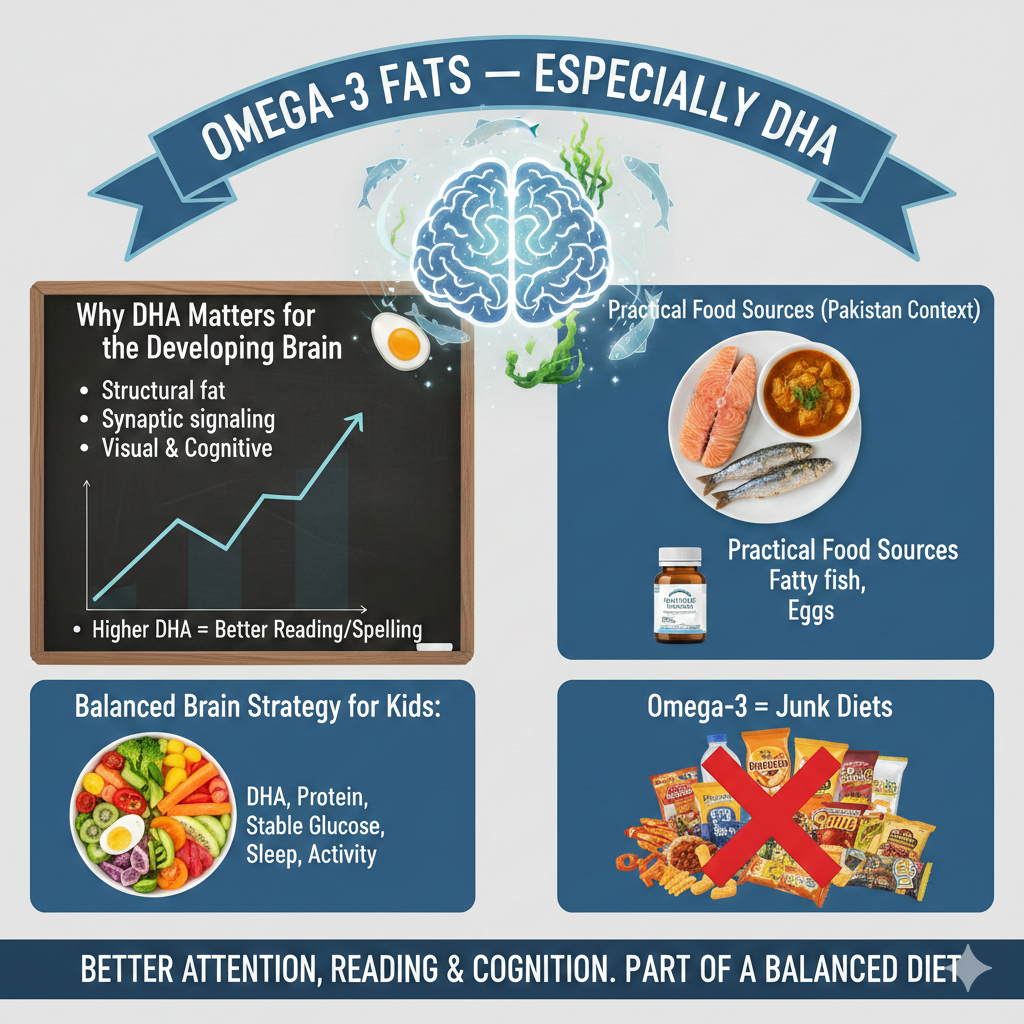
Omega-3 fats — especially DHA — absolutely matter for brain development.
But the story is more balanced than “omega-3 overrides junk diets” or “low-carb is required for brain performance.”
Let’s look at what the science actually shows.
Why DHA Matters for the Developing Brain
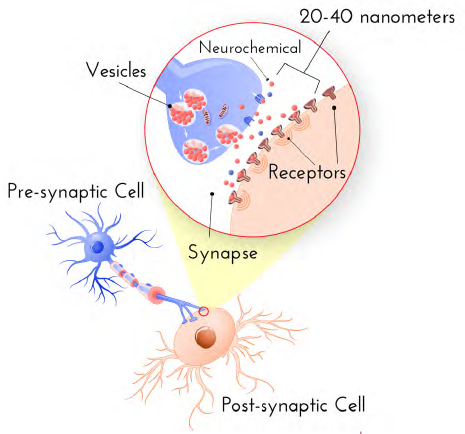

Is a major structural fat in brain cell membranes
Supports synaptic signaling
Affects membrane fluidity
Influences neurotransmission
Plays a role in visual and cognitive development
During childhood, the brain is still developing — especially executive function, attention, and language areas.
DHA status can influence how efficiently those systems operate.
What Do Studies Show About Academics?
Observational studies have found:
Higher blood DHA levels in children are associated with better reading and spelling scores
Lower omega-3 status is sometimes linked to attention difficulties
Benefits appear strongest in children with lower baseline omega-3 intake
Meta-analyses of supplementation trials show:
Small but measurable improvements in attention and some cognitive domains
Stronger effects in children with learning difficulties or low baseline intake
No dramatic IQ jumps in well-nourished children
Important:
These are associations and modest effects — not guaranteed academic transformation.
Diet quality overall still matters.
How Much Omega-3 Is Useful?
Many cognitive studies use:
300–600 mg DHA daily
Or 450–1000 mg combined EPA+DHA
Omega-3 Index (O3I):
8% considered optimal for cardiovascular health
6–8% reasonable target
Children in many regions (including South Asia) often consume very little marine omega-3.
Practical Food Sources



Fatty fish (salmon, sardines, mackerel, pomfret)
Fish curry 2–3 times per week
Eggs (especially DHA-enriched) everyday
Ghee does not meaningfully provide DHA.
It contains mostly saturated fat with minimal omega-3.
If fish intake is low:
Algal DHA supplements are effective (plant-based source of DHA)
Omega-3 & Diabetes Context
For children with type 1 diabetes:
Omega-3s may modestly reduce inflammation
Some evidence suggests small improvements in lipid profile
They do not replace glucose management
For insulin resistance:
Omega-3 improves triglycerides
Effects on glucose control are neutral to mild
They are supportive — not curative.
Does Omega-3 “Override” Junk Diets?
No.
A diet high in:
Ultra-processed foods
Refined sugars
Trans fats
Still impairs metabolic and cognitive health.
Omega-3 helps most when:
It corrects deficiency
It’s part of a generally nutrient-dense pattern
Sleep, activity, and glucose stability are also addressed
Balanced Brain Strategy for Kids
Instead of extreme low-carb or fat-only messaging:
Ensure adequate DHA (fish 2–3x/week or supplement)
Provide sufficient protein
Maintain stable glucose (limit refined sugar spikes)
Encourage sleep (8–10 hrs for school-age children)
Promote outdoor activity
Cognitive performance is multifactorial:
Nutrition
Sleep
Emotional safety
Physical activity
Education environment
Bottom Line
Higher omega-3 status in childhood is associated with:
Better reading fluency
Improved attention
Modest academic advantages
But it works best as part of:
A stable, nutrient-dense, balanced dietary pattern.
Not as a single “brain hack.”
References
- https://ajcn.nutrition.org/article/S0002-9165(26)00042-0/abstract