Prediabetes means your blood sugar is higher than normal—but not yet at diabetes levels. The good news? It’s often reversible with lifestyle changes. Nearly 88 million Americans have it, but most don’t know. Here’s what you can do to manage and potentially reverse prediabetes:


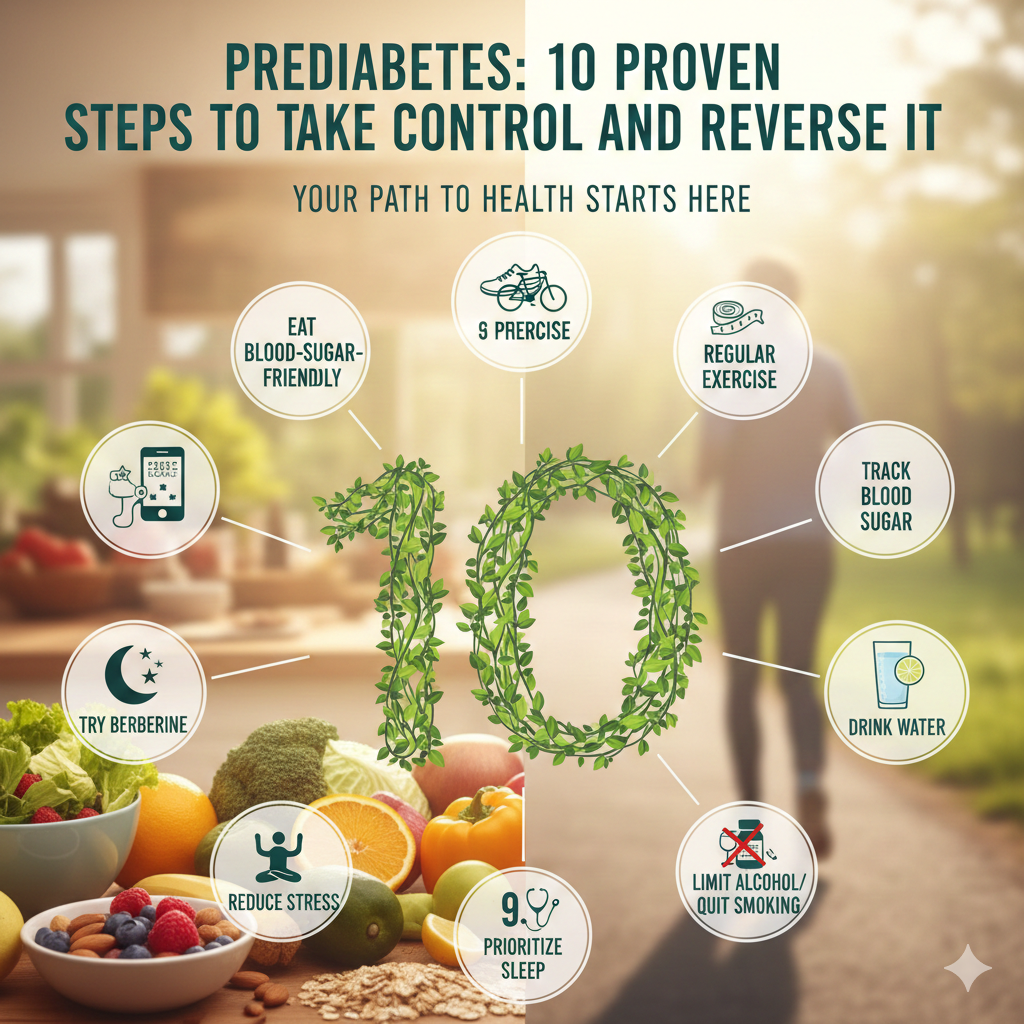
1. Eat a Blood-Sugar-Friendly Diet

Focus on whole foods that don’t spike your blood sugar:

  • Load up on high-fiber fruits, vegetables, nuts, and seeds

  • Cut sugary foods, sodas, white bread, and refined carbs


2. Get Regular Exercise

Movement improves how your body uses insulin:

  • 150+ minutes per week of aerobic activity (walking, cycling, swimming)

  • Strength training 2–3 times weekly to build muscle and boost metabolism


3. Lose a Little Weight

Even 5–10% body weight loss can dramatically improve blood sugar control and lower diabetes risk.


4. Track Your Blood Sugar

Use a continuous glucose monitor or regular tests to see what works—and what doesn’t—for your body.


5. Drink Plenty of Water

Water helps your kidneys flush excess sugar. Skip sugary drinks entirely.


6. Limit Alcohol & Quit Smoking

Both can raise blood sugar and complicate prediabetes. Moderation (or elimination) is best.


7. Try Berberine (with Doctor’s Guidance)

This natural plant compound acts like metformin—lowering blood sugar, improving insulin sensitivity, and supporting gut health. Always check with your healthcare provider first.


8. Reduce Stress

Chronic stress spikes blood sugar. Try meditation, yoga, or deep breathing to keep cortisol in check.


9. Prioritize Sleep

Aim for 7–9 hours of quality sleep nightly. Poor sleep harms blood sugar control.


10. Stay on Top of Check-Ups

Regular doctor visits and A1C tests track your progress and catch issues early.


The Bottom Line

Prediabetes is a warning sign—but also a chance to change your trajectory. Simple changes in diet, exercise, weight, sleep, and stress can often reverse it before diabetes develops. Start with one or two steps today, track your progress, and work with your healthcare team for personalized support.

References

  1. Centers for Disease Control and Prevention. (2020). National Diabetes Statistics Report, 2020. Available at: https://www.cdc.gov/diabetes/pdfs/data/statistics/national-diabetes-statistics-report.pdf
  2. Slavin, J. L. (2013). Dietary fiber and body weight. Nutrition, 29(4), 411-418.
  3. Jenkins, D. J. A., Kendall, C. W. C., & Augustin, L. S. A. (2002). Glycemic index: overview of implications in health and disease. American Journal of Clinical Nutrition, 76(1), 266S-273S.
  4. Ludwig, D. S. (2002). The glycemic index: physiological mechanisms relating to obesity, diabetes, and cardiovascular disease. JAMA, 287(18), 2414-2423.
  5. Colberg, S. R., Sigal, R. J., Fernhall, B., et al. (2010). Exercise and type 2 diabetes: the American College of Sports Medicine and the American Diabetes Association: joint position statement. Diabetes Care, 33(12), e147-e167.
  6. Sigal, R. J., Kenny, G. P., Wasserman, D. H., et al. (2006). Physical activity/exercise and type 2 diabetes. Diabetes Care, 29(6), 1433-1438.
  7. Hamman, R. F., Wing, R. R., Edelstein, S. L., et al. (2006). Effect of weight loss with lifestyle intervention on risk of diabetes. Diabetes Care, 29(9), 2102-2107.
  8. American Diabetes Association. (2020). Standards of medical care in diabetes—2020. Diabetes Care, 43(Suppl. 1), S1-S212.
  9. Popkin, B. M., D’Anci, K. E., & Rosenberg, I. H. (2010). Water, hydration, and health. Nutrition Reviews, 68(8), 439-458.
  10. Willi, C., Bodenmann, P., Ghali, W. A., et al. (2007). Active smoking and the risk of type 2 diabetes: a systematic review and meta-analysis. JAMA, 298(22), 2654-2664.
  11. Yin, J., Xing, H., & Ye, J. (2008). Efficacy of berberine in patients with type 2 diabetes mellitus. Metabolism, 57(5), 712-717.
  12. Turner, N., Li, J. Y., Gosby, A., et al. (2008). Berberine and its derivatives: a novel class of AMPK activators with beneficial effects on type 2 diabetes and insulin resistance. Diabetes, 57(5), 1414-1418.
  13. Zhang, Y., Li, X., Zou, D., et al. (2008). Treatment of type 2 diabetes and dyslipidemia with the natural plant alkaloid berberine. Journal of Clinical Endocrinology & Metabolism, 93(7), 2559-2565.
  14. Habtemariam, S. (2020). Berberine pharmacology and the gut microbiota: a hidden therapeutic link. Pharmacological Research, 155, 104722.
  15. O’Connor, D. B., Thayer, J. F., & Vedhara, K. (2021). Stress and health: A review of psychobiological processes. Annual Review of Psychology, 72, 663-688.
  16. Reutrakul, S., & Van Cauter, E. (2018). Sleep influences on obesity, insulin resistance, and risk of type 2 diabetes. Metabolism, 84, 56-66.
  17. American Diabetes Association. (2020). Standards of medical care in diabetes—2020. Diabetes Care, 43(Suppl. 1), S1-S212.

2 Responses