If you’ve ever tracked your blood sugar and noticed spikes after eating a protein and fat meal—like eggs, steak, or a keto shake—you’re not alone. It’s one of the most common questions in metabolic health. Here’s what science tells us about why this happens and what you can do:
Everyone’s Glucose Response is Different
Your body doesn’t react the same way to food as everyone else’s. Factors like:
Body fat distribution (especially visceral fat around organs)
Insulin secretion patterns
Individual hormone responses
…can make some people see bigger glucose swings, even from “low-carb” meals.
The Role of Glucagon and Other Hormones
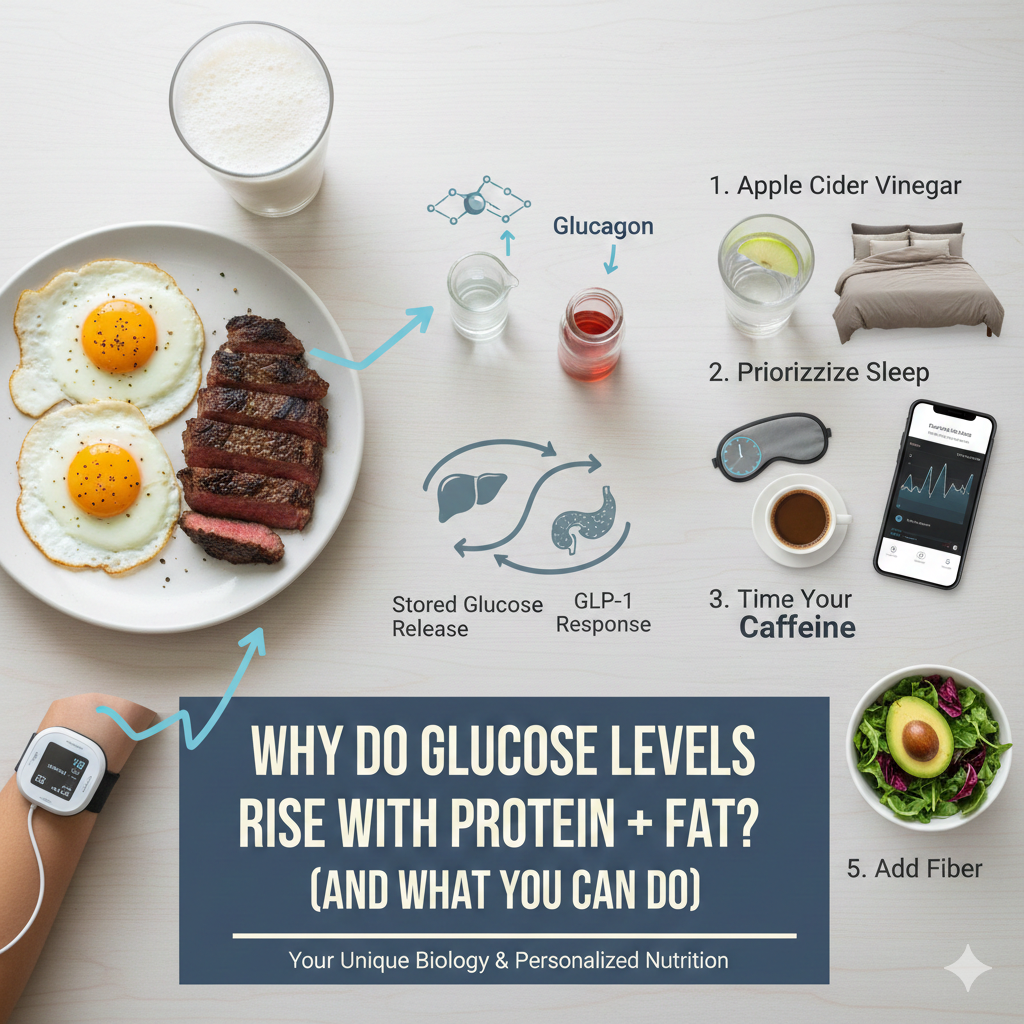
When you eat protein (and sometimes fat), your body releases glucagon from the pancreas. Glucagon tells your liver to release stored glucose into the bloodstream. For some people, this response is stronger, causing a noticeable rise.
Research is exploring why:
Fat storage differences or insulin resistance in glucagon-producing cells may play a role
Some people have higher glucagon and GLP-1 (a helpful gut hormone) responses to protein
Other Glucose-Spiking Triggers
Beyond food, lifestyle factors can amplify these responses:
Caffeine raises blood sugar—even with low-glucose meals
Sleep deprivation spikes cortisol and adrenaline, pushing glucose higher
Stress has similar effects
Practical Tips to Manage Protein + Fat Glucose Spikes
1. Try Apple Cider Vinegar (ACV)
A shot of ACV in water before protein+fat meals can blunt glucose rises. It slows digestion and improves insulin sensitivity.
2. Prioritize Sleep
7–9 hours of quality sleep keeps stress hormones in check and stabilizes glucose responses.
3. Time Your Caffeine
Save coffee until after meals if you notice spikes.
4. Monitor Your Patterns
Use a continuous glucose monitor to identify your specific triggers and responses.
5. Consider Meal Composition
Some find adding a bit of fiber (like greens) or eating slower helps moderate the glucagon response.
The Bottom Line
Your glucose response to protein and fat is highly individual—and perfectly normal to vary. Factors like glucagon, body composition, sleep, and stress all play roles. Rather than avoiding healthy protein+fat meals, experiment with timing, ACV, and lifestyle tweaks to find what works best for your body.
Embrace the complexity—your unique biology is what makes personalized nutrition so powerful!
References
- https://pubmed.ncbi.nlm.nih.gov/35016041/
- https://pubmed.ncbi.nlm.nih.gov/18469247/

2 Responses