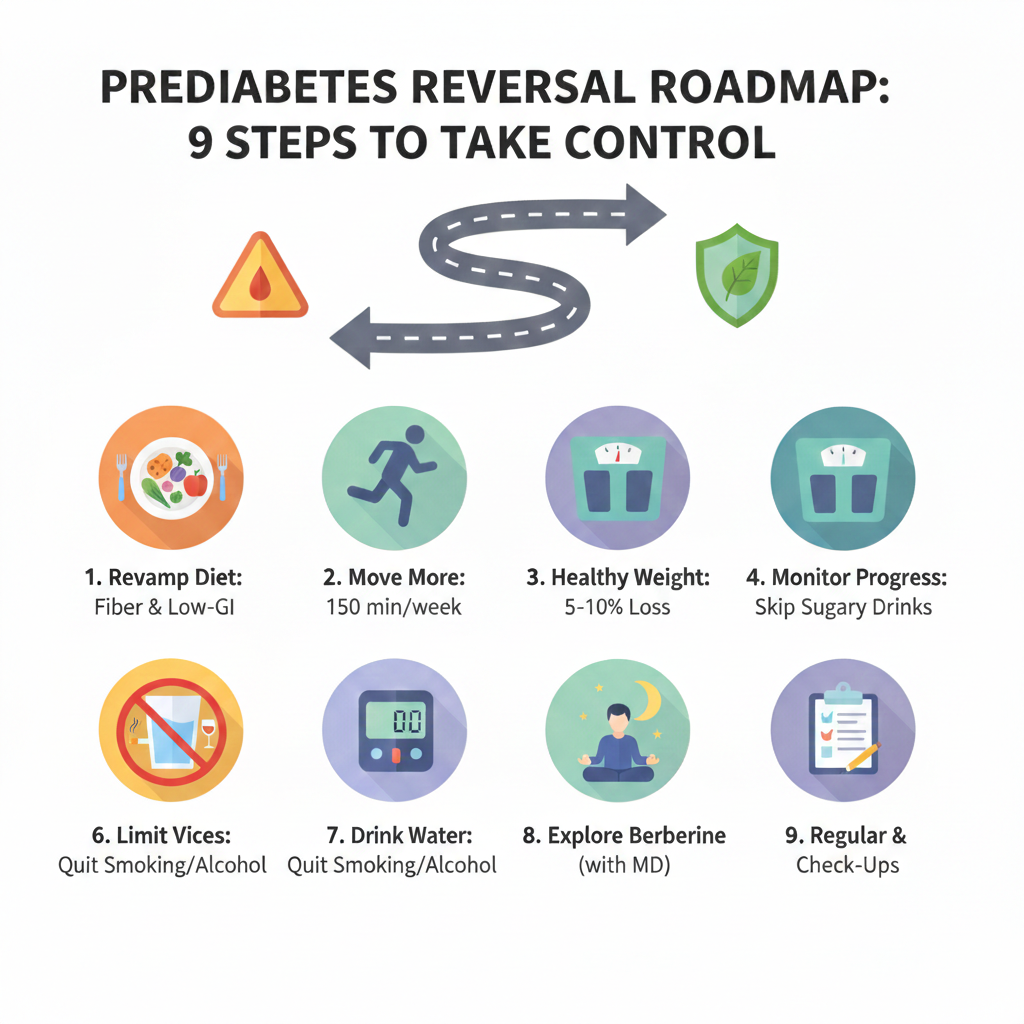
Prediabetes is a warning sign—a state where blood sugar levels are higher than normal but not yet in the diabetes range. While it sounds daunting, this stage represents a critical window of opportunity: with the right steps, you can halt the progression and even restore healthy blood sugar levels.
1. Revamp Your Diet for Blood Sugar Balance
Fill up on fiber: Emphasize non-starchy vegetables and some fruits to slow digestion and keep you full.
Choose low-glycemic foods: Nuts, seeds, and leafy greens help prevent sharp blood sugar rises.
Reduce sugars and refined carbs: Swap white bread, sweets, and sodas for whole, minimally processed foods.
2. Move Your Body Regularly
Being active improves your cells’ response to insulin and helps manage weight—two key factors for reversing prediabetes:
Aim for 150 minutes per week of aerobic activity: walking, cycling, swimming, or jogging.
Strength train 2–3 times weekly to build muscle and further lower blood glucose.
3. Reach—and Maintain—a Healthy Weight
Even a modest weight loss (5–10% of body weight) can dramatically lower the risk of progressing to diabetes.
Combine healthy eating with active living for best results.
4. Monitor Your Progress
Check your blood sugar regularly.
Use a continuous glucose monitor or schedule periodic tests to assess your response to lifestyle changes.
5. Drink More Water
Hydration supports kidney function, helping flush excess glucose from your bloodstream.
Skip sugary drinks—water is your best friend.
6. Limit Alcohol and Quit Smoking
Both can disrupt blood sugar control and worsen health risks:
Work towards quitting for improved metabolic and cardiovascular health.
7. Explore Berberine (with Caution)
Natural supplement berberine may improve insulin sensitivity and lower blood sugar, acting through beneficial effects on metabolism and the gut microbiome.
Always discuss with your healthcare provider before starting supplements.
8. Reduce Stress and Prioritize Sleep
Chronic stress and sleep deprivation disrupt blood sugar and hormone balance.
Incorporate mindfulness, meditation, or yoga into your routine, and strive for 7–9 hours of restful sleep each night.
9. Regular Check-Ups Are Key
Partner with your healthcare team for routine monitoring of A1C and overall metabolic health.
Conclusion
Prediabetes doesn’t have to progress—it’s a wake-up call and an opportunity. Through targeted diet changes, physical activity, weight control, hydration, smart supplementation, stress management, and regular medical follow-ups, you can slow, stop, or even reverse prediabetes. Small actions, done consistently, lead to big, lasting results for your long-term health. Now is the time to take control and rewrite your health story!
References
- Centers for Disease Control and Prevention. (2020). National Diabetes Statistics Report, 2020. Available at: https://www.cdc.gov/diabetes/pdfs/data/statistics/national-diabetes-statistics-report.pdf
- Slavin, J. L. (2013). Dietary fiber and body weight. Nutrition, 29(4), 411-418.
- Jenkins, D. J. A., Kendall, C. W. C., & Augustin, L. S. A. (2002). Glycemic index: overview of implications in health and disease. American Journal of Clinical Nutrition, 76(1), 266S-273S.
- Ludwig, D. S. (2002). The glycemic index: physiological mechanisms relating to obesity, diabetes, and cardiovascular disease. JAMA, 287(18), 2414-2423.
- Colberg, S. R., Sigal, R. J., Fernhall, B., et al. (2010). Exercise and type 2 diabetes: the American College of Sports Medicine and the American Diabetes Association: joint position statement. Diabetes Care, 33(12), e147-e167.
- Sigal, R. J., Kenny, G. P., Wasserman, D. H., et al. (2006). Physical activity/exercise and type 2 diabetes. Diabetes Care, 29(6), 1433-1438.
- Hamman, R. F., Wing, R. R., Edelstein, S. L., et al. (2006). Effect of weight loss with lifestyle intervention on risk of diabetes. Diabetes Care, 29(9), 2102-2107.
- American Diabetes Association. (2020). Standards of medical care in diabetes—2020. Diabetes Care, 43(Suppl. 1), S1-S212.
- Popkin, B. M., D’Anci, K. E., & Rosenberg, I. H. (2010). Water, hydration, and health. Nutrition Reviews, 68(8), 439-458.
- Willi, C., Bodenmann, P., Ghali, W. A., et al. (2007). Active smoking and the risk of type 2 diabetes: a systematic review and meta-analysis. JAMA, 298(22), 2654-2664.
- Yin, J., Xing, H., & Ye, J. (2008). Efficacy of berberine in patients with type 2 diabetes mellitus. Metabolism, 57(5), 712-717.
- Turner, N., Li, J. Y., Gosby, A., et al. (2008). Berberine and its derivatives: a novel class of AMPK activators with beneficial effects on type 2 diabetes and insulin resistance. Diabetes, 57(5), 1414-1418.
- Zhang, Y., Li, X., Zou, D., et al. (2008). Treatment of type 2 diabetes and dyslipidemia with the natural plant alkaloid berberine. Journal of Clinical Endocrinology & Metabolism, 93(7), 2559-2565.
- Habtemariam, S. (2020). Berberine pharmacology and the gut microbiota: a hidden therapeutic link. Pharmacological Research, 155, 104722.
- O’Connor, D. B., Thayer, J. F., & Vedhara, K. (2021). Stress and health: A review of psychobiological processes. Annual Review of Psychology, 72, 663-688.
- Reutrakul, S., & Van Cauter, E. (2018). Sleep influences on obesity, insulin resistance, and risk of type 2 diabetes. Metabolism, 84, 56-66.
- American Diabetes Association. (2020). Standards of medical care in diabetes—2020. Diabetes Care, 43(Suppl. 1), S1-S212.