A Holistic, Evidence-Based Guide
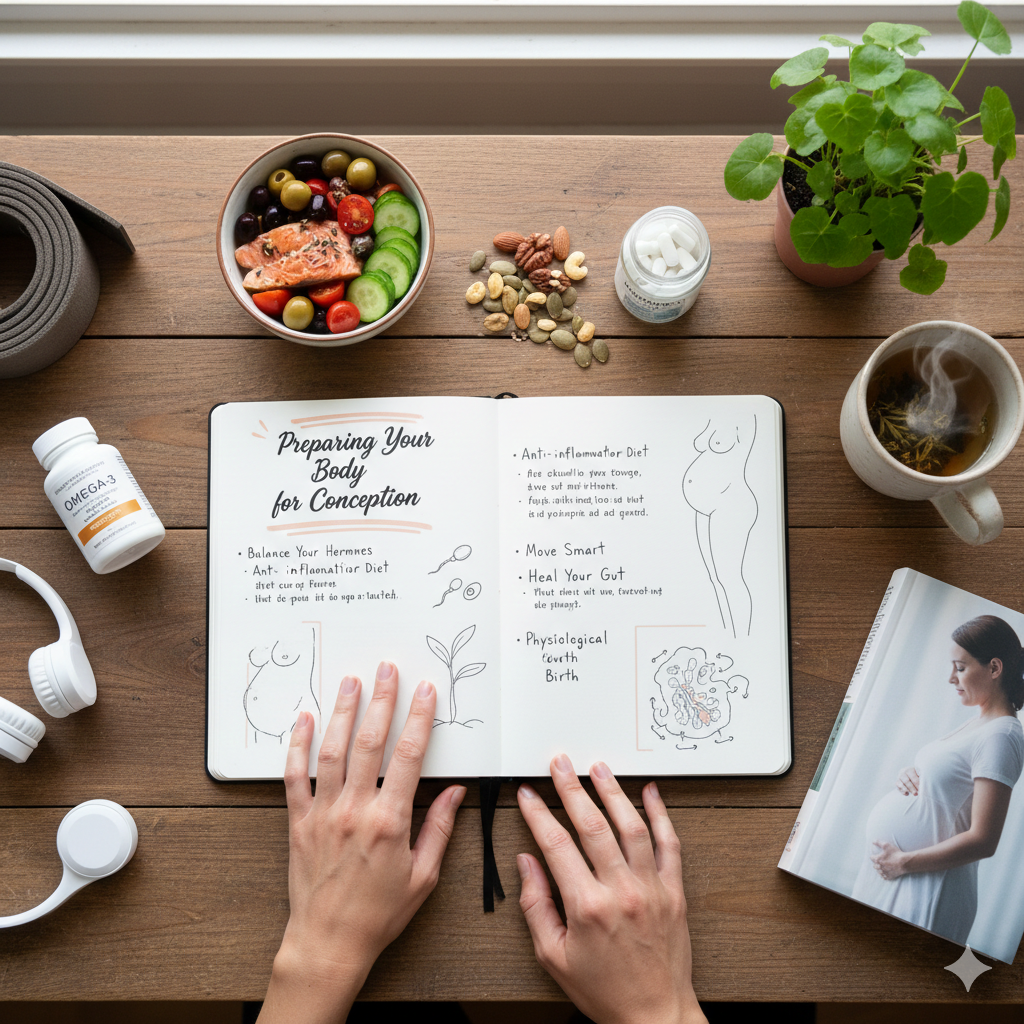
Bringing new life into the world is both exciting and overwhelming. Whether you’re actively trying to conceive or simply planning ahead, what you do now matters. Preparing your body before pregnancy lays the foundation for a healthier conception, pregnancy, and baby.
As a metabolic health and lifestyle coach, I advocate a holistic approach to fertility—far beyond just avoiding BPAs or makeup with synthetic chemicals/dyes. True preparation means supporting your hormones, gut, nutrition, movement, and mindset so your body feels safe and ready to conceive.
Here are my top five evidence-based steps.
1. Balance Your Hormones First
Hormones orchestrate every step of conception—from ovulation to implantation. Imbalances in thyroid hormones (T3/T4), prolactin, AMH, FSH, LH, estrogen, or progesterone can quietly derail fertility.
Common consequences include:
Ovulatory dysfunction (e.g., PCOS or thyroid disorders preventing egg release)
Short luteal phase (low progesterone impairing implantation)
Irregular or absent cycles
Early warning signs may include irregular periods, PCOS, hypothyroidism, adrenal stress, or PMS linked to low progesterone.
👉 The solution is not self-diagnosis.
Targeted testing and professional guidance are key—and most hormonal imbalances respond well to personalized treatment when identified early.
2. Fuel Fertility with an Anti-Inflammatory Diet
What you eat directly influences egg quality, hormone balance, and implantation.
Among all dietary patterns studied, anti-inflammatory diets—especially the Low Carb Mediterranean diet (animals based food centric: lamb, chicken, fish with skin, duck, full fat cheese, eggs, full fat yoghurt, butter, EVOO on salads, green vegies cooked in animal fats and sourdough dipped in animal fats)—consistently shows better fertility outcomes, including improved IVF success, sperm quality, and overall reproductive health.
This approach also lowers long-term risks of:
It’s no surprise that it has been ranked #1 overall diet for seven consecutive years (through 2024).
Build your plate around:
Plenty of quality animals based foods and healthy fats (especially butter, EVOO)
Fresh berry fruits
Adequate whole grains (sourdough), nuts, seeds, and legumes (soaked, sprouted)
- Minimal ultra-processed foods and added sugars
This isn’t restrictive—it’s practical, affordable, and deeply nourishing.
3. Move Smart, Not Extreme
Exercise supports fertility by improving insulin sensitivity, circulation, mood, and stress regulation.
A large study of 17,544 women found that combining regular physical activity, healthy eating, and weight balance reduced ovulatory infertility risk by 69%. Active women also tend to have better IVF outcomes.
The key is moderation:
Walking
Yoga
Strength training
Gentle cardio
Excessive vigorous exercise—especially without adequate fueling—can suppress ovulation and mimic hypothalamic amenorrhea, a pattern seen in endurance athletes.
👉 Keep exercising, and always individualize exercise plans with your OB-GYN or doctor.
4. Heal Your Gut Microbiome
Your gut microbiome—trillions of bacteria, viruses, and fungi—plays a crucial role in fertility through the gut–estrogen axis.
Gut bacteria produce beta-glucuronidase, an enzyme that regulates estrogen recycling. Dysbiosis can lead to estrogen excess or deficiency, increasing the risk of:
Endometriosis
Obesity
Hormonal imbalance
Reduced fertility
Support your gut by:
Eating fermented fiber (kimchi, sauerkraut, cruciferous veggies)
Including probiotics and prebiotics
Maintaining regular movement
Reducing exposure to xenoestrogens (plastics, chemicals)
Using calcium D-glucarate when estrogen excess is suspected
A resilient gut supports hormonal harmony and reproductive health.
5. Understand Physiological Birth
While pregnancy care often focuses on conception, birth preparation matters too.
Physiological birth—spontaneous labor with minimal intervention—honors the body’s innate ability to give birth in low-risk pregnancies. Compared with routine intervention, it’s associated with fewer complications, faster recovery, and improved early bonding.
Physiological birth emphasizes:
This approach is normal for everyone except few with complications—so, understanding it empowers informed choices. Discuss your options openly with your doctor.
Final Thought
Preparing for conception holistically transforms anxiety into confidence.
Start early.
Make small, consistent changes.
Test rather than guess.
Work with qualified professionals.
✨ Your body is not broken—it’s preparing.
When supported, it knows exactly how to thrive.
References
- https://www.mdpi.com/2072-6643/14/19/3914
- https://www.ncbi.nlm.nih.gov/pmc/articles/PMC7468821/
- https://pubmed.ncbi.nlm.nih.gov/36889921/
- https://www.amjmed.com/article/S0002-9343(11)00410-4/fulltext
- https://ijbnpa.biomedcentral.com/articles/10.1186/s12966-021-01227-3
- https://pubmed.ncbi.nlm.nih.gov/27014505/
- https://www.ncbi.nlm.nih.gov/pmc/articles/PMC6770822/
- https://www.ncbi.nlm.nih.gov/pmc/articles/PMC7915719/
- https://pubmed.ncbi.nlm.nih.gov/34423871/
- https://www.mdpi.com/2072-6643/14/19/3914
- https://pubmed.ncbi.nlm.nih.gov/17978119/
- https://pubmed.ncbi.nlm.nih.gov/24524834/
- https://pubmed.ncbi.nlm.nih.gov/12519874/
- https://www.ncbi.nlm.nih.gov/pmc/articles/PMC4281686/
- https://www.ncbi.nlm.nih.gov/pmc/articles/PMC5785832/
- https://jme.bioscientifica.com/view/journals/jme/69/3/JME-21-0238.xml
- https://pubmed.ncbi.nlm.nih.gov/6231418/
- https://jme.bioscientifica.com/view/journals/jme/69/3/JME-21-0238.xml
- https://pubmed.ncbi.nlm.nih.gov/23259758/
- https://jme.bioscientifica.com/view/journals/jme/69/3/JME-21-0238.xml
- https://jme.bioscientifica.com/view/journals/jme/69/3/JME-21-0238.xml
- https://www.ncbi.nlm.nih.gov/pmc/articles/PMC3647729/
- https://www.ncbi.nlm.nih.gov/pmc/articles/PMC3647729/

One Response