
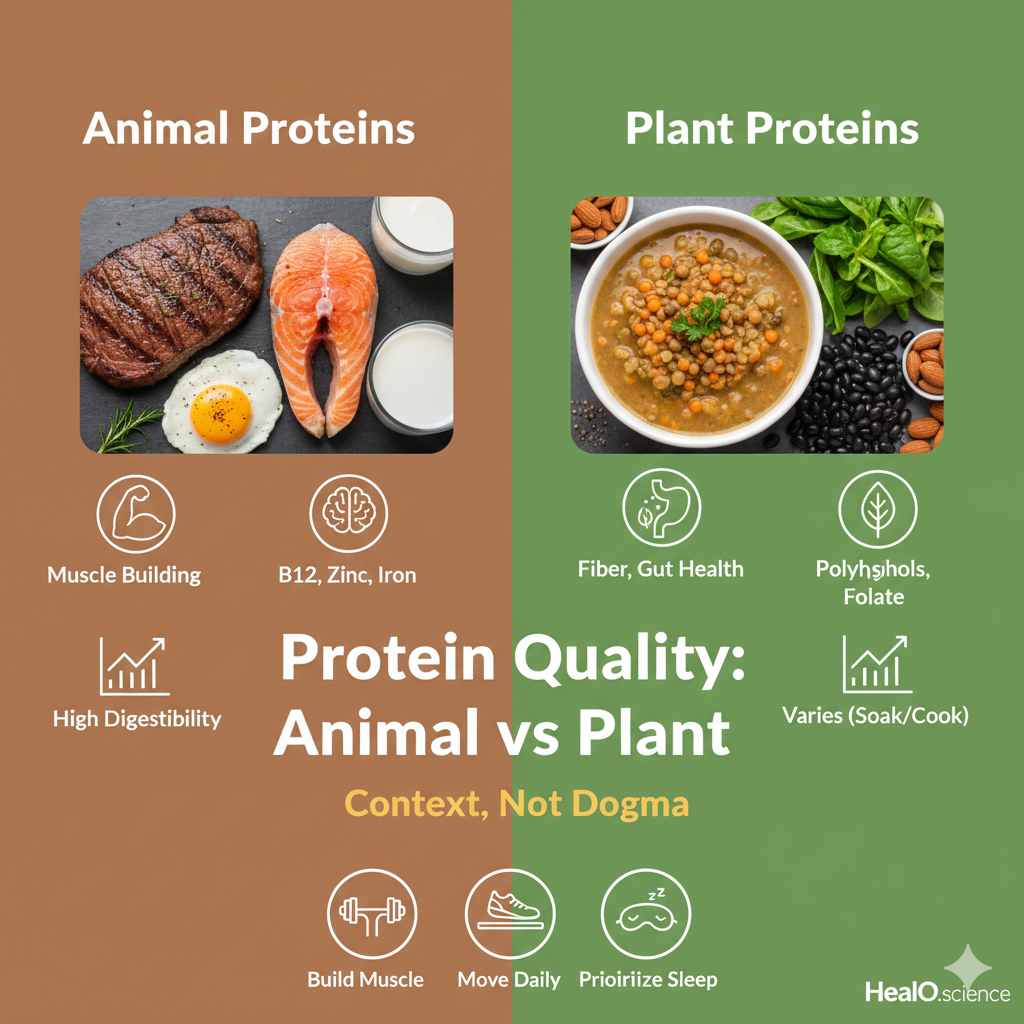
Amino Acid Completeness
Animal proteins (meat, eggs, fish, dairy):
Contain all 9 essential amino acids
Have high digestibility (often 90–99%)
Typically higher in leucine (key for muscle protein synthesis)
Plant proteins:
Often lower in one or more essential amino acids (e.g., lysine or methionine)
Digestibility varies (roughly 70–90% depending on source and preparation)
Can meet requirements when combined strategically (e.g., legumes + grains)
That’s a practical difference, not a moral one.
For people trying to:
Preserve muscle during weight loss
Improve insulin sensitivity
Age with strength
Higher-quality protein can make adherence easier.
Anti-Nutrients: Context Matters
Lectins (legumes, grains)
Phytates (seeds, grains)
Oxalates (spinach, almonds)
Goitrogens (cruciferous vegetables)
Important nuance:
Cooking, soaking, sprouting, and fermenting reduce most lectins significantly
Phytates can reduce mineral absorption — but also have antioxidant effects
Oxalates matter primarily in those prone to kidney stones
Cruciferous vegetables do not impair thyroid function in iodine-sufficient individuals when eaten in normal amounts
These compounds are not universally “toxins.”
They’re biologically active plant defenses that humans have adapted to in many cultures.
The issue is dose + gut tolerance + metabolic context.
Inflammation & Gut Health
Current research does not show that properly prepared legumes universally cause “leaky gut” in healthy individuals.
However:
Some people with IBS or autoimmune issues may feel better reducing certain plant fibers or FODMAPs.
Highly processed plant foods (refined grains, seed oils, sugar-heavy vegan products) are metabolically harmful — but that’s processing, not plants per se.
A whole-food Mediterranean-style pattern — including both animal and plant foods — consistently reduces inflammatory markers.
Diabetes & Protein Source
For type 2 diabetes:
Higher protein intake improves satiety and glycemic control
Both animal-based and plant-based higher-protein diets can improve HbA1c
Total carb load and overall calorie balance matter along with protein source
For type 1 diabetes:
Predictable protein digestion can help dosing
Very high-fat meals may delay glucose rises
Balance and monitoring are key
There is no high-quality evidence showing that moderate consumption of properly prepared legumes “causes autoimmunity” in the general population.
Where Animal Foods Shine
Bioavailable iron (heme iron)
Vitamin B12
Zinc
Creatine
Taurine
Highly absorbable protein
For people with:
Iron deficiency
B12 deficiency
Muscle loss
High protein needs
Poor appetite
Animal protein can be efficient and practical.
Where Plant Foods Shine
Fiber for microbiome diversity
Polyphenols
Potassium
Folate
Magnesium
Cardioprotective phytochemicals
Completely removing vegetables is not required for metabolic health.
Low-carb does not mean zero-plant.
A Smarter Frame
Instead of:
“Plants are toxic.”
Or:
“Animal food is dangerous.”
A more evidence-aligned framework is:
Remove ultra-processed foods first.
Ensure adequate high-quality protein.
Individualize plant intake based on tolerance.
Prioritize metabolic stability over dogma.
Practical Approach for Metabolic Health
For someone in a high-diabetes setting:
Anchor meals around protein (animal or combined low glycemic plant sources)
Keep carbohydrates low and consistent
Use low glycemic vegetables strategically (mostly fermented or cooked if sensitive)
Ensure adequate micronutrients
Monitor glucose response personally
Metabolism improves through:
Muscle mass
Sleep
Stress regulation
Consistent movement
Sustainable diet quality
Not by demonizing entire food kingdoms.
References
- https://pmc.ncbi.nlm.nih.gov/articles/PMC7600777/
- https://pmc.ncbi.nlm.nih.gov/articles/PMC6723444/
- https://diabetesjournals.org/care/article/25/8/1277/22094/Animal-Versus-Plant-Protein-Meals-in-Individuals
- https://nutritionsource.hsph.harvard.edu/anti-nutrients/
- https://www.forbes.com/sites/christopherthompson/2025/10/08/anti-nutrients-explained-oxalates-lectins-and-toxic-vegetables/
- https://www.who.int/news-room/fact-sheets/detail/natural-toxins-in-food
- https://crohnsandcolitisdietitians.com/should-you-worry-about-anti-nutrients-in-foods/
- https://www.sciencedirect.com/science/article/pii/S1756464622000081
- https://www.nature.com/articles/s41387-025-00401-x
- https://www.youtube.com/watch?v=McnZk7KuRIA
- https://healo-mf.com/low-carb-diets-for-type-2-diabetes-remission-hope-or-hype/
- https://healo-mf.com/multifaceted-benefits-of-protein/
- https://healo-mf.com/the-top-four-problems-with-plant-based-protein-and-how-to-fix-them/
- https://healo-mf.com/top-reasons-to-eat-a-high-protein-diet/
- https://healo-mf.com/are-water-lentils-the-best-vegan-protein-a-deep-dive/
- https://healo-mf.com/13-health-benefits-of-grass-fed-beef-vs-grain-fed/
- Recent Post