Fasting is booming thanks to its reputation for weight loss, metabolic improvement, and better insulin sensitivity. But a new peer-reviewed study in Nutrition & Metabolism reveals something surprising: how you start your fast may be just as crucial as the fast itself.
The Study: Protein & Fat vs. Protein & Carbs
Researchers compared two different 24-hour fasts:
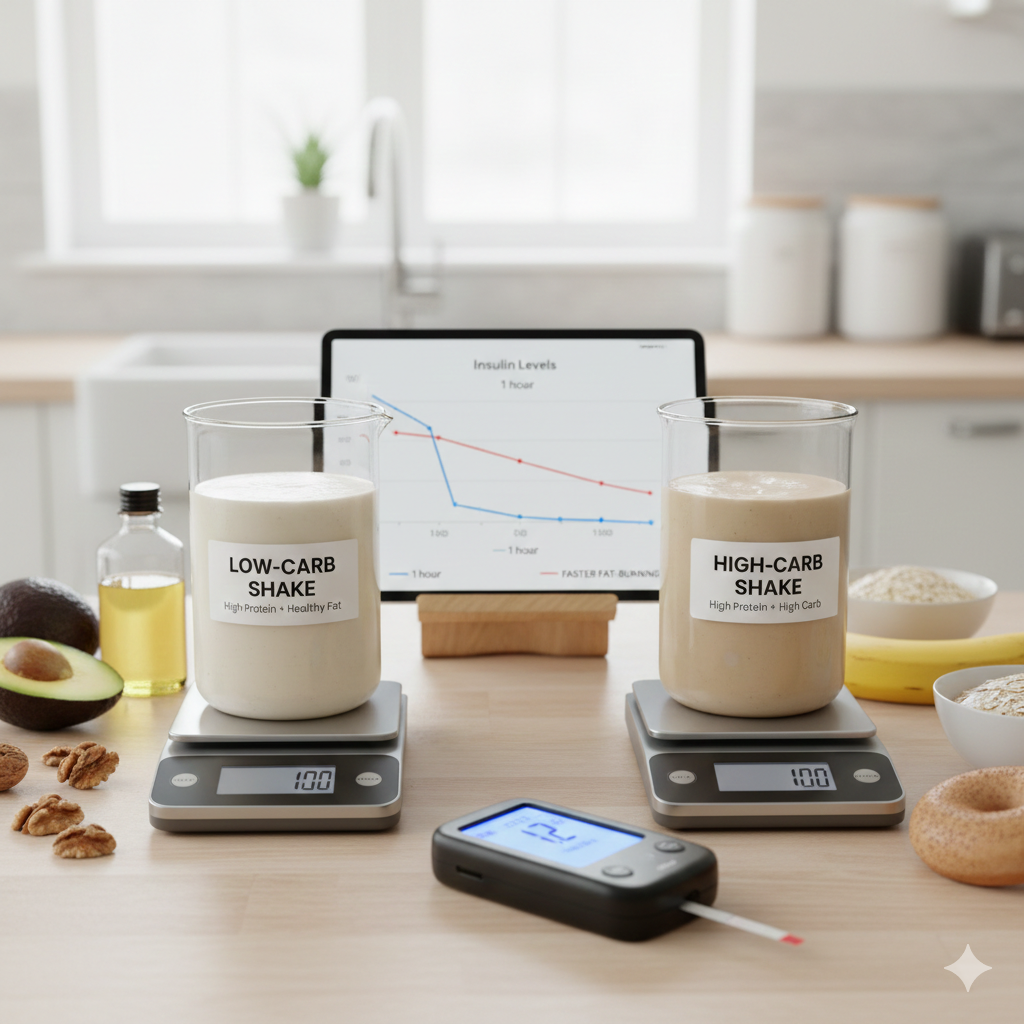
One began with a shake (high protein + healthy fats, low carbs).
The other started with a popular breakfast shake (high protein + high carbs, low fat).
Both shakes were matched for calories, volume, and protein, so the only major difference was the ratio of carbs to fats.
The Results: Fast-Track to Ketosis & Better Metabolic Control
1. Rapid Ketosis for Fat Burn
Participants starting their fast with a low-carb shake entered nutritional ketosis (≥ 0.5 mmol/L β-hydroxybutyrate) within 12 hours and sustained it for the full 24 hours.
Those starting with the carb-heavy shake never reached ketosis in 24 hours, delaying the fat-burning process.
2. Lower Insulin & Stable Blood Sugar
Just one hour after the shakes, insulin was about 42% lower with low-carb shake vs. carb-heavy.
Blood glucose stayed lower and much more stable during the low-carb shake fast, reducing spikes and troughs.
Lower insulin means earlier fat burning, less hunger, and better metabolic flexibility.
3. Elevated Appetite-Regulating Hormones
Low-carb shake boosted glucagon (24% higher), which releases stored energy.
Appetite hormones GLP-1 and GIP were 27% and 34% higher, supporting satiety and easier fasting.
Why This Matters for Your Routine
The transition into fasting is usually the hardest part—unstable blood sugar, hunger, and sluggishness can strike. But starting with low-carb, high-fat nutrition:
Accelerates fat-burning (ketosis)
Smooths blood sugar swings
Minimizes insulin spikes
Boosts appetite control hormones
That translates to less hunger, more energy, and maximized fasting benefits—without complicating your routine.
The Bottom Line
Science now backs the wisdom of starting your fast with a low-carb, high-fat meal. If you’re intermittent fasting for weight loss, longevity, or metabolic health, this small change can deliver better results, improved energy, and more sustainable fasting—all with real, measurable changes in your blood chemistry.
Reference:
Read the complete study: https://pmc.ncbi.nlm.nih.gov/articles/PMC11998415/