Low-carb and ketogenic diets remain hot topics for weight loss and health. But are they science or hype? Let’s bust the most common myths using insights from published scientific studies.
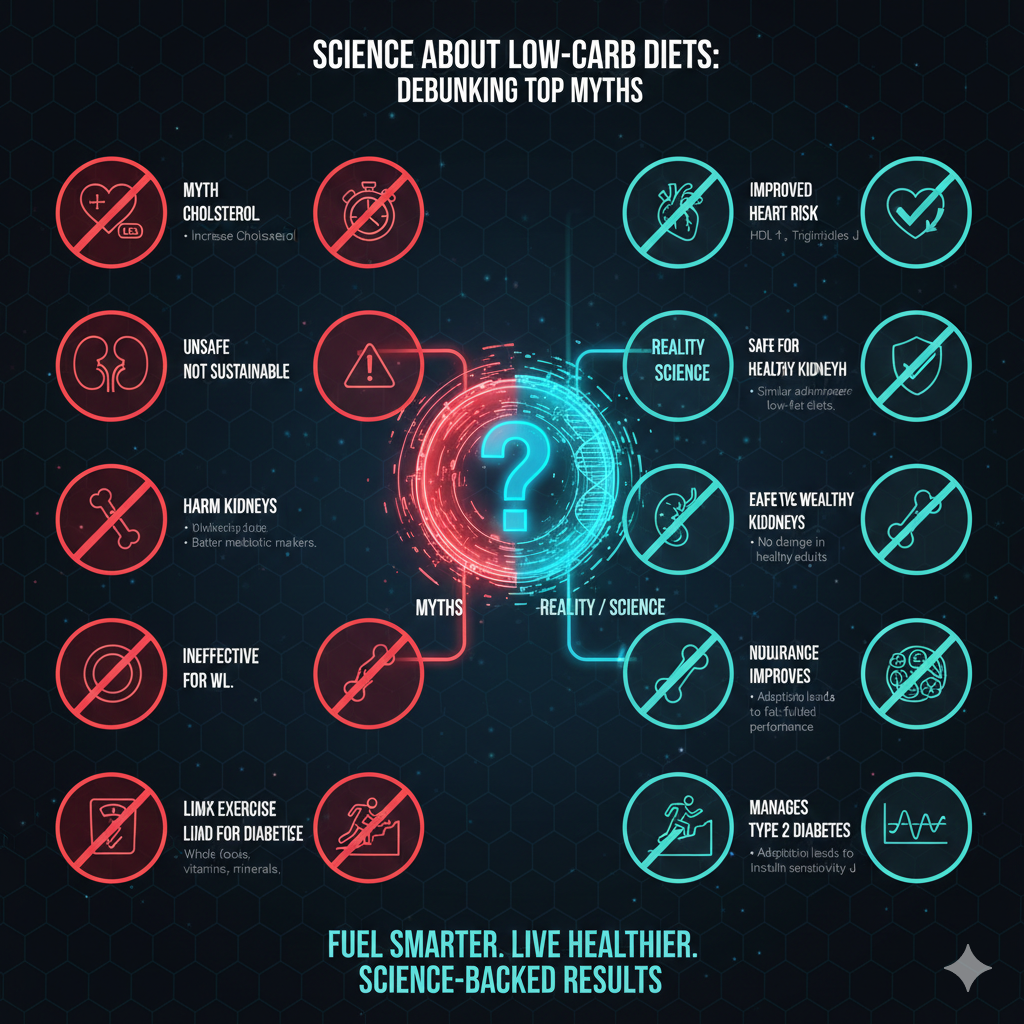
Myth 1: Low-Carb Diets Always Increase Cholesterol
Reality:
Low-carb diets can raise LDL cholesterol (“bad” cholesterol) in some, but the full cholesterol story is more complex. Most evidence shows that low-carb diets:
Increase HDL (“good”) cholesterol
Lower triglycerides
Improve cholesterol-to-HDL ratio
Result: improved cardiovascular risk profile for many.
Studies show greater increases in HDL and reductions in triglycerides than low-fat diets, even if LDL rises slightly for some.youtube
Myth 2: Low-Carb Diets Aren’t Sustainable Long-Term
Reality:
Adherence varies, but many people find low-carb diets sustainable—especially when they reduce hunger and increase food satisfaction. Proper meal planning and support are key.
Two-year studies show similar long-term adherence and weight loss for both low-carb and low-fat diets.
Myth 3: Keto and Low-Carb Diets Are Unsafe for Heart Health
Reality:
Multiple trials show that low-carb diets often improve heart health markers—including HDL and triglycerides. Individual cholesterol changes do occur (some see LDL increase) but overall risk markers usually improve, especially in those with metabolic syndrome.
Myth 4: Low-Carb Diets Harm Kidneys
Reality:
Research in healthy adults shows that higher protein intake on low-carb diets does not damage kidney function.
However, those with existing kidney disease should consult a healthcare provider.
Myth 5: Low-Carb Diets Cause Bone Loss
Reality:
No consistent evidence links low-carb eating with bone density reduction in adults.
Two-year research found no difference in bone mineral density between low-carb and low-fat eaters.
Myth 6: Low-Carb Diets Are Not Effective for Weight Loss
Reality:
On the contrary, numerous randomized trials and meta-analyses show low-carb diets lead to greater weight loss—especially in the first six months—by controlling appetite and lowering calorie intake naturally.
Myth 7: Low-Carb Diets Lack Nutrition
Reality:
Low-carb diets can be nutrient-rich if you emphasize vegetables, healthy fats, protein, nuts, and seeds.
Well-planned low-carb diets provide essential vitamins and minerals—even with fewer grains and fruits.
Myth 8: Low-Carb Diets Limit Exercise Performance
Reality:
Athletes may experience a temporary dip during adaptation, but endurance often improves or stays the same with proper adjustment and planning.
Studies show endurance athletes can maintain or even improve their performance once adapted.youtube
Myth 9: Low-Carb Diets are Bad for Diabetes
Reality:
Low-carb diets can significantly help manage type 2 diabetes—by stabilizing blood sugar, improving insulin sensitivity, and reducing the need for meds.
Myth 10: Low-Carb Diets Cause Malnutrition
Reality:
Thoughtful planning prevents deficiencies. Fill your plate with a variety of low-carb veggies, healthy fats, and quality proteins to provide all your nutrients.
Conclusion
Despite persistent myths, scientific research shows that low-carb diets—when well-designed—are:
Safe for most people (with individual adjustments)
Effective for weight loss and long-term maintenance
Supportive of cardiovascular and metabolic health
Potentially helpful for type 2 diabetes management
The key: focus on whole, nutrient-dense foods and tailor your plan to your personal needs and preferences.
References:
- Gjuladin-Hellon, T., Davies, I., Penson, P. E., & Amiri Baghbadorani, R. (2018). Effects of carbohydrate-restricted diets on lipid markers. Nutrition Reviews.
- Bazzano, L., Hu, T., Reynolds, K., Yao, L., et al. (2014). Effects of low-carbohydrate diets. Annals of Internal Medicine.
- Foster, G., Wyatt, H., Hill, J., et al. (2010). Weight and Metabolic Outcomes After 2 Years on Low-Carb Diets. Annals of Internal Medicine.
- Chawla, S., Tessarolo Silva, F., et al. (2020). Comparison of low-carb and low-fat diets. Nutrients.
- Westman, E., Yancy, W., Edman, J., et al. (2002). Effects of a 6-month low-carb diet program. The American Journal of Medicine.
- Retterstøl, K., Svendsen, M., Narverud, I., & Holven, K. (2018). LDL cholesterol increases with LCHF diet. Atherosclerosis.
- Hu, T., Mills, K., Yao, L., Demanelis, K., Eloustaz, M., Yancy, W., Kelly, T., He, J., & Bazzano, L. (2012). Effects of low-carbohydrate diets versus low-fat diets on metabolic risk factors: a meta-analysis of randomized controlled clinical trials.. American journal of epidemiology, 176 Suppl 7, S44-54
- Kirkpatrick, C., Bolick, J. P., et al. (2019). Review of low-carb diet effects. Journal of Clinical Lipidology.
- Ruth, M., Port, A., Shah, M., et al. (2013). HFLC diet effects on inflammation. Metabolism.