
Personalized nutrition designed for your unique health goals.
A Jain Practice Through the Lens of Modern Science
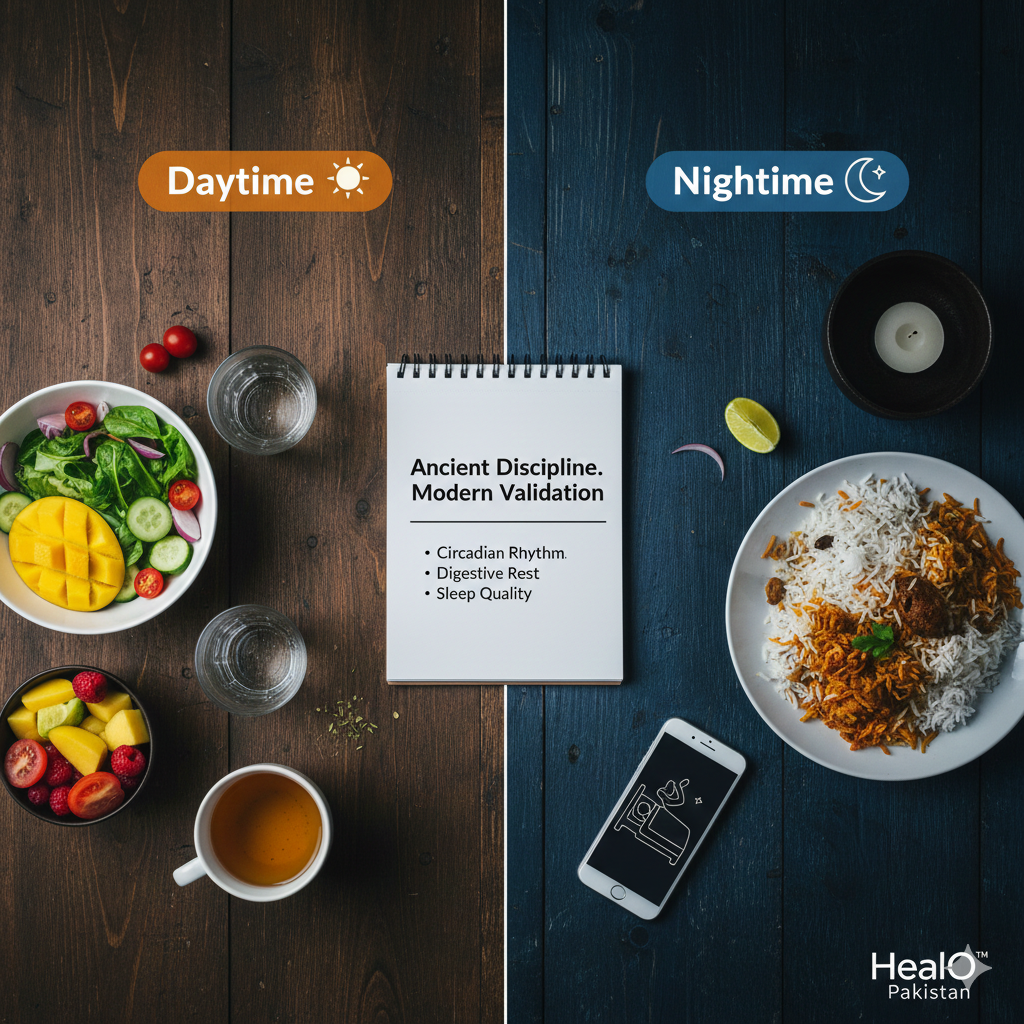
In Jain Dharma, consuming food after sunset is traditionally prohibited.
This practice is rooted in ahimsa (non-violence) and respect for life — including microscopic organisms.
While the original rationale was spiritual and ethical, modern science offers several physiological insights that align remarkably with this ancient discipline.
1️⃣ Circadian Rhythm & Digestive Efficiency
Human biology follows a circadian clock regulated by light exposure.
-
Daylight increases metabolic activity.
-
Insulin sensitivity is higher earlier in the day.
-
Gastric emptying and digestive enzyme activity peak during daylight hours.
-
Melatonin (released after sunset) suppresses insulin secretion.
When we eat late at night:
-
Blood sugar control worsens
-
Glucose tolerance decreases
-
Fat storage increases
-
Digestion slows
Multiple studies on early time-restricted feeding (eTRF) show:
-
Better insulin sensitivity
-
Improved lipid profiles
-
Reduced inflammation
-
Better metabolic flexibility
In simple terms:
Your body is biologically designed to digest efficiently in daylight.
2️⃣ Metabolism Slows at Night
At night:
-
Core body temperature drops
-
Physical activity decreases
-
Metabolic rate lowers
-
Gastrointestinal motility slows
Heavy meals during this period may lead to:
-
Indigestion
-
Acid reflux
-
Bloating
-
Weight gain over time
The concept of “digestive fire” in traditional Indian health systems parallels what we now understand as circadian metabolic alignment.
3️⃣ Sleep Disruption
Late eating can:
-
Increase nocturnal awakenings
-
Cause reflux when lying down
-
Reduce deep sleep quality
-
Delay melatonin signaling
Research shows that eating within 2–3 hours of sleep is associated with:
-
Poor sleep quality
-
Increased heart rate during sleep
-
Impaired overnight fat oxidation
Better sleep = better hormonal balance.
4️⃣ Night Eating & Cardiometabolic Risk
Studies from Asia (including Hong Kong and Japan) suggest:
-
Early dinner timing correlates with lower cardiovascular risk.
-
Late-night eating is associated with obesity and metabolic syndrome.
-
Shift workers (who eat at night) show higher rates of diabetes and heart disease.
While causation is complex, circadian misalignment appears to be a major contributor.
5️⃣ Gastrointestinal Rest & Autophagy
Avoiding food after sunset naturally extends the fasting window.
This may promote:
-
Improved gut rest
-
Better microbiome balance
-
Cellular repair processes (autophagy)
-
Reduced late-night insulin spikes
Time-restricted eating (12–14 hour overnight fasts) is now widely studied for metabolic health benefits.
6️⃣ The Microbial Argument – A Clarified View
Traditional Jain explanation suggests that microorganisms increase after sunset and may contaminate food.
From a scientific standpoint:
-
Microbes exist at all times — not only after sunset.
-
However, before refrigeration, food spoilage risk did increase in humid nighttime conditions.
-
Insects are more active at night and may contaminate exposed food.
Thus, historically, avoiding food after sunset likely reduced:
-
Foodborne illness
-
Accidental harm to small organisms
-
Contamination in pre-modern environments
The spiritual rationale aligned with practical public health wisdom.
7️⃣ Specific Foods & Night Digestion
Some foods are particularly problematic at night:
🔹 High-Carb+Fat Foods
Slow gastric emptying → reflux, heaviness, blood sugar dysregulation, fat storage
🔹 Spicy Foods
Trigger acid reflux, disrupt sleep, raise core temperature
🔹 Caffeine
Blocks adenosine → suppresses sleep drive for 6–8 hours
🔹 Large Portions (Even Healthy Foods)
Heavy fiber loads late at night can cause bloating and discomfort
It is not that nuts or fiber are unhealthy — timing matters.
8️⃣ Benefits in Daily Life
Beyond physiology, early eating offers:
-
Better sleep hygiene
-
Structured family time
-
Reduced late-night cravings
-
Improved discipline and mindful eating
-
Less dependence on restaurant dining culture
Modern lifestyle diseases often correlate with chaotic eating schedules.
9️⃣ The 3–4 Hour Rule
Many sleep scientists now recommend:
👉 Finish your last meal 3–4 hours before bedtime.
This aligns closely with the Jain sunset principle.
The Deeper Insight
Ancient Jain practice may be viewed as:
-
Circadian alignment
-
Digestive optimization
-
Ethical non-violence
-
Metabolic discipline
-
Built-in time-restricted fasting
Even those who do not follow Jain Dharma religiously can benefit from early dining patterns.
Balanced Conclusion
Avoiding food after sunset is not about fear of germs alone.
It aligns with:
-
Chronobiology
-
Hormonal regulation
-
Sleep science
-
Metabolic health
-
Gut physiology
Ancient discipline.
Modern validation.
Sometimes tradition precedes laboratory confirmation.
- Recent Post