Oxidative stress is a silent force at work in your body, quietly contributing to aging and a wide range of diseases. Understanding and controlling it is one of the keys to long-term health, resilience, and disease prevention.
What is Oxidative Stress?
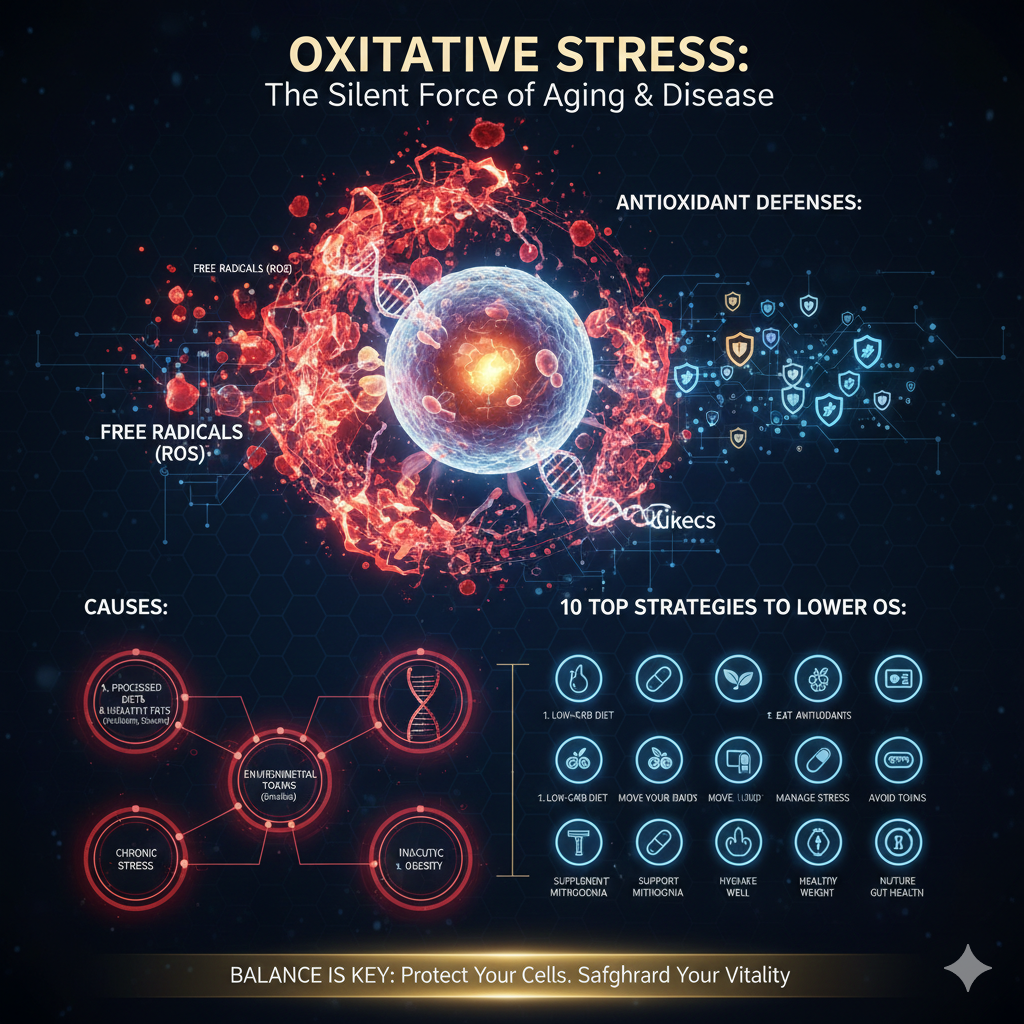
Oxidative stress happens when the production of free radicals—unstable, reactive molecules (especially “reactive oxygen species” or ROS)—exceeds your body’s ability to neutralize them with antioxidants. At low levels, ROS are a natural part of biology. But when balance tips, excess free radicals can damage the proteins, DNA, and membranes inside your cells.
Why does this matter?
Chronic oxidative stress is now linked to cancer, cardiovascular disease, diabetes, neurodegeneration, accelerated aging, and much more.
What Causes Oxidative Stress?
Diet:
Excessive processed foods, sugars, seed oils, and unhealthy fats drive up oxidation, especially when lacking protective antioxidants.
Environmental Toxins:
Heavy metals, air pollution, pesticides, and tobacco smoke increase free radical load and damage cells.
Physical Inactivity & Obesity:
Sedentary lifestyles and extra fat tissue generate more ROS and further overwhelm your body’s defenses.
Chronic Psychological Stress:
Ongoing stress increases cortisol, impairs immunity, and reduces antioxidant reserves.
Aging:
Antioxidant defenses naturally weaken with age, making older adults more vulnerable.
Early Warning Signs of Oxidative Stress
These symptoms may not always be obvious, but spotting them early can help stave off long-term damage:
Persistent fatigue or low energy
Memory lapses, “brain fog,” trouble concentrating
Premature wrinkles, fine lines, or age spots
Frequent colds or infections (impaired immunity)
Unexplained muscle soreness or joint pain
Ten Top Strategies to Lower Oxidative Stress
Adopt a Low-Carb, Antioxidant-Rich Diet:
Prioritize veggies, nuts, berries, and healthy fats; cut sugars, refined carbs, and processed seed oils.
Low-carb/keto diets may especially reduce ROS and support mitochondria.youtube
Eat More Antioxidants:
Vitamin C, vitamin E, selenium, colorful plant polyphenols (berries, greens, spices)
Move Your Body:
Regular exercise (walking, swimming, strength training) improves antioxidant defense and lowers inflammation.
Manage Stress Effectively:
Meditation, mindfulness, spiritual practice, social support, and healthy sleep.
Minimize Environmental Toxins:
Avoid tobacco, filter water, and choose foods and products with minimal chemical additives.
Supplement Wisely:
Omega-3s, CoQ10, and alpha-lipoic acid support cellular antioxidant functions —but always check with your provider.
Support Your Mitochondria:
Nutrients like magnesium and acetyl-L-carnitine support energy production and reduce ROS.
Hydrate Well:
Water flushes toxins, aids detoxification, and supports every cell in your body.
Maintain a Healthy Weight:
Fat loss and preserving muscle curb many obesity-related oxidant and inflammatory pathways.
Nurture Gut Health:
Probiotics, prebiotics, and plenty of fiber diversify your microbiome and help keep inflammation at bay.
Conclusion
Oxidative stress may be invisible, but its impact on aging and disease is profound. By understanding what drives it and taking deliberate steps to keep it in check—through a healthy diet, smart lifestyle choices, and regular activity—you can safeguard your body, mind, and vitality for years to come.
References:
- Paoli, A., Rubini, A., Volek, J. S., & Grimaldi, K. A. (2013). Beyond weight loss: a review of the therapeutic uses of very-low-carbohydrate (ketogenic) diets. European Journal of Clinical Nutrition, 67(8), 789-796. https://doi.org/10.1038/ejcn.2013.116
- Carlsen, M. H., Halvorsen, B. L., Holte, K., Bøhn, S. K., Dragland, S., Sampson, L., … & Blomhoff, R. (2010). The total antioxidant content of more than 3100 foods, beverages, spices, herbs, and supplements used worldwide. Nutrition Journal, 9(1), 3. https://doi.org/10.1186/1475-2891-9-3
- Powers, S. K., & Jackson, M. J. (2008). Exercise-induced oxidative stress: cellular mechanisms and impact on muscle force production. Physiological Reviews, 88(4), 1243-1276. https://doi.org/10.1152/physrev.00031.2007
- Juster, R. P., McEwen, B. S., & Lupien, S. J. (2010). Allostatic load biomarkers of chronic stress and impact on health and cognition. Neuroscience & Biobehavioral Reviews, 35(1), 2-16. https://doi.org/10.1016/j.neubiorev.2009.10.002
- Valko, M., Rhodes, C. J., Moncol, J., Izakovic, M., & Mazur, M. (2006). Free radicals, metals and antioxidants in oxidative stress-induced cancer. Chemico-biological Interactions, 160(1), 1-40. https://doi.org/10.1016/j.cbi.2005.12.009
- Bentinger, M., Tekle, M., & Dallner, G. (2010). Coenzyme Q–biosynthesis and functions. Biochemical and Biophysical Research Communications, 396(1), 74-79. https://doi.org/10.1016/j.bbrc.2010.02.147
- Choi, S. W., & Friso, S. (2010). Epigenetics: A New Bridge between Nutrition and Health. Advances in Nutrition, 1(1), 8-16. https://doi.org/10.3945/an.110.1004
- Frühbeck, G., Gómez-Ambrosi, J., Muruzábal, F. J., & Burrell, M. A. (2001). The adipocyte: a model for integration of endocrine and metabolic signaling in energy metabolism regulation. American Journal of Physiology-Endocrinology and Metabolism, 280(6), E827-E847. https://doi.org/10.1152/ajpendo.2001.280.6.E827
- Bischoff, S. C. (2011). ‘Gut health’: a new objective in medicine? BMC Medicine, 9(1), 24. https://doi.org/10.1186/1741-7015-9-24