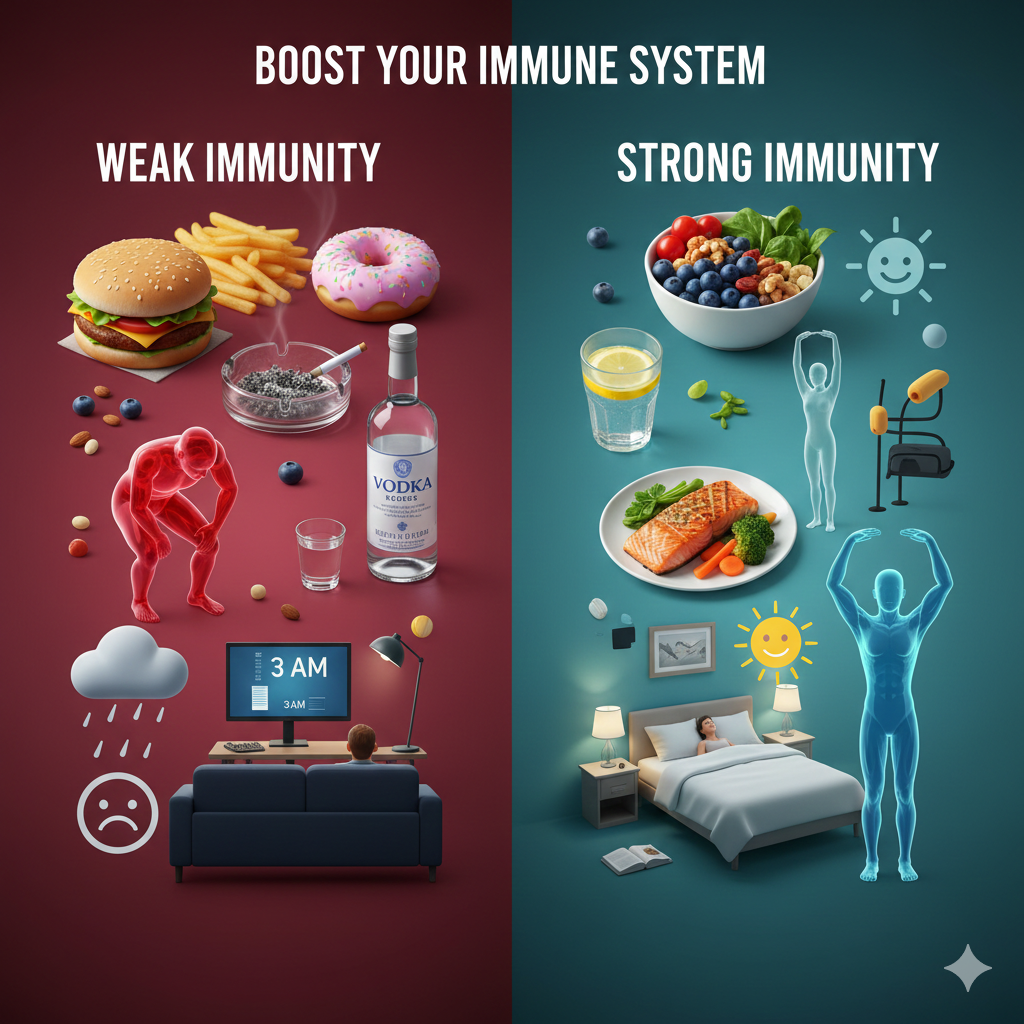
Your immune system is your body’s built-in defense against illness and infection. While genetics play a role, your daily habits can make a big difference in how well your immune system works. Here are ten research-backed steps you can start today to strengthen your immunity and support overall health:
1. Eat a Nutrient-Rich Diet
Focus on whole foods—especially colorful fruits, leafy greens, proteins, healthy fats, and nuts. Key vitamins (A, C, D, E) and minerals (like zinc) are crucial for immune defense. Skip the junk and minimize added sugars and refined grains.
2. Stay Well Hydrated
Water is essential for moving nutrients around your body and flushing out waste. Aim for about 15.5 cups (men) or 11.5 cups (women) daily—this includes all fluids and water-rich foods.
3. Prioritize Quality Sleep
Your body repairs and boosts immunity while you sleep. Adults should aim for 7–9 hours of restorative sleep each night. Poor sleep weakens your defenses and increases your risk of getting sick.
4. Get Regular Exercise
Moderate activity—like walking, cycling, or swimming—keeps immune cells circulating and reduces inflammation. Don’t overdo it; balance cardio, strength, and stretching for best results.
5. Manage Stress Levels
Too much stress can suppress your immune system. Practice mindfulness, deep breathing, or meditation, and make time for hobbies and social connection to keep stress in check.
6. Maintain Healthy Vitamin D Levels
Vitamin D is vital for immune resilience. Spend time in the sun, eat D-rich foods (like fish and eggs), or consider supplements—especially if you’re indoors most of the day or live in a cloudy climate.
7. Support Gut Health with Probiotics
A healthy gut equals a stronger immune system. Eat fermented foods like yogurt, kefir, and sauerkraut, and include plenty of prebiotic fiber from veggies and nuts to feed your friendly gut bacteria.
8. Consider a Low-Carb Diet
Some research suggests that cutting excess carbs (especially sugars and refined grains) can reduce inflammation and support immune cell function. A diet rich in veggies, protein, and healthy fats may also improve how your immune system responds.
9. Add Polyphenol-Rich Foods
Brightly colored berries, spices, and nuts are packed with plant compounds (polyphenols) that help reduce inflammation and bolster your immune system. Try to “eat the rainbow” every day!
10. Avoid Smoking and Limit Alcohol
Both smoking and heavy alcohol use weaken the immune system and raise your risk of illness. Quitting smoking and drinking moderately (or not at all) is one of the best things you can do for your immunity.
In Summary:
You can’t control everything, but simple lifestyle choices go a long way in keeping your immune system strong. Eat well, hydrate, move more, sleep well, manage stress, and avoid habits that lower your defenses. These easy habits not only help you stay healthy now but support better wellness for years to come.
References
- Calder, P. C., Carr, A. C., Gombart, A. F., & Eggersdorfer, M. (2020). Optimal Nutritional Status for a Well-Functioning Immune System Is an Important Factor to Protect against Viral Infections. Nutrients, 12(4), 1181.
- Popkin, B. M., D’Anci, K. E., & Rosenberg, I. H. (2010). Water, hydration, and health. Nutrition Reviews, 68(8), 439–458.
- Walker, M. P. (2017). Why We Sleep: Unlocking the Power of Sleep and Dreams. Simon & Schuster.
- Campbell, J. P., & Turner, J. E. (2018). Debunking the Myth of Exercise-Induced Immune Suppression: Redefining the Impact of Exercise on Immunological Health Across the Lifespan. Frontiers in Immunology, 9, 648.
- Dhabhar, F. S. (2014). Effects of stress on immune function: the good, the bad, and the beautiful. Immunologic Research, 58(2-3), 193–210.
- Aranow, C. (2011). Vitamin D and the Immune System. Journal of Investigative Medicine, 59(6), 881–886.
- Belkaid, Y., & Hand, T. W. (2014). Role of the Microbiota in Immunity and Inflammation. Cell, 157(1), 121–141.
- Paoli, A., Rubini, A., Volek, J. S., & Grimaldi, K. A. (2013). Beyond weight loss: a review of the therapeutic uses of very-low-carbohydrate (ketogenic) diets. European Journal of Clinical Nutrition, 67(8), 789–796.
- Goldberg, E. L., Molony, R. D., Kudo, E., Sidorov, S., Kong, Y., Dixit, V. D., & Iwasaki, A. (2019). Ketogenic diet activates protective γδ T cell responses against influenza virus infection. Science Immunology, 4(41), eaav2026.
- Honce, R., Schultz-Cherry, S., & Impact of Obesity on Influenza A Virus Pathogenesis, Immune Response, and Evolution (2019). Frontiers in Immunology, 10, 1071.
- Ganesan, K., Xu, B., A Critical Review on Polyphenols and Health Benefits of Black Soybeans. Nutrients, 10(11), 1664.
- Arcavi, L., & Benowitz, N. L. (2004). Cigarette Smoking and Infection. Archives of Internal Medicine, 164(20), 2206–2216.
- Piano, M. R. (2017). Alcoholic Cardiomyopathy: Incidence, Clinical Characteristics, and Pathophysiology. Chest, 151(1), 181–190.