“Eat your veggies first!” It turns out, there’s real wisdom in mealtime sequencing. Science now confirms that the order in which you eat your food can have a profound effect on your blood sugar—helping you tame post-meal glucose spikes, support metabolic health, and even reduce your risk of insulin resistance.
Why Blood Sugar Spikes Matter
When you eat carbohydrates—especially processed or sugary foods—they’re chewed, digested, and then rapidly absorbed as glucose into your bloodstream. Large, repeated spikes in blood glucose trigger a strong insulin response. Over time, this rollercoaster ride can contribute to insulin resistance and increase your risk of type 2 diabetes and metabolic syndrome.
How “Meal Sequencing” Works
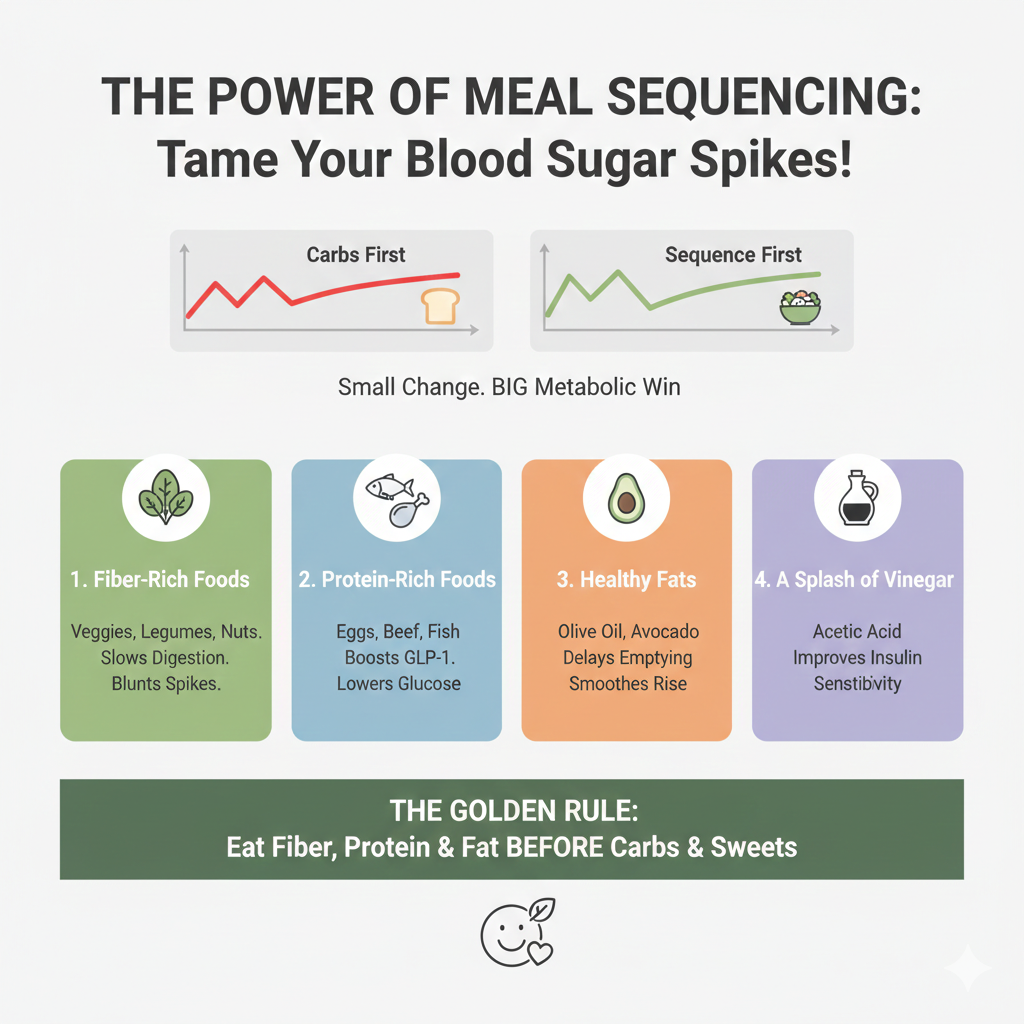
Meal sequencing (or food sequencing) means starting your meal with foods that blunt the glycemic response, followed by carbs or dessert last. This simple practice can slow glucose absorption, stabilize blood sugar, and improve your overall metabolic health.
What Should You Eat First?
Fiber-Rich Foods
Soluble fiber (in veggies, legumes, nuts) forms a gel in your gut, slowing carb digestion and glucose absorption.
Research: Eating fiber before carbs can lower after-meal blood sugar spikes significantly.
Protein-Rich Foods
Protein (eggs, beef, fish) doesn’t raise blood sugar, and it boosts hormones (like GLP-1) that slow your stomach’s emptying and reduce glucose absorption.
Research: Protein-first meals consistently produce lower glucose spikes and improved glycemic control.
Healthy Fats
Foods like avocado, olive oil, and fatty fish further delay gastric emptying, smoothing out the rise in blood sugar from subsequent carbs.
Tip: Start your meal with a salad dressed in olive oil or a few slices of avocado.
Vinegar
Acetic acid (in apple cider or wine vinegar) helps slow down digestion and improves insulin sensitivity.
Research: Vinegar before a high-carb meal can meaningfully blunt post-meal glucose response.
Non-Starchy Vegetables
Filling your plate with spinach, broccoli, peppers, or leafy greens before starchy or sugary foods—adds fiber, water, and volume to your meal, reducing glycemic load.
Why Does Meal Ordering Work?
Slower gastric emptying: Fiber, protein, and fat delay stomach emptying, slowing the rate at which glucose hits your bloodstream.
Improved insulin response: Protein and vinegar help make your body’s insulin more effective.
Reduced digestive enzyme activity: Some foods mildly inhibit carb-breakdown enzymes, further moderating blood sugar rise.
How to Put Meal Sequencing Into Practice
Begin every meal with a fiber salad, protein, or healthy fats.
Save bread, rice, pasta, or dessert for last.
Add a splash of vinegar (or use it in salad dressing).
When eating out, order a protein-rich appetizer or start with a veggie-based soup or salad.
The Takeaway
You don’t have to overhaul your diet overnight to see a big metabolic benefit. Simply eat fiber, protein, and healthy fats before carbs and sweets for more stable blood sugar, lower insulin spikes, reduced cravings, and a better shot at long-term metabolic health.
It’s a small change with a big payoff—proving mom really did know best: save dessert for last!
References
- “Dietary Fiber and Glycemic Control,” Diabetes Care, vol. 32, no. 4, pp. 568-573, 2009.
- “Effect of protein ingestion on the glucose and insulin response to a standardized oral glucose load,” American Journal of Clinical Nutrition, vol. 34, no. 3, pp. 364-370, 1981.
- “Fat supplementation and postprandial glucose and insulin responses,” Diabetes Care, vol. 26, no. 5, pp. 1481-1482, 2003.
- “Vinegar supplementation lowers glucose and insulin responses and increases satiety after a high-carbohydrate meal in healthy subjects,” European Journal of Clinical Nutrition, vol. 59, no. 9, pp. 983-988, 2005.
- “Effects of consuming vegetables before carbohydrate on glycemic response in healthy men,” Journal of Nutrition, vol. 144, no. 1, pp. 58-63, 2014.