
Personalized nutrition designed for your unique health goals.
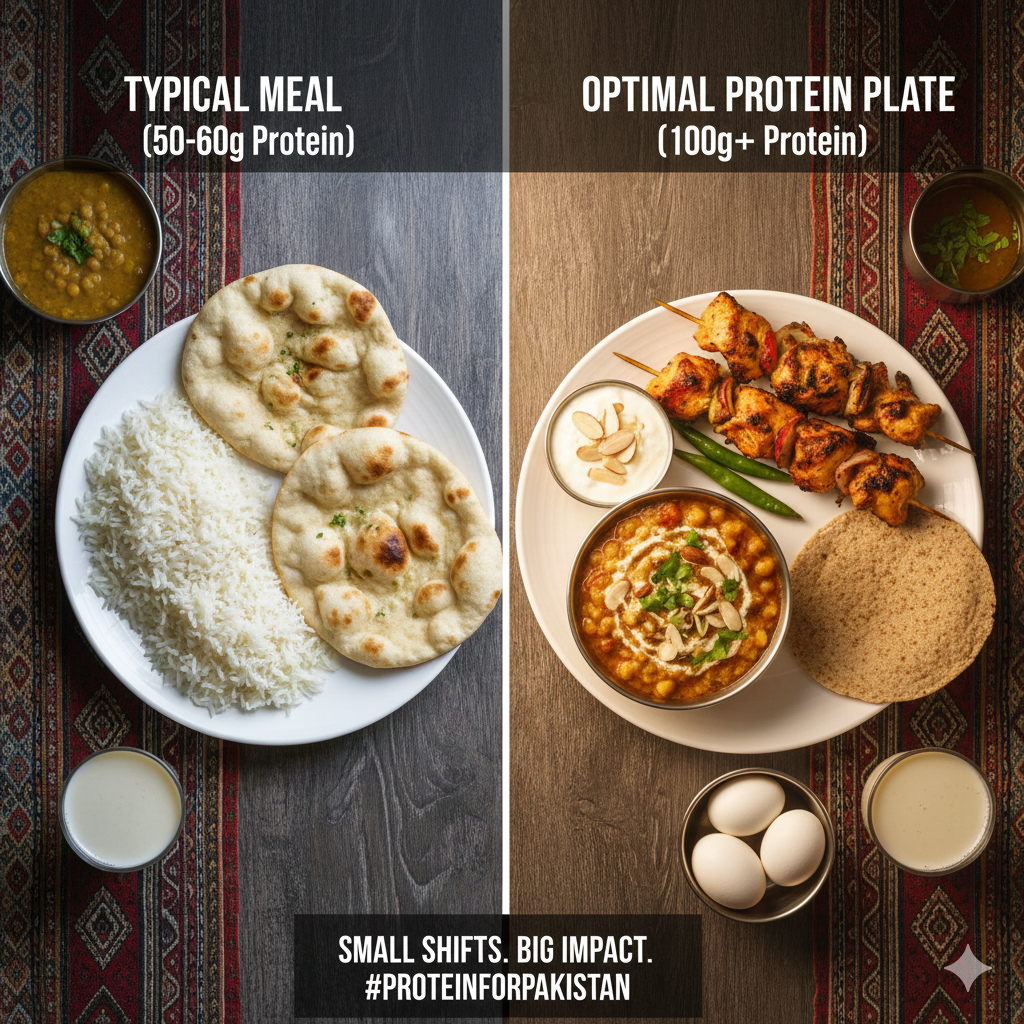
Pakistanis average 50–60g of protein per day.
For most adults, that’s nearly half of optimal intake.
This shortfall is quietly driving:
Muscle loss
Rising diabetes
Poor pregnancy outcomes
Stunted growth in children
Fatigue and weak immunity
The irony?
Our cuisine is rich in dals, chana, quorma, kababs, and karahi — protein is already part of our culture.
We just aren’t prioritizing it.
Why Protein Deficiency Hits Pakistan Hard
1. Carb-Dominant Plates
Typical meals center around:
Roti
Rice
Naan
Protein often becomes a side dish instead of the anchor.
2. Low Meat Intake
Per capita meat consumption remains low.
Many families reserve chicken or beef for weekends.
Barriers include:
Cost
Habit
Religious patterns
“Meat is heavy” beliefs
3. Incomplete Plant Proteins
Many rely heavily on:
Wheat
Rice
Lentils alone
While healthy, cereals lack complete amino acid profiles and are poorly absorbed when not combined strategically.
4. Persistent Myths
“Dairy is enough.”
“Protein is only for bodybuilders.”
“Too much protein damages kidneys.” (Not in healthy individuals.)
Meanwhile:
~80% of pregnant women under-consume protein.
~40% of children under five show stunting indicators.
What Most Pakistani Meals Actually Provide
Target for most adults:
~0.7g per pound bodyweight
(≈ 90–110g daily for many adults)
Here’s reality:
| Meal | Approx Protein |
|---|---|
| Paratha + Chai | 8g |
| Dal Chawal | 12g |
| Aloo Gosht (small) + Roti | 15g |
| Chana Masala + Naan | 10g |
| Dahi | 6g |
Most days barely reach 50–60g.
What Happens When Protein Is Low?
Protein is not just “muscle food.” It regulates:
Blood sugar stability
Immune strength
Hormone production
Hair, skin, and tissue repair
Pregnancy development
Satiety and weight control
Low intake contributes to:
Sarcopenia (muscle loss) after 30
Higher diabetes risk (carb-heavy meals spike glucose)
Obesity despite low muscle mass
Chronic fatigue
Edema
Poor wound healing
Protein is metabolic protection.
Best Pakistani Protein Sources (Affordable & Accessible)
Dairy
Paneer (25g per cup)
Dahi / Yoghurt (10g per cup)
Milk (8g per glass)
Lassi (8g)
Pulses
Chana (15g per cup)
Moong dal (24g per cup)
Masoor dal (18g per cup)
Horse gram (22g per cup)
Flours & Grains
Besan (21g per cup)
Quinoa (8g per cup)
Whole wheat atta (16g per cup)
Nuts & Seeds
Peanuts (7g per ounce)
Almonds (6g per ounce)
Non-Veg Power
Chicken (25g per 100g)
Mutton (20g per 100g)
- Beef (26g per 100g)
Eggs (6g each)
Fish (20g per 100g)
Sample 100g+ Protein Days (HealO Framework)
Day 1 – Vegetarian (~104g)
Breakfast: Besan roti + lassi (28g)
Lunch: Chana masala + dahi + besan roti (35g)
Snack: Yoghurt + almonds (16g)
Dinner: Palak paneer + moong dal (25g)
Day 2 – Mixed (~105g)
Breakfast: 3 eggs + small paratha (20g)
Lunch: Chicken karahi + raita (40g)
Snack: Whey or pea protein shake (25g)
Dinner: Masoor dal + salad (20g)
Day 3 – Budget Vegetarian (~100g)
Breakfast: Dahi + besan roti (25g)
Lunch: Moong dal khichdi + curd (30g)
Snack: Peanuts + lassi (15g)
Dinner: Chana pulao (quinoa swap) (30g)
HealO™ Protein Upgrade Strategy
No revolution required. Just evolution.
1. Anchor Every Meal in Protein
Serve dal, chana, paneer, eggs first.
Limit roti to 1–2 max.
2. Swap Smart
Replace atta with besan occasionally
Add dahi to every savory meal
Use horse gram weekly
3. Use Eggs Strategically
Eggs are one of the cheapest complete proteins in Pakistan.
Boil daily. Keep ready.
4. Increase Dairy Quality
Full-fat dahi improves satiety.
Greek-style yoghurt boosts protein density.
5. Track for 14–30 Days
Use Apps like MyFitnessPal or HealthifyMe help to estimate intake.
6. Hydrate
Higher protein increases water needs.
Target ~as per thirst daily.
7. Supplement If Needed
A quality pea or whey protein can bridge gaps — especially for elderly, pregnant women, or busy professionals.
The Bigger Picture
Protein is not a gym trend.
It is:
Diabetes defense
Fertility support
Healthy aging insurance
Growth fuel for children
Muscle preservation after 30
Small shifts — like doubling dal portions or adding two eggs daily — create massive long-term impact.
Stronger Pakistanis don’t need new cuisine.
We need better ratios on the same plates.
Start tonight.
Prioritize protein.
Protect metabolism.
Build a resilient future — one meal at a time.
References
- https://pmc.ncbi.nlm.nih.gov/articles/PMC3730849/
- https://pubmed.ncbi.nlm.nih.gov/25831641/
- https://pubmed.ncbi.nlm.nih.gov/20141686/
- https://pmc.ncbi.nlm.nih.gov/articles/PMC6507527/
- https://pmc.ncbi.nlm.nih.gov/articles/PMC8710090/
- https://www.ncbi.nlm.nih.gov/books/NBK218739/
- https://pubmed.ncbi.nlm.nih.gov/34067667/
- https://pubmed.ncbi.nlm.nih.gov/97410/
- https://pmc.ncbi.nlm.nih.gov/articles/PMC6115570/
- https://pubmed.ncbi.nlm.nih.gov/39982904/
- https://pubmed.ncbi.nlm.nih.gov/32552812/
- https://pubmed.ncbi.nlm.nih.gov/40204413/
- Recent Post