Plant-based proteins are everywhere—from vegan shakes to meat alternatives. While they appeal to vegetarians, vegans, and flexitarians, they come with real limitations compared to animal sources. Here are the top four issues—and practical ways to work around them.
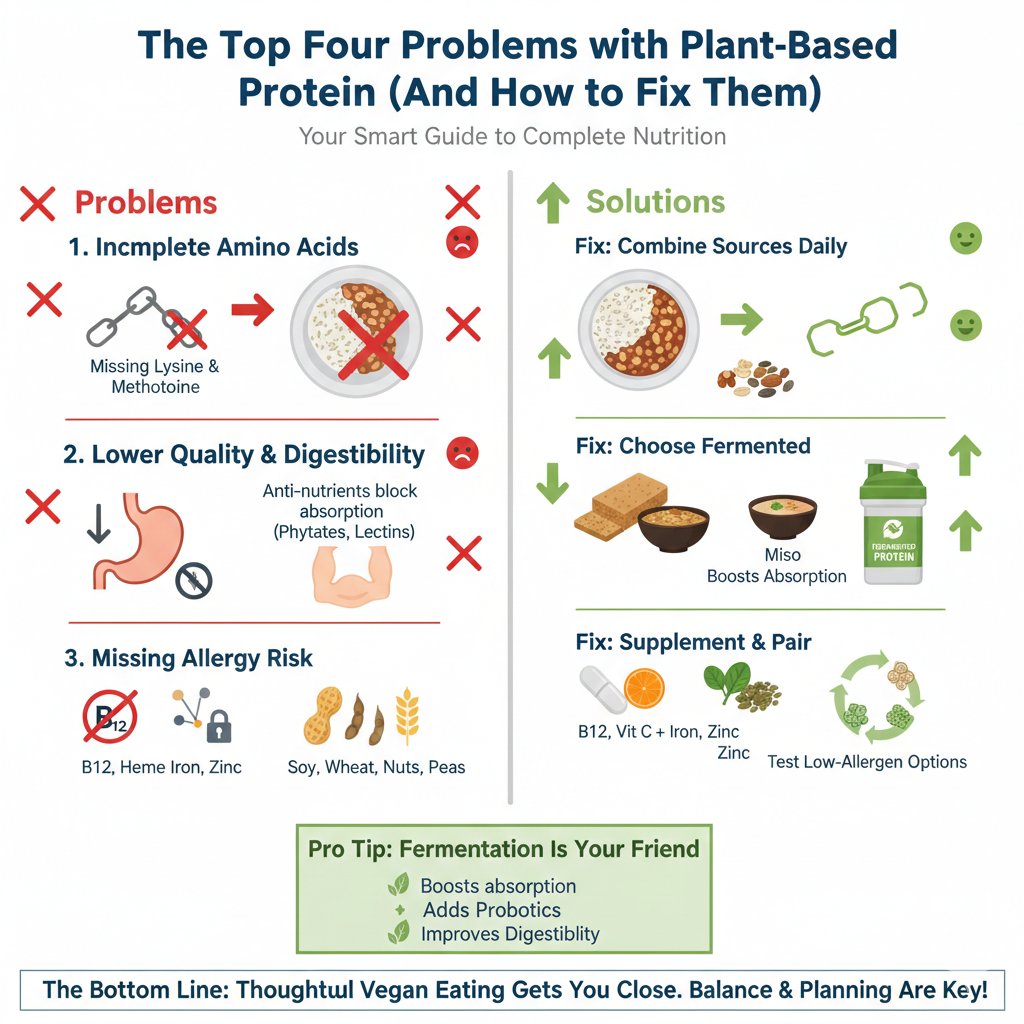
Problem 1: Incomplete Amino Acid Profile
Animal proteins deliver all nine essential amino acids your body can’t make. Most plants don’t:
Grains lack lysine
Legumes miss methionine
Veggies and fruits fall short overall
Without balance, your body may break down muscle to fill gaps.
Fix: Mix sources daily—pair rice with beans, quinoa with nuts, or oats with seeds.
Problem 2: Lower Protein Quality & Digestibility
Plant proteins often contain anti-nutrients like phytates and lectins that block absorption. You might eat 30g of protein but absorb far less.
Fix: Choose fermented options (tofu, tempeh, natto) that break down these blockers for better uptake.
Problem 3: Missing Key Nutrients
Plants lack:
Vitamin B12 (critical for nerves and blood)
Bioavailable iron/zinc (poorly absorbed due to plant compounds)
This raises deficiency risks, especially long-term.
Fix: Supplement B12, pair iron-rich plants with vitamin C, and prioritize zinc from pumpkin seeds or fermented soy.
Problem 4: Higher Allergy Risk
Soy, wheat, nuts, and peas trigger allergies or sensitivities—GI upset, rashes, or worse. Cross-reactivity makes swaps tricky.
Fix: Test fermented, low-allergen options like pea or rice protein; rotate sources to minimize issues.
Pro Tip: Fermentation Is Your Friend
Fermented plant proteins shine:
Boosts absorption by neutralizing anti-nutrients
Adds probiotics for gut health and immunity
Improves digestibility for high-fiber vegan diets
Look for tempeh, miso, or fermented protein powders.
Bottom Line
Plant proteins aren’t useless—but they’re incomplete without planning. Combine sources, ferment smartly, and supplement gaps for quality nutrition. Animal proteins remain gold standard for completeness, but thoughtful vegan eating gets you close.
References
- Janelle K. et al. (2019). Nutritional Considerations for Plant-Based Diets. Medical Clinics of North America, 103(2), 303-315.
- Mariotti F. (2018). Plant Protein, Animal Protein, and Protein Quality. Progress in Nutrition, 20(4), 405-413.
- Gorissen S. H. et al. (2018). Protein Content and Amino Acid Composition of Commercially Available Plant-Based Protein Isolates. Amino Acids, 50(12), 1685-1695.
- Pawlak R. et al. (2014). The Prevalence of Cobalamin Deficiency among Vegetarians Assessed by Serum Vitamin B12: A Review of Literature. European Journal of Clinical Nutrition, 68(5), 541-548.
- Gibson R. S. (2018). Perils of Ignoring Phosphorus and Iron in Plant-Based Diets: Potential Consequences for Bone Health. Nutrients, 10(8), 1013.
- Sicherer S. H. et al. (2010). Prevalence of Peanut and Tree Nut Allergy in the United States Determined by Means of a Random Digit Dial Telephone Survey: A 5-Year Follow-Up Study. Journal of Allergy and Clinical Immunology, 126(4), 808-813.
- Sampson H. A. et al. (2014). Update on Food Allergy. Journal of Allergy and Clinical Immunology, 133(2), 385-396.
- https://jabonline.in/abstract.php?article_id=575&sts=2
- https://www.ncbi.nlm.nih.gov/pmc/articles/PMC6261201/
- Cleveland Clinic. (2020, February 20). 5 Reasons to Add More Fermented Foods to Your Diet. Retrieved from https://health.clevelandclinic.org/5-reasons-you-should-add-more-fermented-foods-to-your-diet-infographic/.
- https://www.sciencedirect.com/science/article/pii/S2213453022001884
- https://www.uclahealth.org/news/want-to-boost-immunity-look-to-the-gut

2 Responses