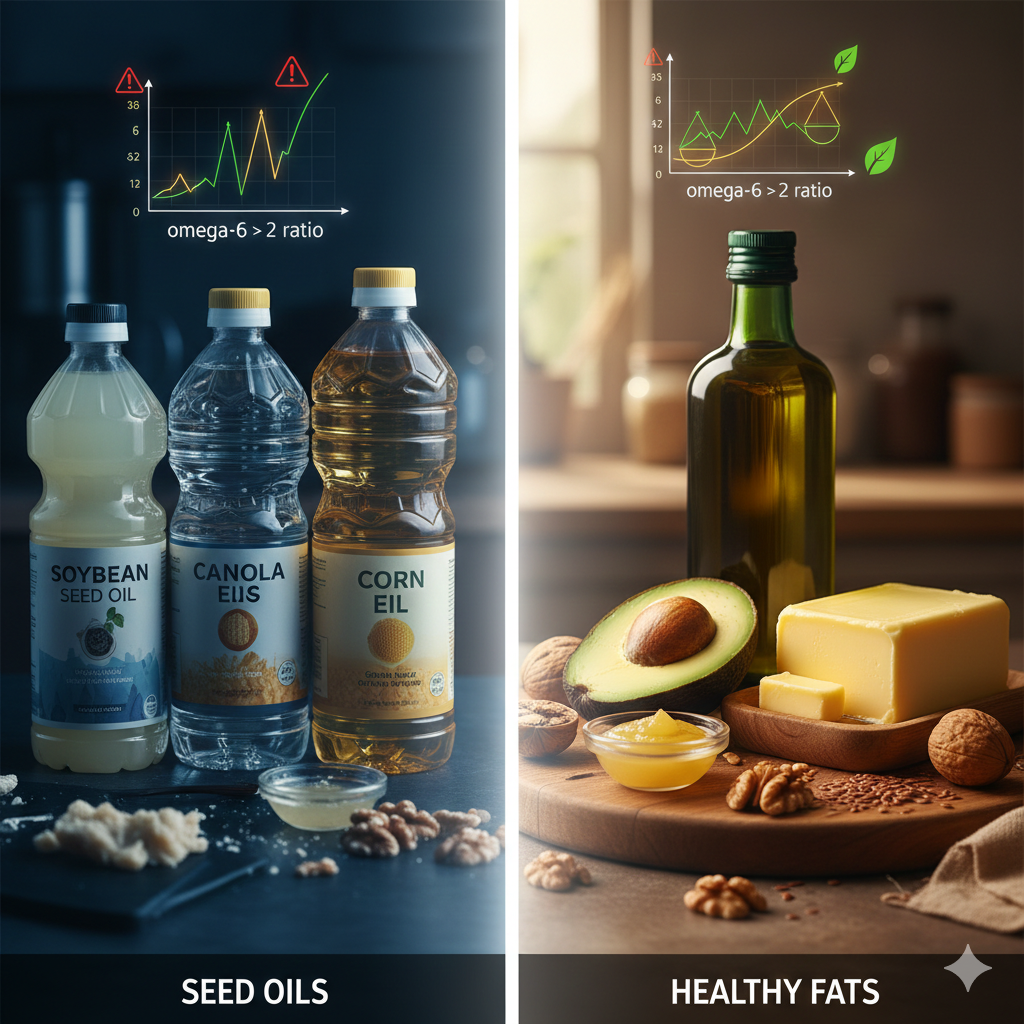
Seed oils like soybean, canola, and corn oil are everywhere in modern kitchens. Once promoted as heart-smart because they’re low in saturated fat, new research is now shining a light on the potential drawbacks of these oils for long-term health.
1. The Omega Imbalance
Both omega-6 and omega-3 fatty acids are essential for health—but they need to be in balance. Seed oils are loaded with omega-6 fats, and when these crowd out omega-3s (from foods like fish and flax seeds), it tilts the body toward inflammation. Research links this imbalance to chronic issues like heart disease, diabetes, and autoimmunity. Soybean and corn oil are especially high in omega-6s, making them big contributors to this problem in typical Western diets.
2. Oxidative Stress and Free Radicals
Because seed oils are high in polyunsaturated fats, they oxidize easily—especially when heated for cooking. This creates free radicals, unstable molecules that damage your cells and may contribute to diseases like cancer or Alzheimer’s. Using seed oils in frying or high-heat cooking can generate even more of these harmful compounds. That’s why experts now warn against heating these oils too much.
3. Heart Health: More Complex Than It Seems
Seed oils are often marketed as “heart healthy.” But the science is mixed. Replacing saturated fat with polyunsaturated fat (from seed oils) doesn’t always lower your risk of heart disease, according to large reviews. Plus, the excess omega-6 in these oils may actually promote inflammation, a key factor in heart and artery problems—possibly offsetting any benefits of a low-saturated fat diet.
4. Insulin Resistance and Metabolic Issues
Emerging studies suggest that a diet high in seed oils could make the body less sensitive to insulin, raising the risk for type 2 diabetes and metabolic syndrome. Animal research shows soybean oil—one of the most common seed oils—can drive up inflammation and disrupt how your body handles blood sugar. This is especially concerning with rates of insulin resistance climbing globally.
5. What’s the Better Choice?
Given these risks, it’s wise to rethink your go-to oils. For cooking, try more stable fats like olive oil, avocado oil, coconut oil, ghee or butter. These are less prone to oxidation and have a friendlier balance of fatty acids.
Bottom Line
Seed oils may not be the “healthy choice” we once thought. Too much omega-6, unstable fats, and possible effects on heart and metabolic health give good reason to use them with caution—or choose other fats instead. For most people, opting for more traditional oils like olive or coconut, and reducing overall processed food intake, is a safer bet for lasting health.
References
- Simopoulos, A. P. (2008). The importance of the ratio of omega-6/omega-3 essential fatty acids. Biomedicine & Pharmacotherapy, 56(8), 365-379.
- Devaraj, S., Jialal, I., & Rockwood, J. (2008). Evaluation of oxidative stress in diabetes. Diabetes, 57(3), 717-725.
- Kanner, J., German, J. B., Kinsella, J. E. (2007). Initiation of lipid peroxidation in biological systems. Critical Reviews in Food Science and Nutrition, 27(1), 1-22.
- Chowdhury, R., Warnakula, S., Kunutsor, S., Crowe, F., Ward, H. A., Johnson, L., … & Di Angelantonio, E. (2014). Association of dietary, circulating, and supplement fatty acids with coronary risk: a systematic review and meta-analysis. BMJ, 348, g2272.
- Ramsden, C. E., Hibbeln, J. R., Majchrzak, S. F., & Davis, J. M. (2010). n− 6 fatty acid-specific and mixed polyunsaturate dietary interventions have different effects on CHD risk: a meta-analysis of randomised controlled trials. British Journal of Nutrition, 104(11), 1586-1600.
- Sargis, R. M., Johnson, D. N., Choudhury, R. A., Brady, M. J. (2011). Environmental endocrine disruptors promote adipogenesis in the 3T3-L1 cell line through glucocorticoid receptor activation. Obesity, 19(4), 794-802.
- O’Sullivan, A., Armstrong, P., Schuster, G., & Pedersen, B. K. (2010). Exercise as an anti-inflammatory therapy for rheumatic diseases—myokine regulation. Nature Reviews Rheumatology, 6(6), 305-311.