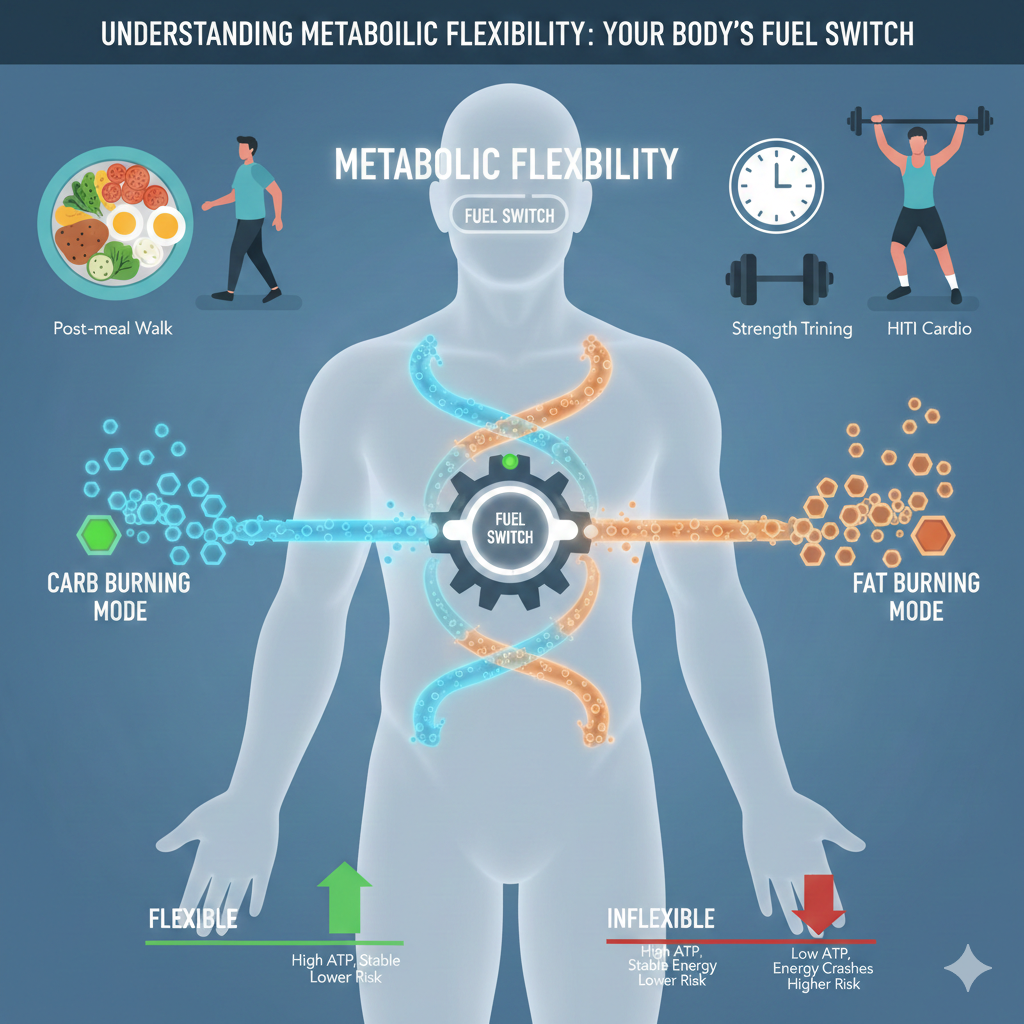
Metabolic flexibility is your body’s ability to switch seamlessly between burning carbohydrates (glucose) and fats depending on energy needs. This adaptability keeps your cells powered with ATP—the body’s energy currency—even as your meals, activity, or fasting periods fluctuate.
Think of it as a hybrid engine: when carbs are available, you burn them efficiently; when fasting or low-carb, you shift to fat without stalling.
How It Works
After a meal: Glucose rises → cells prioritize carb burning → fat breakdown is temporarily suppressed (Randle cycle).
During fasting or low glucose: Fat is mobilized → fatty acids become the primary fuel → energy continues without crashes.
High energy demand: Cells dynamically switch fuels to keep ATP production stable.
Measuring Flexibility
Traditionally, respiratory quotient (RQ) tracks fuel use:
| State | RQ | Dominant Fuel |
|---|
| Fasting | ~0.8 | Fat |
| Post-meal / Insulin-stimulated | ~1.0 | Carbs |
Greater RQ shift = better flexibility.
Non-invasive tools like Lumen now let you track this daily via breath.
Why It Matters: Health Implications
Metabolic inflexibility is linked to:
Insulin resistance & type 2 diabetes
Obesity & excess fat storage
Cardiovascular risk & metabolic syndrome
| Condition | Flexible Metabolism | Inflexible Metabolism |
|---|
| Insulin Sensitivity | High; glucose handled efficiently | Low; resistance develops |
| Fat Storage | Proper storage, avoids ectopic buildup | Poor; promotes obesity |
| Disease Risk | Lower T2D & CVD risk | Higher metabolic syndrome risk |
Factors impairing flexibility include visceral fat, chronic inflammation, mitochondrial dysfunction, and lactate accumulation.
How to Improve Metabolic Flexibility
Lifestyle choices can retrain your body to switch fuels efficiently:
Intermittent fasting / time-restricted eating → trains fat adaptation
Strength training (2–3x/week) → boosts mitochondria & energy metabolism
Post-meal walks → stabilizes blood sugar & reduces spikes
Protein + fiber-rich carbs → slow glucose absorption, support flexibility
HIIT or cardio → enhances substrate switching (fat ↔ carb)
Evidence from cohort studies shows that these interventions restore metabolic flexibility, improve glucose control, and reduce cardiovascular risks.
💡 Key Takeaway: Flexibility = energy resilience. Train your body to burn both carbs and fat efficiently, and you’ll enjoy stable energy, better weight control, and metabolic health.
References
- https://www.frontiersin.org/articles/10.3389/fnut.2022.946300/full#:~:text=Classically%2C%20metabolic%20flexibility%20has%20been,clamp%2C%20meal%20test%20challenge


One Response